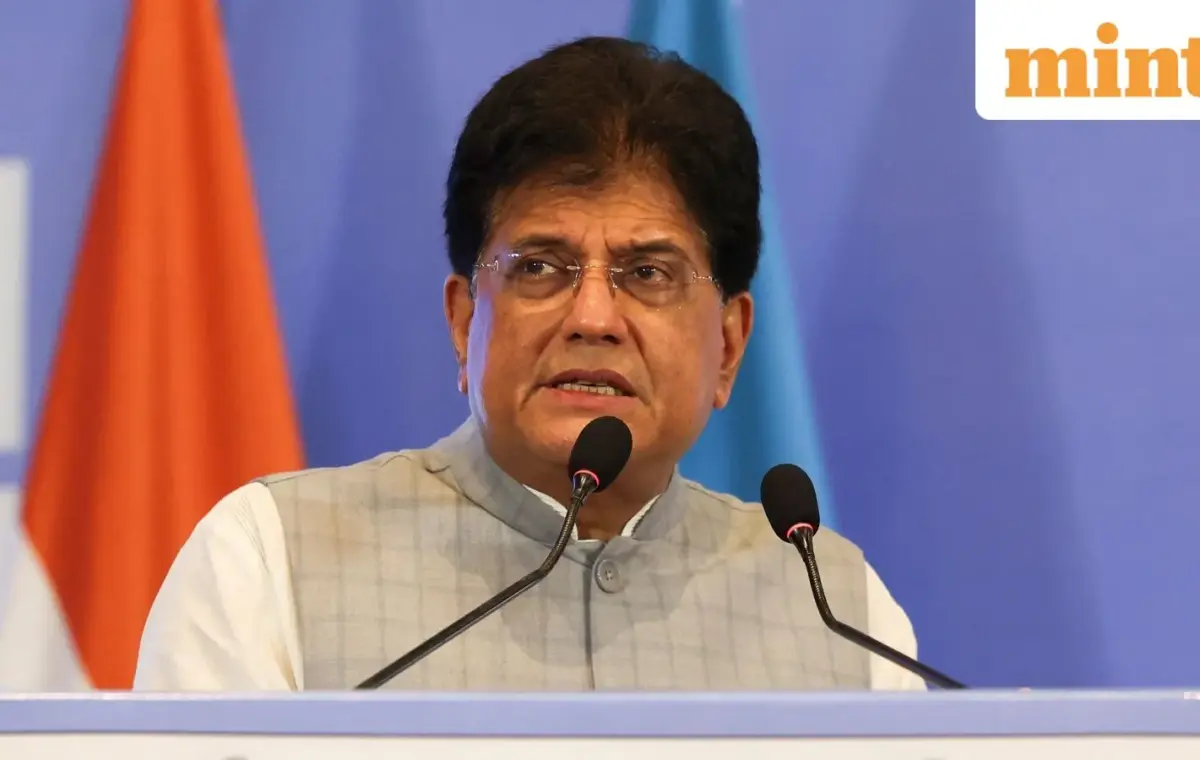
India is preparing a framework to ease mandatory Bureau of Indian Standards (BIS) certification requirements for high-tech companies importing specialised equipment and components for manufacturing, Commerce and Industry Minister Piyush Goyal said on Tuesday.
The move is aimed at helping semiconductor, artificial intelligence and other advanced technology companies avoid delays in setting up operations in India. Japanese companies had raised concerns over the existing certification requirements.
Speaking to representatives of Japanese semiconductor and AI firms, Piyush Goyal said BIS and the Commerce and Industry Ministry had been directed to work on a framework for exemptions.
"I have noted some of the concerns that were flagged today. The concerns about BIS certification. I'm happy to share with you that we have taken action yesterday itself.
"We have already instructed BIS and the Ministry of Commerce and Industry to work on a framework to support high-tech industry, not necessarily only Japanese companies, but high-tech industries coming in to promote the Make in India program, to create a framework of exemption from BIS certification required for all the equipment and components that they need to bring to India to promote their manufacturing in India," he said.
Piyush Goyal said exemptions could be offered at the company, industry, product or project level to ensure timely access to specialised equipment.
"We'll be creating a framework which will either give company level or industry level exemptions. We will work on the framework as I get back to India and find a solution for bulk exemption, or product or project based exemption, or company based exemption, so that we can have timely supply of products, goods, and services, and support your work in India," Goyal said.
The issue was raised by Tokyo Electron, a major Japanese semiconductor equipment manufacturer.
Piyush Goyal said India expects semiconductor demand to reach $150 billion by 2032 and wants to position the country as a major global electronics manufacturing hub.
The government has approved Semicon 2.0, with a budget of ₹1,27,500 crore. Goyal said the programme, combined with state incentives, could help seed around $50 billion in investment.
"We hope that this will be the foundation for sustainable growth in India and will help develop the precision manufacturing," he said.
The government expects India's first new semiconductor fabrication plant to be commissioned in 2028.
"The world is showing greater confidence in India. We will make efforts to attract more manufacturers to come to India to set up fabs and manufacture chips, including silicon fabs, compound semiconductor fabs, discrete component fabs, display fabs, etc," Goyal said.
Piyush Goyal also said the government was working to improve infrastructure around Japanese industrial clusters and assured companies that it would address issues related to SEZ, EoU and MOOWR frameworks.
Catch all the Business News , Economy news , Breaking News Events andLatest News Updates on Live Mint. Download TheMint News App to get Daily Market Updates.