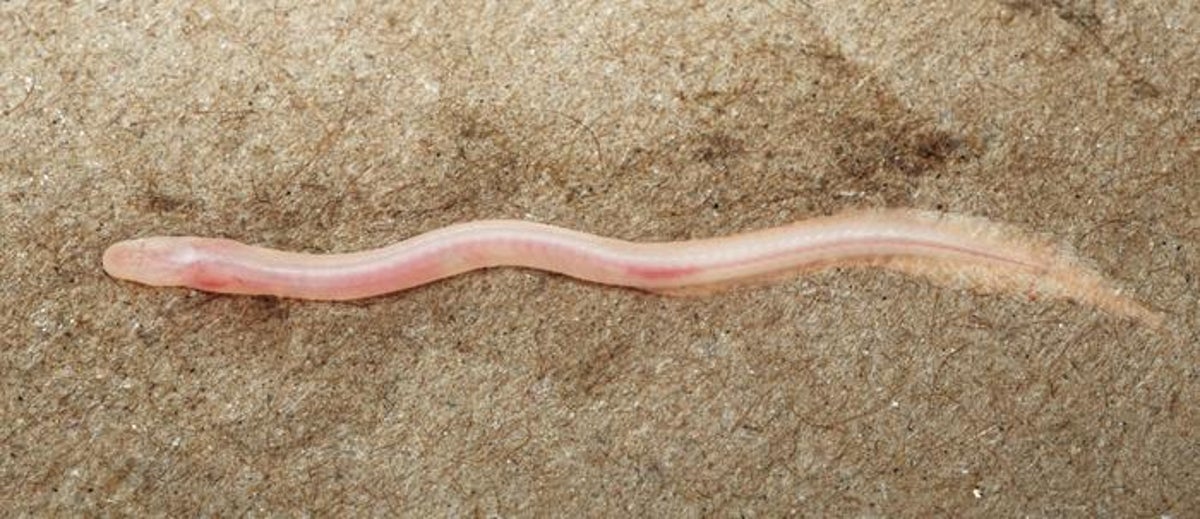
Scientists manually pumped thousands of litres of water from local handpumps to procure a specimen
I would like to be emailed about offers, events and updates from The Independent. Read our Privacy notice
Scientists have identified a new genus and species of underground earthworm eel living beneath northern India’s Bihar after watching a 2024 TikTok video that showed the unusual tiny fish emerging from a borewell.
The small, colourless eel has been named Gangaichthys indonepalicus, meaning the fish of the Ganga.
It is the first subterranean fish to be recorded from the Gangetic Basin.
“As the species occurs on the border between India and Nepal, we picked indonepalicus as the specific epithet, which reflects the distribution of the species,” Tejas Thackeray, an author of the study describing the discovery in the journal ZooKeys.
Measuring just about 4cm (1.6 in) in length, the eel features physical adaptations suited for life in total darkness, including eyes covered by skin, an unpigmented translucent body, and an apparent absence of ribs.
Researchers found a sample of the species after intensive fieldwork in Bihar, where they manually pumped thousands of litres of water from local handpumps to procure a specimen.
“Procuring samples of this unusual fish was challenging,” said Akshay Khandekar, another author of the study,
“Identifying potential hand pumps (borewells) and wells, and obtaining permission from their owners to extract water for the purpose of searching for the fish proved difficult,” Dr Khandekar said, adding that the fieldwork became more intensive when researchers “began manually pumping water”.
After pumping approximately 2000 litres of water, they finally obtained the first specimen, but the eel sustained damage during the process and died immediately.
“The second and only intact specimen was found from the same borewell after pumping an additional 500 litres of water,” Dr Khandekar said.
Later, genetic analysis and CT X-ray scans confirmed that the specimen represents a completely distinct genus within the earthworm eel family Chaudhuriidae.
The discovery points to India’s rich biodiversity, “spanning huge gradients in climate and topography and multiple biogeographic regions”, said Ishan Agarwal, another author of the study.
However, there is a huge gap in knowledge, with many more species yet to be discovered, he said.