By WILIAM HUNTER, SENIOR SCIENCE & TECHNOLOGY REPORTER
Published: 11:11 BST, 28 August 2026 | Updated: 11:53 BST, 28 August 2026
Hundreds of people have been killed, and more than 1,500 are still missing after devastating flash floods swept through the Nepal–Tibet border.
Scientists believe the disaster was triggered by the collapse of a glacier on the Langtang–Lirung mountain, which registered as a magnitude 5.2 earthquake.
Although it may take months of research to uncover the exact story, experts are already warning that this is 'not a one–off event'.
Dr Jonathan Carrivick, an expert on glacial flooding from the University of Leeds, told the Daily Mail: 'Climate change is warming the mountains, causing permafrost and glaciers to melt.'
According to the expert, this makes 'the likelihood of these sorts of events – possibly bigger – more frequent.'
Overall, researchers estimate that a whopping 15 million people worldwide are living in danger zones.
While the Himalaya, Karakoram, Hindu Kush and neighbouring ranges in Asia are most at risk, people living in the US and Canada are also in danger.
'North America could experience something similar to what we see in Nepal today,' Dr Carrivick warned.
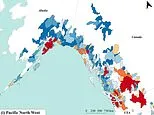
As rescue efforts continue in the flood–hit regions of Nepal and Tibet, scientists have mapped which glaciers around the world could be at risk of a similar disaster. Pictured: Red regions show areas of high Glacial Lake Overflow Flood risk
High Mountain Asia is the most threatened region because it is rapidly warming, and hosts rapidly melting glaciers, growing meltwater lakes and some of the world's steepest mountains
Hundreds of people have been killed, and more than 1,500 are still missing after devastating flash floods swept through the Nepal–Tibet border
Although scientists are still scrambling to understand the disaster, the current evidence suggests that Nepal's deadly floods are the consequence of glacial collapse.
Dr Carrivick says: 'This Nepal event appears to have been a massive rock failure that took a large part of the glacier with it.'