NASA’s Roman Space Telescope could find alien Earths—but not like you think
The Roman Space Telescope will spend more than a quarter of its time staring at the Milky Way’s bulge, a star-packed central region of our galaxy that may swarm with small, rocky exoplanets
ESA/Euclid/Euclid Consortium/NASA, CFHT, image processing by J.-C. Cuillandre and E. Bertin (CEA Paris-Saclay
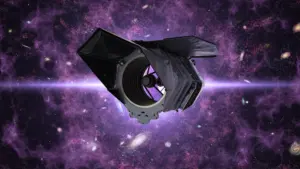
When a SpaceX Falcon Heavy rocket blasts off from Kennedy Space Center as early as Sunday morning, it will be carrying a crucial steppingstone toward astronomers’ grand goal of finding Earth-like exoplanets in the Milky Way.
NASA’s Nancy Grace Roman Space Telescope was designed for several high-priority studies of far-distant galaxies, but one of its key tasks closer to home will be an unprecedentedly long stare into the star-packed heart of our galaxy known as the galactic bulge. Roman will spend more than a quarter of its planned five-year primary mission observing this 10,000-light-year-wide region, which is so sprawling and thick with stars that previous telescopes have scarcely probed its depths.
Called the Galactic Bulge Time-Domain Survey, this project will focus on a rather narrow band of the Milky Way’s center, a region that’s roughly eight full moons in the Earth’s night sky in size. Anything larger would’ve been biting off more than even mighty Roman, with its panoramic field of view, could readily chew.
If you're enjoying this article, consider supporting our award-winning journalism by subscribing. By purchasing a subscription you are helping to ensure the future of impactful stories about the discoveries and ideas shaping our world today.
“We're not going to see that much of the bulge, but we're going to see very deep into the bulge, and in fact, all the way to the other side of the galaxy,” says Scott Gaudi, an astronomer at Ohio State University and a member of the telescope’s commissioning team.
Even so, astronomers should still discern hundreds of millions of stars within that relatively small slice of sky, explains Kristen McQuinn, leader of the Roman Space Telescope’s mission office.
Monitoring stars by the hundreds of millions is necessary for the rare and fleeting events Roman’s bulge survey is most primed to find. The telescope’s optics are designed to pick up a phenomenon called microlensing, in which a background star’s light is briefly warped and amplified by the gravitational fields of “foreground” objects that happen to drift through our solar system’s line-of-sight. Other stars are the typical foreground objects—and when they host planets, those worlds can impart their own smaller blips to the microlensing signal, too. The technique is even sensitive to exoplanets with Earth-like dimensions, potentially allowing astronomers to suss out whether such objects are, galactically speaking, common or rare.
“The reason we've never done a lot of microlensing in the past is because microlensing events themselves are quite rare,” says McQuinn. “In order to see one per year you’d have to look at 10,000 stars. You’ve got to kiss a lot of frogs, as they say, but with Roman we’re going to have hundreds of millions of stars, and so what is rare for another observatory is going to be quite common for Roman.”
The downside to microlensing, however, is that each chance alignment is a one-off event, meaning that few if any found worlds will ever be amenable to follow-up studies.
In its bulge survey, which records an image every 12 minutes, the telescope will also be looking for other planet-induced fluctuations in starlight—shadowy “transits” of worlds periodically flitting across the faces of their stars. These couldn’t be more different from microlensing’s one-time blips, as they recur again and again, allowing transiting systems to be studied more over time. Transits are what revealed most of the more than 6,000 exoplanets now known, and Roman’s planners expect the bulge’s target-rich environment to yield on order of 100,000 more. The bulkier a world is and the closer it is to its star, the bigger the shadow it casts, biasing the technique toward finding massive exoplanets. But Roman’s sensitivity is such that the telescope is likely to bag even planets as small as the moon.
“Pretty much anything that that moves or bumps or flickers, we’ll be able to detect it,” Gaudi says.
“It's not just how many planets are there, but how many Earth-like planets are there, how many planets are actually bound to a star, and others that are just free-floating through our galaxy,” McQuinn adds.
Source: Read the original article on www.scientificamerican.com