You have reached your maximum number of saved items.
Almost a decade after the idea of a folding phone was first seriously entertained, the format has matured from a set of brittle and janky oddities to a category of useful – if expensive – hybrid handsets. And though some people favour the more compact flip devices that have one phone-sized foldable screen and one little cover display, the vast bulk of foldies remain larger two-big-screen experiences.
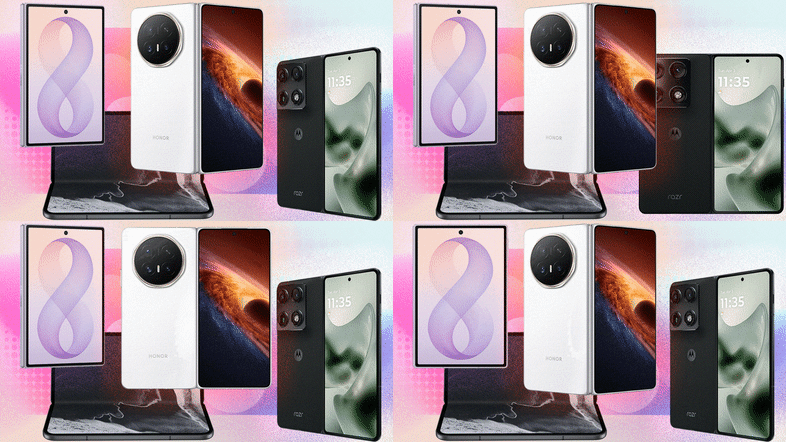
I’ve chosen and tested four options from the 2026 crop, which I recommend as contenders if you’re looking for a smartphone-tablet mix you can put in your pocket. Each of these devices run Android, have the same flexible front-back-inside camera layout, promise seven years of software updates, and have that characteristic crease in the middle of their folding screens, despite best efforts to make it less noticeable. But they also approach certain challenges quite differently.
The Razr brand has long been associated with flip phones, both of the 2000s variety and the modern folding OLED type. But this is the first model to adopt the larger book-style format, and it benefits a lot from the work Lenovo has put into refining its take on non-folding Motorola phones.
Moto devices will often arrive in finishes, colours and designs that help them stand out from the pack. My white Fold review unit has a kind of satin fabric feel on the rear case, but the black one appears to have a grippier almost rubber-like vibe. Add stainless-steel accents on the camera bump and hinge, plus the brand’s no-fuss take on Android, and you end up with a real looker. But the Fold has substance, too.
The screens on offer here are bigger, brighter and faster than the rest of the foldie competition. If you like to open your device up and fill the screen with images, HDR videos and scrolling content feeds, it will look better here than on any other phone in this list. Plus the brightness of the inner screen (6000 nits peak, not that that’s generally a great indicator of overall brightness) makes it very useable in sunny situations.
Inside, a Snapdragon 8 Gen 5 chip provides more than enough grunt, and a huge 6000 mAh battery lets the device last all day, which is certainly not guaranteed with foldies. It helps the Razr’s case that it’s also the least expensive of these four options but you could spend a little extra to get Motorola’s stylus. It doesn’t live in the phone itself, but in a separate pen-style fabric-coloured holder, which also keeps the little stick charged up.
The only niggles I have with the phone are to do with that big honking camera bar. It makes for a device that’s quite thick at the top, so it’s awkward to hold and looks like it’s being raised by a jack if you lay it on a desk. I would excuse it if the cameras were mind-blowing, but they’re just good. The main shooter provides quality you’d expect from a flagship device, though not as good as the other phones on this list, and the 3x optical zoom is appreciated but could be sharper.
Though it was one of the first to market with a big book-style folding phone, which all three of its rivals in this article have copied, Samsung has gone with a totally different shape for the Fold8. Instead of being tall and thin like a regular phone when closed, this device is squat square-ish like a passport. And instead of being more or less square when open, it’s wide but not quite TV wide, like an iPad. Coincidentally or not, this is precisely how leaks have described Apple’s upcoming folding phone.
The format works, and it makes the Fold8 a really fun device to use. It’s so light that using it while closed feels like handling a little notebook, and while one-handed use is a bit awkward, your thumbs can reach the whole screen when you’re using two.
Meanwhile, the inner screen feels like the perfect size for scrolling through calendars or watching videos on the go, and you actually get a bigger widescreen movie screen here than on the much larger phones, since they waste a lot of vertical space. Samsung’s screens are bright and sharp, too.
The company’s long history with foldable phones shows through in its multitasking software, which is the nicest of the bunch. And yet, putting two Android apps side-by-side on the other phones feels natural because they’re the shape of two phones next to each other. On the Fold8, you’re always getting a square view, which some apps don’t like. Elsewhere, this is just like any other high-end Galaxy phone. Heaps of power, bright colours, and a blend of Samsung and Google AI.
Once again, the camera proves the biggest pain point here, but for different reasons. There was simply no good place to put the forward-facing selfie cam on the internal screen in a device this small. It’s really conspicuous, and it can have text and UI disappear behind it, which seems like an oversight Samsung needs to fix. Meanwhile, the main rear camera is good, but the Fold8 is missing a telephoto lens entirely. To me, that’s practically a deal-breaker for a $2700 device – it means you can really only go to 2x zoom before things get blurry.
Like the rest of the Pixel 11 line-up, Google’s folding phone is extremely similar to last year’s model. But that fact hurts the Pro Fold a little bit more because the 2025 version already felt a little stale compared to its competitors. The big chunky metal bits of frame by the hinges, and the large black plastic borders around the inner screen, probably help the device when it comes to protection (and indeed it has much a higher dust and solid particle protection rating that either of the above phones) but it does feel a little thicker and wider in the hand. Thankfully, if you don’t mind the look, it’s an all-around excellent phone.
If you want a foldable phone that doesn’t skimp on any flagship features, it’s tough to go past the Pixel. Its camera set-up is phenomenal, from the hardware (including a 5x optical zoom) to the software, which lets you take control with full pro controls, or go entirely the other way and just press a single button near your subject, letting AI decide what photos and videos to take while also cropping and editing them.