This is read by an automated voice. Please report any issues or inconsistencies here.
See more from the L.A. Times in Google Search. Set us as preferred
Hydrogen, viewed by its advocates as a clean fuel and a solution to climate change, is having a “non moment,” but don’t ask anyone in the industry to say that on the record.
Years of market turmoil, federal funding cuts, canceled projects and industry pullback have made it clear: California’s grand vision for fleets of vehicles and heavy industry running on clean hydrogen fuel has stalled.
Yet at a recent gathering in Sacramento, those in the nascent industry continued to tout the potential of a fuel they hope will turn around and thrive. Practically no one wanted to be quoted on the bleak outlook.
“It’s tough,” said Andrew Carman, a hydrogen dealmaker at the conference who said there just aren’t enough buyers to justify much new fuel production.
Hydrogen is an alternative to gasoline, diesel fuel and natural gas that’s part of California’s climate strategy because it doesn’t produce greenhouse gas emissions when used. It can be made cleanly by cleaving the hydrogen out of water using clean electricity.
But that’s not what usually happens. Some 95% of hydrogen used today is made from natural gas. That’s because freeing hydrogen from its bond with oxygen in water requires an extraordinary amount of energy — and expensive equipment — making it cost prohibitive.
Former Gov. Arnold Schwarzenegger drove a Hummer powered by hydrogen, putting the fuel on the state’s map in 2004 with his vision of a 200-station “hydrogen highway.” But as electric cars dropped in price and gained popularity, the highway has more or less been left for dead.
“There was a race between batteries and hydrogen, and batteries won,” said Bill Magavern, policy director at the Coalition for Clean Air.
There are some 14,000 hydrogen cars registered in California, and that number declined for the first time last year. There are eight fewer hydrogen fueling stations now than in 2023 too — a total of 57, according to the California Energy Commission. And about a third are out of order.
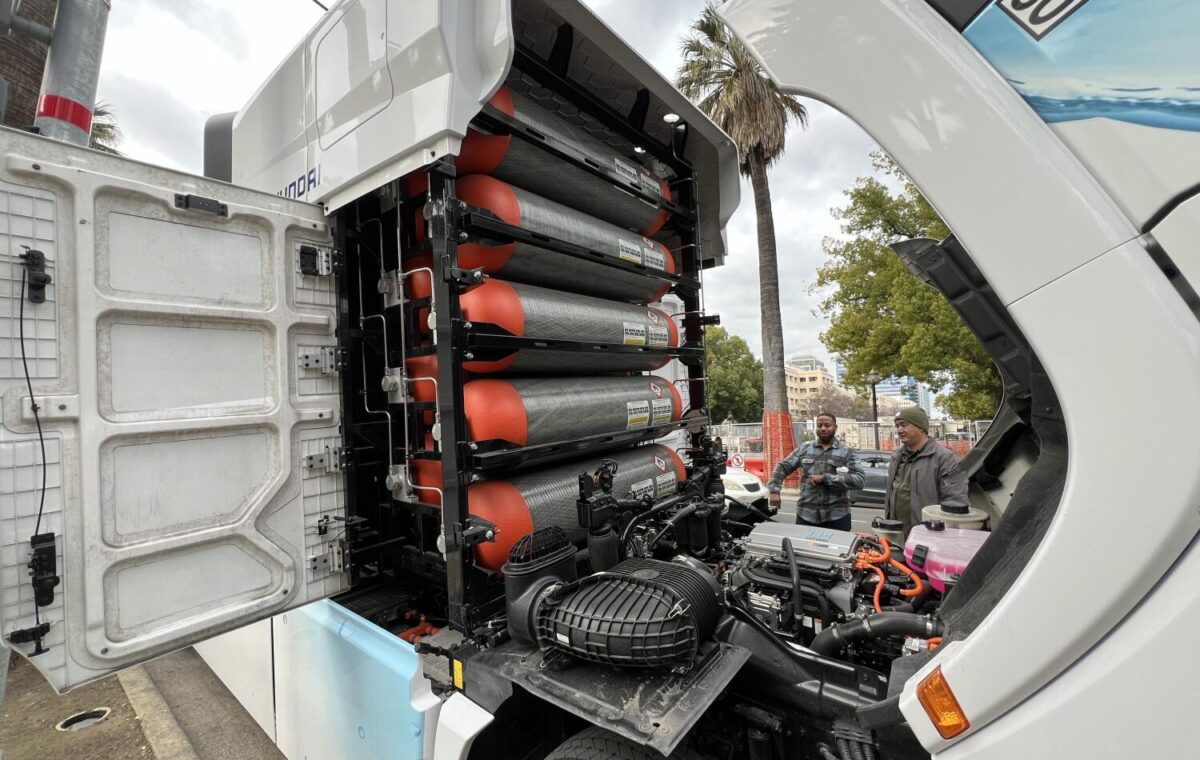
In recent years, the state has pivoted toward hydrogen for buses, trucks and port equipment, but these too have struggled to get off the ground.
Carman said there are 400 or so hydrogen buses and trucks on the roads, and he has faith in new, smaller production plants and stations eventually opening to serve them. He recently brokered a deal for a maker of water treatment chemicals in Pittsburg, Calif., to sell hydrogen, one of its byproducts, to transit agencies.
But the state’s dream of a vast network of green fuel production sites and pipelines serving thousands of hydrogen-powered vehicles across California is a harder sell.
“How do you get to that next scale?” asked Carman, who runs PACC Services. “That’s not an easy problem to solve.”