Published: 17:11 BST, 3 September 2026 | Updated: 21:14 BST, 3 September 2026
A drug-resistant fungus that can cause a rash covering most of the body is spreading to new areas of the world, including within the US, a study suggests.
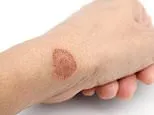
Ringworm is a highly contagious disease that causes an itchy, circular rash on the skin, typically on the foot or groin. Rather than being caused by a worm, it is actually caused by 40 species of fungi.
While most cases are easily cleared with a short course of lotions or antifungals, in recent years doctors have grown increasingly alarmed over a new strain – Trichophyton indotineae – which can cause a painful rash that spreads over much of the body and resists standard treatments.
Now, scientists in Europe have analyzed samples from patients globally to track the spread of the strain and detect whether it is being found in new areas.
In their analysis of more than a million samples from 54 countries, researchers found scientists were now detecting seven times as many cases as in 2022 globally.
The strain was also detected in at least five new countries in Europe and South America over the last five years where it had not been previously reported.
In the US, the strain was first detected in 2023 in two unrelated patients in New York City whose infections did not respond to standard treatments.
It has now been detected in 11 states, according to the Centers for Disease Control and Prevention (CDC), but the agency says this is likely an undercount, adding that cases may be misdiagnosed or not tested in some states.
The above shows locations where Trichophyton indotineae has been detected nationwide. Countries that are colored green have not submitted any data
Ringworm is an extremely common infection, also known as Athlete's foot when it is on the feet or jock itch if it is on the groin.
About 14 percent of Americans are infected at any given time, estimates suggest, which is because the fungi behind the infection can easily spread via skin-to-skin contact and touching towels, bedsheets and surfaces in bathrooms or public locker rooms also touched by an infected person.
Anyone can be infected with ringworm, but those who take part in contact sports such as wrestling, sweat excessively or use public locker rooms are at higher risk of suffering a ringworm infection. Anyone with a weakened immune system or autoimmune disease is also at higher risk from an infection.
The only way to confirm a T. indotineae infection is to do a lab test, but doctors say there are warning signs that someone may be infected with this strain.
These include having a rash that is red, itchy and covers a large area of skin and does not improve after standard treatment – over-the-counter creams or oral antifungals – or that keeps recurring over several months.