US denies Iran's claim of strike on American vessel near Strait of Hormuz — US denies Iran’s claim that it struck an unmanned American vessel attempting to enter the Strait of Hormuz, calling the allegation a “total lie” amid rising tensions following a fresh exchange of attacks between Washington and Tehran.
The reported incident came a day after the US military said it had struck three Iranian oil tankers in retaliation for attacks on American Navy warships.
The latest confrontation comes as the six-month US-Iran conflict continues despite a fragile ceasefire announced in June. Fighting has persisted intermittently, while diplomatic efforts to end the conflict have stalled.
The two countries resumed military attacks last week after roughly a month of relative calm.
The latest strikes have focused on the Strait of Hormuz and areas along Iran's southern coastline. At least five people were killed earlier in the week during a US bombardment, reviving memories of the opening phase of the conflict, when a school was struck.
The war began on February 28 with US and Israeli attacks on Iran. Since then, both sides have sought to inflict military and economic damage on the other.
The Trump administration has pursued a two-pronged strategy — responding militarily to attacks around the Strait of Hormuz while simultaneously targeting financial institutions and entities accused of helping Iran move money.
Iran, meanwhile, has sought to withstand decades of sanctions and the US blockade of its ports. Tehran has continued finding ways to sell its oil, relying partly on a shadow fleet of vessels to transport crude to international buyers.
The Strait of Hormuz has become Iran's most important source of leverage in the conflict.
The waterway was considered an international shipping route before the war and is crucial for global oil and natural gas supplies.
US Energy Secretary Chris Wright said Sunday that around 9 million barrels of oil a day were currently passing through the strait. His estimate appeared higher than average flows recorded over the previous 28 days by TankerTrackers.com and other sources.
Wright told CNN that, when regional pipeline supplies are also taken into account, energy flows could be at roughly two-thirds or more of pre-conflict levels.
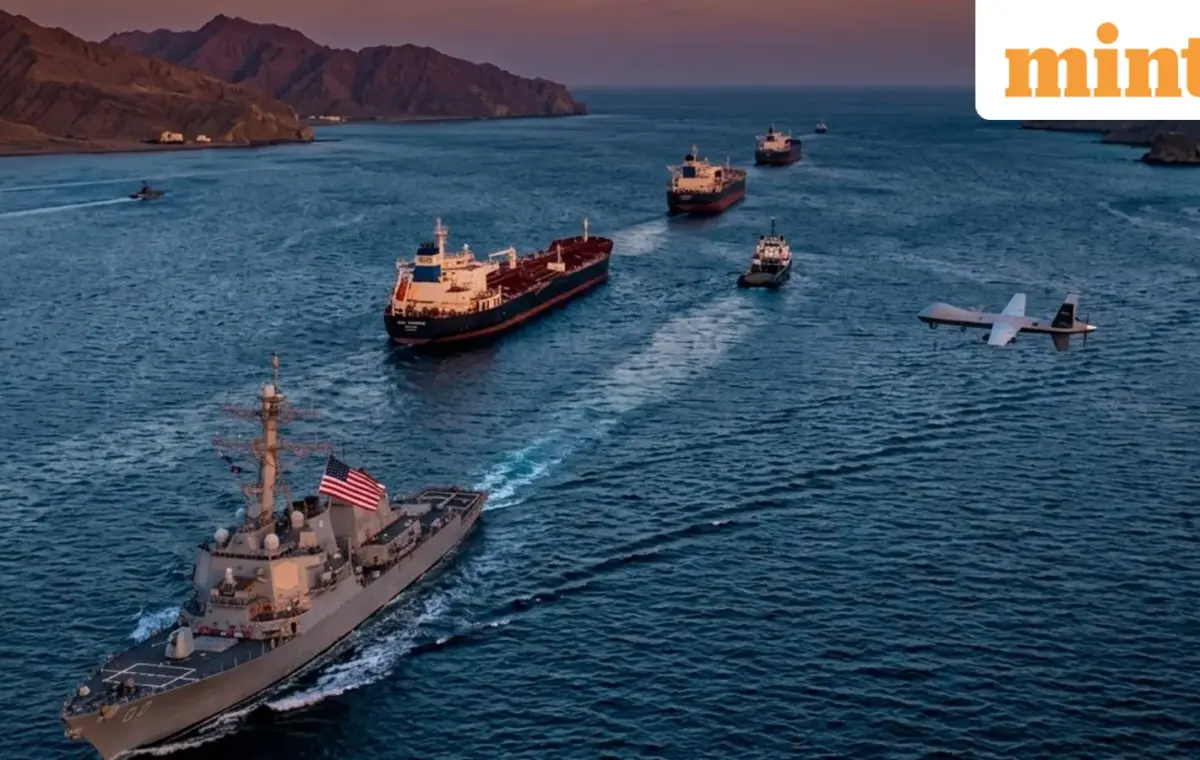
However, the continued movement of tankers depends heavily on the presence of the US Navy, which has been escorting vessels and providing protection against possible Iranian attacks.
Wright said he expected other countries to eventually contribute to efforts to protect shipping through the waterway.
The latest escalation followed US strikes on three Iranian oil tankers.
US denies Iran’s claim that it struck an unmanned American vessel attempting to enter the Strait of Hormuz, calling the allegation a “total lie” amid rising tensions following a fresh exchange of attacks between Washington and Tehran.
The reported incident came a day after the US military said it had struck three Iranian oil tankers in retaliation for attacks on American Navy warships.
The latest confrontation comes as the six-month US-Iran conflict continues despite a fragile ceasefire announced in June. Fighting has persisted intermittently, while diplomatic efforts to end the conflict have stalled.
The two countries resumed military attacks last week after roughly a month of relative calm.
The latest strikes have focused on the Strait of Hormuz and areas along Iran's southern coastline. At least five people were killed earlier in the week during a US bombardment, reviving memories of the opening phase of the conflict, when a school was struck.
The war began on February 28 with US and Israeli attacks on Iran. Since then, both sides have sought to inflict military and economic damage on the other.
The Trump administration has pursued a two-pronged strategy — responding militarily to attacks around the Strait of Hormuz while simultaneously targeting financial institutions and entities accused of helping Iran move money.
Iran, meanwhile, has sought to withstand decades of sanctions and the US blockade of its ports. Tehran has continued finding ways to sell its oil, relying partly on a shadow fleet of vessels to transport crude to international buyers.
The Strait of Hormuz has become Iran's most important source of leverage in the conflict.
The waterway was considered an international shipping route before the war and is crucial for global oil and natural gas supplies.
US Energy Secretary Chris Wright said Sunday that around 9 million barrels of oil a day were currently passing through the strait. His estimate appeared higher than average flows recorded over the previous 28 days by TankerTrackers.com and other sources.
Wright told CNN that, when regional pipeline supplies are also taken into account, energy flows could be at roughly two-thirds or more of pre-conflict levels.
However, the continued movement of tankers depends heavily on the presence of the US Navy, which has been escorting vessels and providing protection against possible Iranian attacks.
Wright said he expected other countries to eventually contribute to efforts to protect shipping through the waterway.
The latest escalation followed US strikes on three Iranian oil tankers.
Written by https://futureknowledge.in/ | Source: www.livemint.com
Written by https://futureknowledge.in/