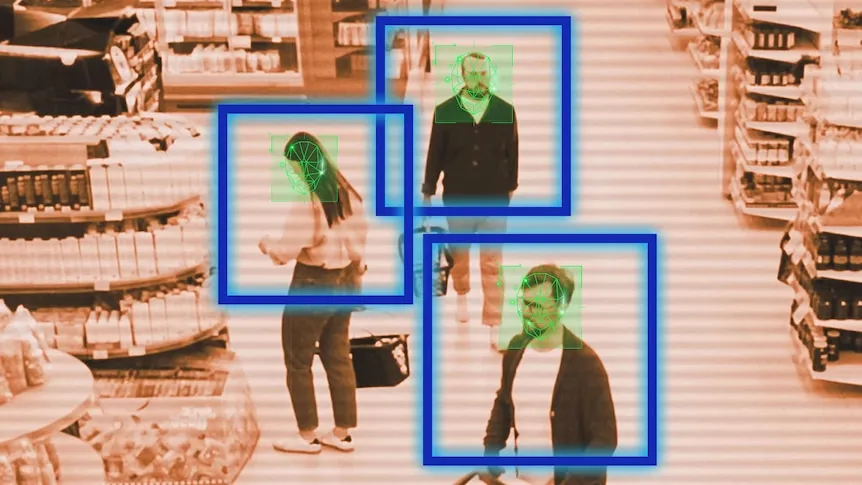
Experts warn facial recognition technology is creeping into everyday mass surveillance. (ABC News: Kylie Silvester)
A shopper walks into a supermarket and grabs a basket. By that time, a camera has scanned their face.
That is what experts warn could be the new normal for Australians.
Supermarkets started with exit gates and bagging-area cameras. Now they are trialling facial recognition technology.
In August, Coles and Woolworths rolled out facial recognition technology trials in a bid to combat crime with about a third of retail workers not feeling safe in their workplace, according to a union survey of about 3,000 staff.
The technology scans the features of a person's face to create a unique digital code and identify them.
Neither of the supermarket giants has said if it would be rolled out in their Australian stores.
However, both companies said they were looking into improving protection for their customers and staff.
Industry groups say the move is about safety, but experts warn once the technology is installed the "scope creep" does not stop.
Experts have serious privacy and human rights concerns. (ABC News)
Scope creep, also known as function creep, is when society incrementally allows things to happen over time that people feel uncomfortable about.
"We let it pass and all of a sudden you see a layering of the technology being used for more privacy intrusive purposes," said responsible technology policy specialist Lauren Perry from the University of Technology Sydney.
She is concerned face scans could shift from safety and security to customer experience in ways that could disadvantage and harm the consumer.
Lauren Perry says facial data could give companies more information about consumer purchasing behaviour. (Getty Images: gorodenkoff)
The layering of new technologies such as face scan-enabled EFTPOS machines and the widespread rollout of digital price tags across supermarkets could tailor real-life shopping experience.