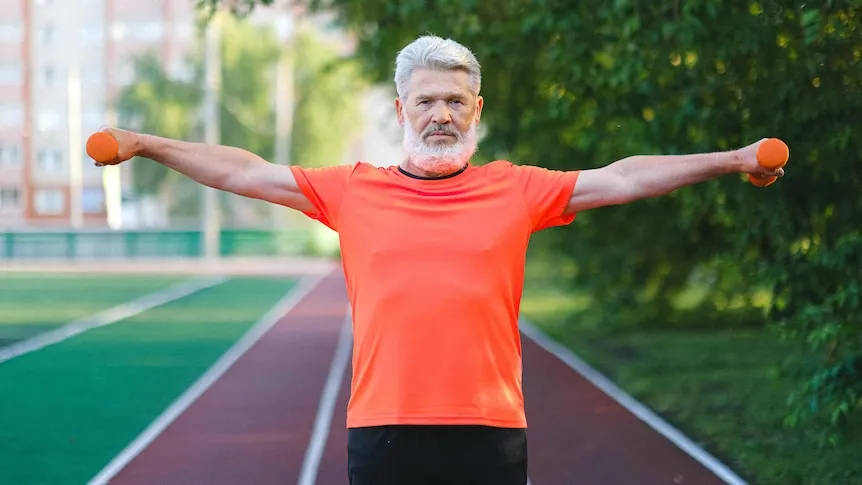
Could exercise be thwarting your weight loss goals? — Many people report exercise makes them incredibly hungry. Here's what might be going on. (Pexels: Anna Shvets)
We've all been there. You spend an hour in the gym, and before you even reach the change room, you start thinking about our favourite takeaway meal — after all, you've earned it!
Before long, you're tucking into a super-sized meal. Then the guilt hits: what was the point of exercising to burn all those calories if it just makes us eat even more calories?
But while this might be a familiar pattern, it's not necessarily a super-sized hunger at play. Let's see what the science says.
While many people report that exercise makes them hungry, the science is more nuanced.
In the short term, a bout of exercise can actually suppress appetite. A meta-analysis of 20 studies found exercise reduced the hunger hormone ghrelin while increasing hormones associated with fullness, including PYY, GLP-1 and pancreatic polypeptide.
But this effect is temporary. A more recent systematic review and meta-analysis found exercise suppressed appetite initially, but this effect wore off 30–90 minutes later.
So exercise isn't an appetite-suppression strategy. Rather, there appears to be a short window after exercise when our appetite may be dampened before it returns to normal.
There is an important distinction between what happens after one workout and what happens when we exercise regularly.
If you've expended a substantial amount of energy, your body may respond by increasing hunger as it works to restore energy balance. (ABC News: Chris Gillette)
A systematic review of exercise training in adults who were above a healthy weight or who had obesity found a small increase in hunger levels while fasting.
However, there were no clear or consistent increases in post-meal or daily hunger, and exercise did not substantially increase average energy intake.
In other words, if you're exercising more, you may well feel hungrier at some point. That's not your body "fighting" exercise — it's a normal physiological response to having expended more energy.
People don't necessarily compensate by eating back all the energy they have used.
A systematic review and meta-analysis of 13 randomised controlled studies found both short bursts of high-intensity exercise (interspersed with recovery) and moderate-intensity continuous exercise temporarily suppressed appetite.
Many people report exercise makes them incredibly hungry. Here's what might be going on. (Pexels: Anna Shvets)
We've all been there. You spend an hour in the gym, and before you even reach the change room, you start thinking about our favourite takeaway meal — after all, you've earned it!
Before long, you're tucking into a super-sized meal. Then the guilt hits: what was the point of exercising to burn all those calories if it just makes us eat even more calories?
But while this might be a familiar pattern, it's not necessarily a super-sized hunger at play. Let's see what the science says.
While many people report that exercise makes them hungry, the science is more nuanced.
In the short term, a bout of exercise can actually suppress appetite. A meta-analysis of 20 studies found exercise reduced the hunger hormone ghrelin while increasing hormones associated with fullness, including PYY, GLP-1 and pancreatic polypeptide.
But this effect is temporary. A more recent systematic review and meta-analysis found exercise suppressed appetite initially, but this effect wore off 30–90 minutes later.
So exercise isn't an appetite-suppression strategy. Rather, there appears to be a short window after exercise when our appetite may be dampened before it returns to normal.
There is an important distinction between what happens after one workout and what happens when we exercise regularly.
If you've expended a substantial amount of energy, your body may respond by increasing hunger as it works to restore energy balance. (ABC News: Chris Gillette)
A systematic review of exercise training in adults who were above a healthy weight or who had obesity found a small increase in hunger levels while fasting.
However, there were no clear or consistent increases in post-meal or daily hunger, and exercise did not substantially increase average energy intake.
In other words, if you're exercising more, you may well feel hungrier at some point. That's not your body "fighting" exercise — it's a normal physiological response to having expended more energy.
People don't necessarily compensate by eating back all the energy they have used.
A systematic review and meta-analysis of 13 randomised controlled studies found both short bursts of high-intensity exercise (interspersed with recovery) and moderate-intensity continuous exercise temporarily suppressed appetite.
Written by https://futureknowledge.in/ | Source: www.abc.net.au
Written by https://futureknowledge.in/