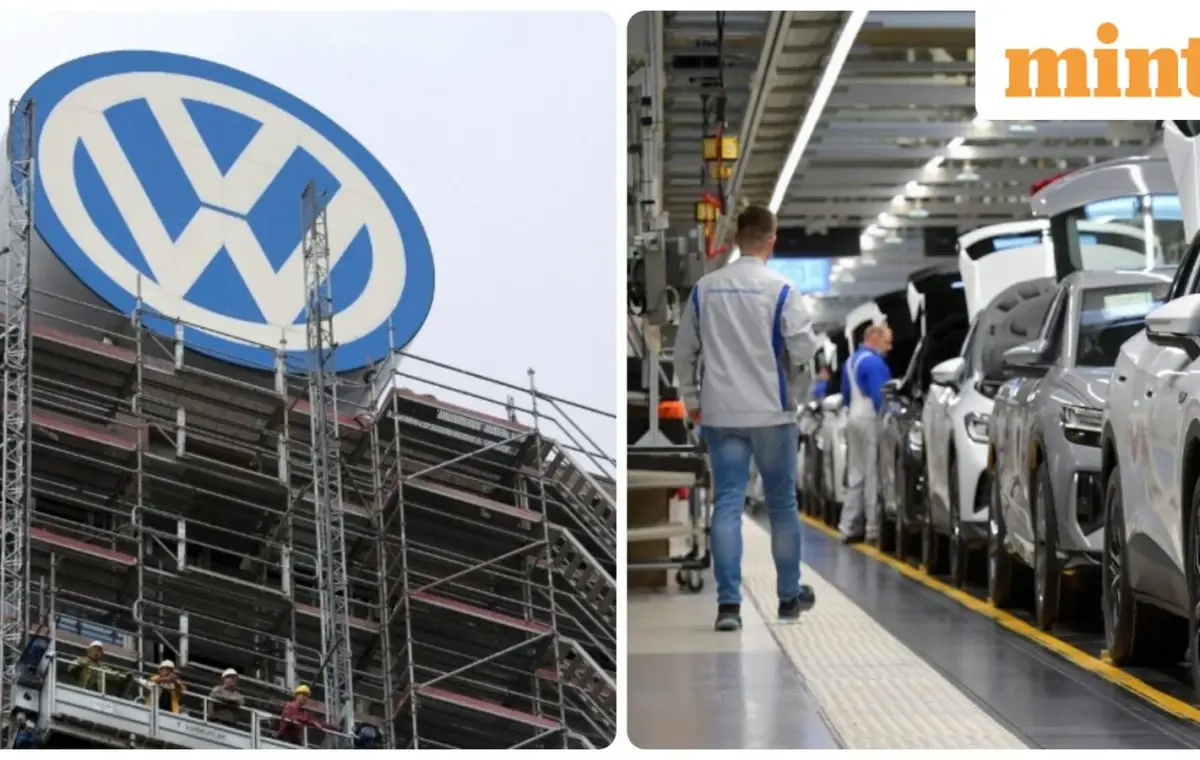
The German automaker Volkswagen is in the spotlight since it announced restructuring plans. With Volkswagen currently considering the closure of four German plants, the prime focus is on the industry's 35-hour work week. Amid high labour costs, the future of German auto production seems uncertain. The automaker alleges that high domestic costs bring down profits making cost cut necessary at a time when cheaper models from abroad are stealing market share.
The contentious issue of extending work hours by five extra hours to avoid layoffs and increase productivity has arisen. In Germany's metalworking industry, the 35-hour week is the full-time standard for many production workers, including large parts of the auto sector due to strong unions and labour regulations.
The emergence of this agreement can be traced back to the 1980s and 1990s when IG Metall union, which represents most Volkswagen workers in Germany, collectively bargained under the slogan "More time to live, love, laugh". In 1984, the agitation stretched as long as seven weeks when West German metal industry workers protested and negotiated.
While the company's management and unions are in disagreement over this concerning issue, let's find out whether extending work week by five extra hours can solve Volkswagen's problems.
German autoworkers are one of the highly paid and most expensive as this Western European country has some of the highest automotive labour costs in the world. Labour cost is Germany is nearly $3,307 per vehicle against $955 in Spain and $597 in China.
Catch all the Business News , Corporate news , Breaking News Events and Latest News Updates on Live Mint. Download The Mint News App to get Daily Market Updates.
Log in to our website to save your bookmarks. It'll just take a moment.
Oops! Looks like you have exceeded the limit to bookmark the image. Remove some to bookmark this image.