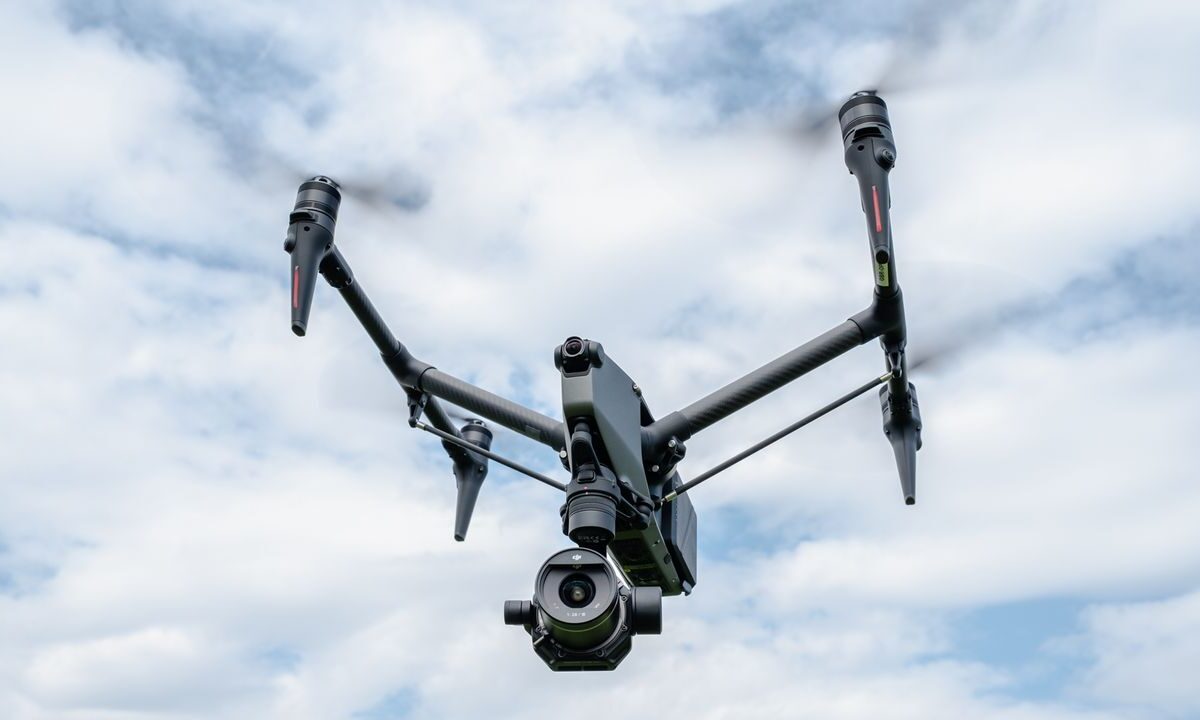
Platform offers a streamlined online to-order defense approach
When you purchase through links on our site, we may earn an affiliate commission. Here’s how it works.
The US Department of War has announced an expanded version of the counter-unmanned aerial system marketplace run by Joint Interagency Task Force 401, its coordination hub for counter-drone work.
A report by DroneFront found the platform is built and operated by Kaizen Laboratories, a four-year-old software company in New York, under a $15 million prototype contract.
The announcement is an impressive milestone in a procurement experiment that has been running behind closed doors since February 2026, with access available only to vetted buyers.
The inventory available to the Department of War's list of buyers is not visible to third parties, and for those who do have access, it is heavily tiered based on export-control status.
Buyers are manually approved by JIATF-401 admins and granted access based on classification levels; eligible buyers include federal procurement officers, military commands, pre-cleared allies, and defense ministries from partner nations.
Vendors on the platform are also subject to a detailed vetting process that involves business verification, product evaluation, and compliance with export controls before they are allowed to publish anything.
This essentially fits with what a digital weapons catalog is, but with considerably more firepower under the hood than a typical gun shop might carry, and where mistakes or even the display of classified data could have catastrophic security ramifications.
Sign up to the TechRadar Pro newsletter to get all the top news, opinion, features and guidance your business needs to succeed!
For example, if data about the effectiveness or limitations of certain counter-drone hardware were made public, it could undermine its usefulness in certain theaters of war.
Australia, Poland, South Korea, the United Kingdom and Romania have been publicly named as partner nations, and Army Secretary Dan Driscoll has said state and local law enforcement agencies are being onboarded as well.
JIATF-401 reported $13 million in marketplace purchases as of April. By early August, task force spokesperson Lt. Col. Adam Scher put the figure at $21 million. That shows subsequent sales of about $8 million over the next 4 months, or about $2 million per day.
For a platform that was contracted out to be built at $15 million, one could argue that the sales are moving slower than expected, but that might be the point here: Kaizen CEO Nikhil Reddy has said the platform remains in a slow-rollout phase, with a limited set of orders being used to validate that the ordering and adjudication process works before wider release.
The more consequential piece of the platform, however, is one that has yet to be released: an AI-assisted planning layer that lets a user enter a threat profile, a budget, an operational readiness state and an environment, and then, in Reddy's own description, scans the products in the marketplace agentically and returns a recommended capability configuration across the kill chain. Kaizen said in early August that this was expected to go operational within days.