You have reached your maximum number of saved items.
She built Russia’s answer to Amazon. She navigated wartime Kremlin politics. And she outmanoeuvred her ex-husband — the father of her seven children — in a rancorous business feud that involved a deadly shooting near Red Square.
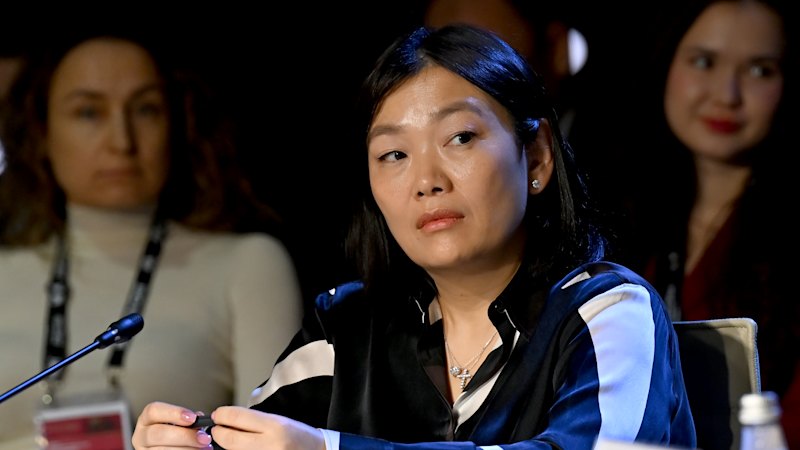
But Tatyana Kim, billionaire co-founder of the online marketplace Wildberries and the richest woman in Russia, is now facing a far greater challenge. Ukrainian airstrikes are decimating her company’s facilities and threatening her business empire’s survival.
After months of attacks on Russian oil refineries that caused nationwide gas shortages, Ukraine has expanded its air campaign to Wildberries warehouses across Russia. Kyiv has targeted at least 23 Wildberries facilities so far, hitting them night after night since mid-July, with billions of dollars in merchandise going up in smoke. Nine of the company’s workers have been killed.
The attacks mark a new stage in the conflict, with Kyiv aggressively targeting a single private business for the first time. Ukrainian President Volodymyr Zelenskyy is attempting to bring the war home for more Russians, hoping that rising discontent and inconvenience in Russian society will increase the pressure on President Vladimir Putin to end the war.
Kyiv has argued that Wildberries, which accounts for about 10 per cent of all Russian retail sales, is a legitimate target because it provides goods to Russian soldiers.
Kim, speaking in a video address late last month, condemned what she described as “terrorist attacks.” She said the goods Wildberries was selling were no different from what was on offer by platforms like Amazon or the Chinese giant Alibaba.
“There is no logic, common sense or rationality in the actions of the terrorists, nor can there be,” Kim said, referring to the Ukrainians. She said the “enemy” was trying to “apply pressure, destabilise and provoke panic and shock among a large number of people.”
The strikes are hurting Wildberries, and the Russian retail market in general, at a time when the country’s economy is already facing difficulties, though the damage pales in comparison to the destruction Russia has caused in Ukraine.
Consumer spending in Russia for nonfood items on marketplaces like Wildberries has plummeted in recent weeks, amid the airstrikes, according to a research note by SberIndex, a research arm of state-owned Sberbank.
Wildberries has lost up to one-third of its warehouse space and as much as 480 billion roubles’ worth of goods ($8.3 billion) in the Ukrainian attacks, according to Moscow-based Data Insight, an e-commerce consultancy.
Wildberries “has almost run out of its biggest warehouses,” said Sergei Semko, an analyst at Data Insight.
“Every single day, one warehouse after another is getting methodically destroyed,” he added.
What ultimately happens to Wildberries will depend in part on how long Ukraine’s strikes continue and how effectively and quickly Kim adapts the company’s logistics. It will also depend on what sort of redress she is able to win from the Russian state.
Born into a Russian family that is ethnically Korean, Kim is a former English teacher who launched Wildberries in 2004 along with her husband, Vladislav Bakalchuk, as a website that sold clothes from European catalogues.