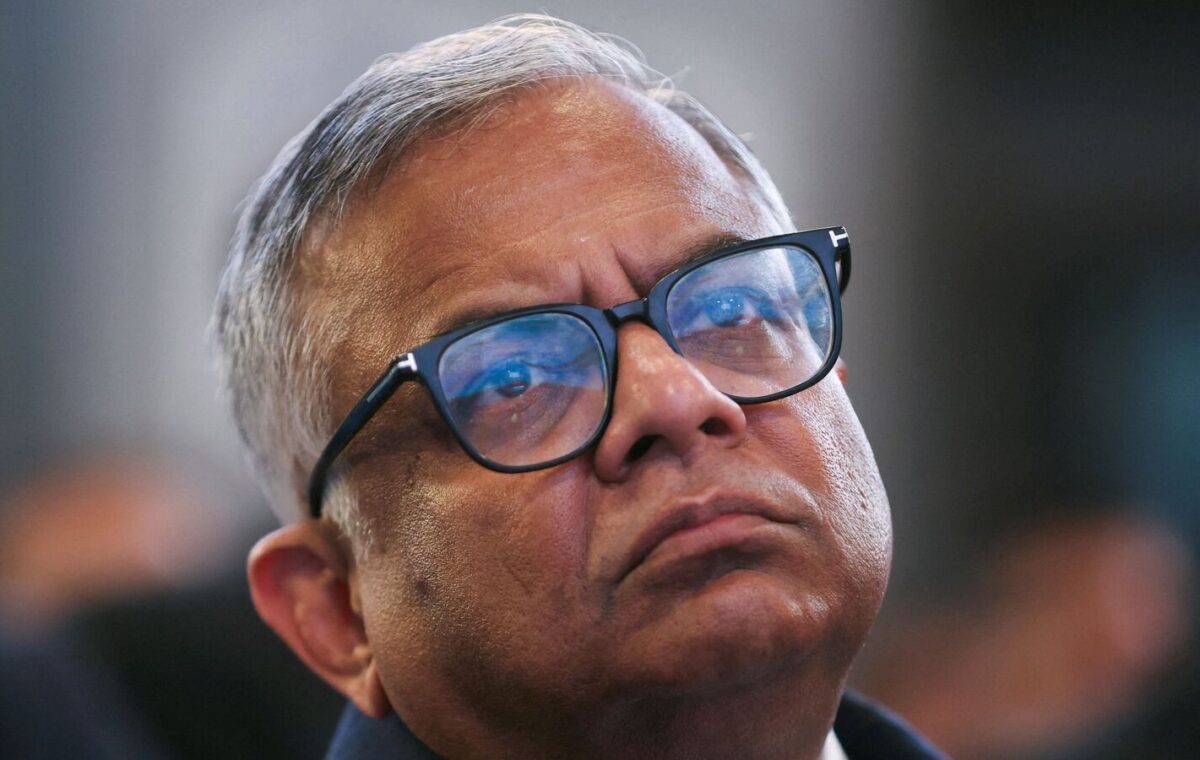
India’s largest conglomerate is reeling from the shock resignation of its chairman, Natarajan Chandrasekaran, the first outsider in generations to run Tata Sons. His decision to step down in February jeopardises Tata Sons Pvt.’s $120 billion wager on future growth, Bloomberg reported.
Some of the conglomerate’s current and planned projects could slow down, be scaled back, or stretch out as it awaits new leadership, sources told the media outlet.
That’s especially true as Chandra’s exit leaves Noel Tata, the chairman of Tata Trusts, as the kingmaker managing the transition at the top of the group’s holding company.
Noel has, in recent months, pushed back against the Chandra-led spending spree, amounting to $120 billion over the next five years, favouring more measured capital spending with quicker payout horizons, the report added.
The tension between the two men has now come to a head, and will ripple across the country.
“The ball is now firmly in Noel Tata’s court,” said Kranthi Bathini, a Mumbai-based equity strategist at WealthMills Securities Pvt. “Replacing a technocrat of Chandrasekaran’s caliber, someone sharply attuned to rapidly shifting technological landscapes, will be a formidable challenge," Bathini said.
Tata is in many ways a proxy for India’s broader economy, with brands ranging from Jaguar Land Rover luxury cars and the Taj hotel chain to Air India and everyday staples like Tetley tea.
Beyond consumer-facing businesses, the group has placed strategic bets on everything from semiconductors and electric car batteries to AI data centers.
That makes it a crucial partner for Prime Minister Narendra Modi’s agenda to recast India as a global manufacturing power.
The Tata Group didn’t immediately respond to a request for comment.
The Tata Trust chair leads a collective of 13 charities with a two-thirds stake in Tata Sons.
Noel’s tightening grip over the conglomerate stemmed from a rift with Chandra, as Chandrasekaran is widely known, over the pace and duration of capital allocation. Chandra’s exit now resolves the issue of dueling visions for the conglomerate, but with no obvious successor.
“Chandra has overseen an investment-heavy transformation of the Tata Group across aviation, electronics, semiconductors and digital,” Utkarsh Sinha, managing director at boutique investment banking firm Bexley Advisors.
“His departure could signal a greater focus on capital discipline, consolidation and extracting returns from those investments rather than continuing the same pace of expansion.”
Tata Sons’ board had already begun pushing for a strategic recalibration even before Chandra announced his departure, the people familiar with the matter said.