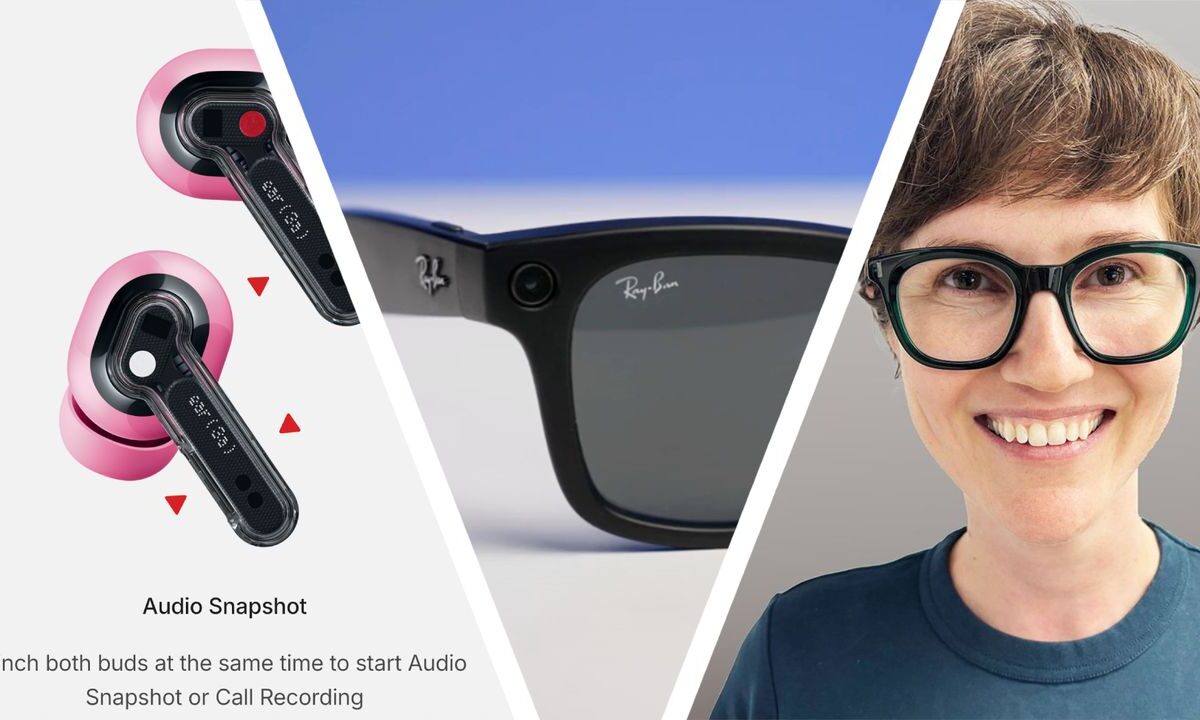
'The chicification of surveillance is deeply concerning'
When you purchase through links on our site, we may earn an affiliate commission. Here’s how it works.
Think our tech is getting a little too smart for its own good? You're not alone.
In the past few weeks, TechRadar brought you three key updates on the invasion of your privacy without consent, owing to the AI learning models nestled in our gadgets and appliances.
In case you missed the latest missives, new LG TVs can record you in the background and will ask you to notify anyone who comes into your home, to comply with "wiretapping" laws. Next up, Nothing's new earbuds offer a 'squeeze the stems to record calls' feature being called Audio Snapshot, which is tantamount to phone-hacking in cute packaging. And finally, there's the continued backlash over Meta's AI glasses. Despite the social media giant implementing a feature that stops recordings if a wearer tampers with the front-firing light, hatred of these and other smart shades (oft-renamed 'pervert glasses' by the general public) has led to people calling for camera-less glasses.
So, in a world where our glasses can watch, our earbuds can hear, our speakers can speak and our TVs are a little too closely invested in our lives for comfort, how much more will we allow our tech to intrude before enough is enough — and what can we do to regain some privacy?
'I see this as part of a bigger pattern that is a push by technology and other forces to normalize consumer surveillance'
Lauren Hendry Parsons is a seasoned advocate for digital rights and a gifted speaker in making these complex issues accessible. She is a director within the non-profit Mozilla Foundation, helping to make the organization's push for a "technology future that serves and is shaped by the people who use it" a message that resonates on a global scale.
Luckily, she has agreed to talk to me on the growing concern over surveillance tech's prevalence in our lives.
Parsons states that in order to zoom in on these issues, we need first to zoom out. "I see this as part of a bigger pattern," she begins, "that is a push by technology and other forces to normalize consumer surveillance — surveillance of people by other people — and that's something that we're seeing cropping up a lot."
Sign up for breaking news, reviews, opinion, top tech deals, and more.
So what's changed — after all, recording devices have existed for some time? The answer is the growing number of places where such surveillance is becoming normal.
"It's something that started in the Internet of Things home devices," she says. "You might talk to a smart speaker, or talk actively to another product that is doing your bidding — but it was usually tied to a place.
"Now, we're seeing the normalization of surveillance-chic behaviors, where fashion influencers are sharing their own Ring doorbells to show off their outfit of the day.
"That moves surveillance from something fixed inside a home, where people can at least see the object and talk about it, to something that's constantly moving through every space and every conversation."