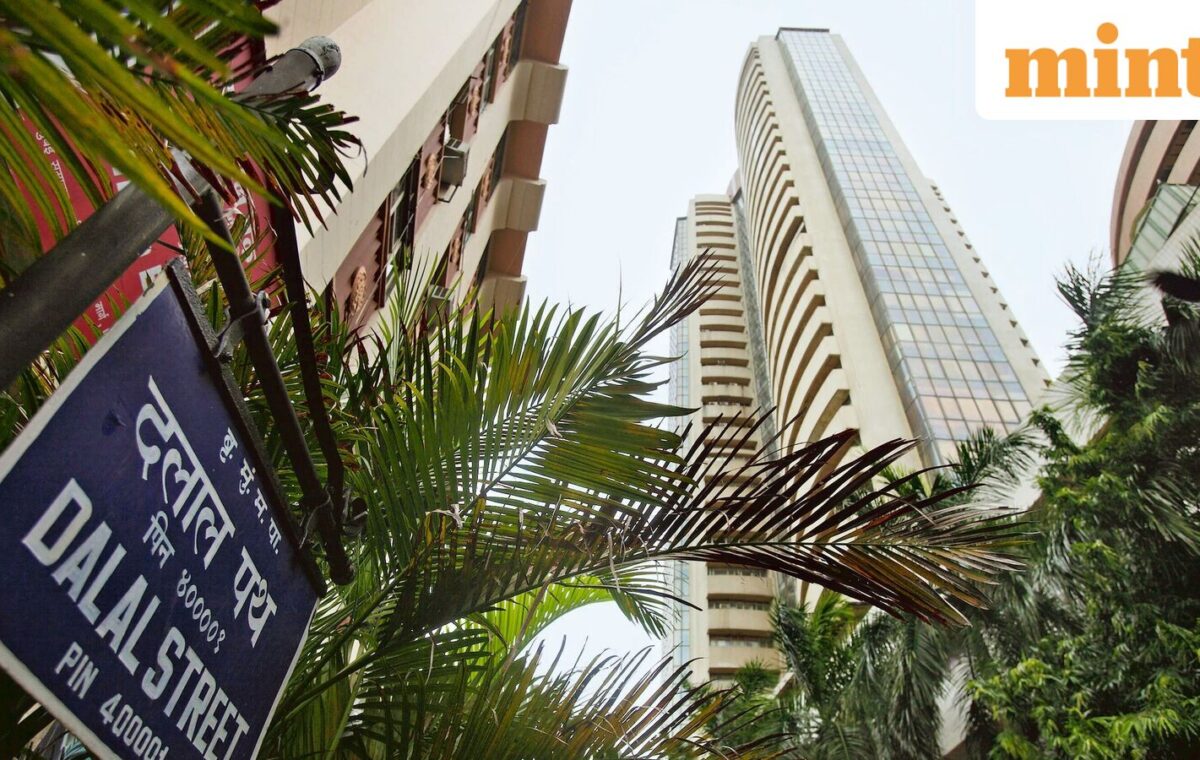
The Indian stock market remained rangebound for the fourth consecutive session on Thursday, 13 August, as uncertainty over a potential US-Iran deal and the reopening of the Strait of Hormuz continued to keep investors cautious even as crude oil prices declined amid the prospects of weak global demand this year.
The Sensex ended 114 points, or 0.15%, higher at 78,079.96, while the Nifty ended at 24,395.85, down 40 points, or 0.16%. The Nifty Midcap 100 index rose by 0.15%, while the Smallcap 100 index inched up by 0.27%.
Oil price benchmark Brent crude declined 2% to trade near $87 per barrel amid speculations that oil demand may remain weak this year due to slowing global economic growth.
The Indian rupee, meanwhile, slipped 11 paise to close at 95.44 per dollar compared to its previous close of 95.33.
The domestic market struggled to find a direction- a trend seen over the last few sessions- due to persistent uncertainty over a US-Iran deal.
As per reports, Iran and the US, both have claimed that they control the Strait of Hormuz, the narrow waterway through which around one-fifth of the world’s crude oil shipments pass.
Iran closed the Strait in the early days of the war, which began on 28 February this year. The US also imposed a naval blockade of the Strait of Hormuz, forcing Tehran to halt its share of oil shipments.
Softer retail inflation numbers for July in the US and India allayed concerns over an imminent rate hikes by the US Fed and the RBI, but oil price volatility keep the inflation risk prominent.
The US Consumer Price Index (CPI) inched up 0.1% month-on-month in July after dropping 0.4% in June. Year-on-year, the CPI increased 3.4% after rising 3.5% in June.
India’s Consumer Price Index (CPI)-based inflation, or retail inflation, accelerated to 4.45% in July, slightly above the median estimate of 4.4% forecast by 18 economists in a Mint poll.
"Softer-than-feared inflation readings in both the U.S. and India provided support to investor sentiment, reinforcing expectations that the Fed and the RBI can maintain a patient policy stance in the near term. Yet, elevated crude oil prices remain a key overhang, with geopolitical uncertainty in the Middle East preventing a stronger risk-on move," Vinod Nair, Head of Research, Geojit Investments, noted.
"In the near term, market direction is likely to be shaped by developments in energy markets, geopolitical risks and the sustainability of foreign capital inflows," said Nair.
Tata Consumer, Tata Motors Passenger Vehicles, and NTPC ended as the top gainers in the Nifty 50 index.
On the flip side, Hindalco, ICICI Bank, and UltraTech Cement ended as the top laggards in the index.
Nifty Metal declined 1.05%, ending as the top loser among sectoral indices. Bank Nifty dropped 0.43%, while the Financial Services index declined 0.37%.