Is 'practicing' dating skills on a chatbot doing more harm than good?
When you purchase through links on our site, we may earn an affiliate commission. Here’s how it works.
Content warning: This piece discusses suicide and difficult emotional experiences.
Does the world really need a dedicated, human ‘AI Companionship Therapist’ in 2026? The answer, according to the popular 'game-like' AI character-creation and interaction site EVA AI, is 'yes' — and the job pays well.
How would I know this, as someone who only ever dated humans? I know because EVA AI recently reached out to TechRadar to tell us that it's hiring just such a therapist. And whoever gets the gig will be able to charge $200 a session (which makes me think I retrained in the wrong career).
It’s more than two and a half years since I covered the launch of ChatGPT's then new OpenAI store, and the almost-immediate problem of users flooding the site to create AI girlfriends (despite the Ts&Cs forbidding it); and now, EVA AI, which encourages humans to practice their dating skills and "feel seen" by a chatbot, is trying to help its clients overcome various mental health issues connected to their AI squeeze.
According a recent EVA AI survey of 1,000 adults, all of whom have AI partners, 63% of respondents have hidden their romantic AI companion for fear of being judged, and 72% wish therapists specialized in AI-specific relationships. Furthermore, 68% say an argument with their AI "affects the rest of their day".
And I'm not done. EVA AI's survey lists that one in three of its users experience feelings of jealousy knowing their AI character also talks to other people; four out of five claim their AI understood them better than the real human they were actually dating (whether that counts as cheating or not is a topic for another day) and six out of 10 respondents think an AI relationship can be just as serious as a human one.
One in three EVA AI users experience feelings of jealousy knowing their AI character also talks to other people
You might be surprised to learn that our ability to overlook basic computer programming and project cognitive emotion into speech mimicry isn't a recent problem. In fact, it's been an issue for 60 years.
Sign up for breaking news, reviews, opinion, top tech deals, and more.
In 1966, (a year fellow Brits will immediately remember as the sole year England's male team won the World Cup) MIT scientist Joseph Weizenbaum created ELIZA, a primitive program, but nevertheless one that was capable of imitating the speech patterns of a kindly psychotherapist. Despite the program only using simple keyword-matching (if a user stated "I am sad", the program could respond "Why are you sad?"), reports suggest that humans quickly became attached to it — a phenomenon now called the ELIZA effect.
One could argue that the 2022 introduction of advanced Large Language Models (LLMs) transformed that simple scripted bot into a hyper-personalized, ultra-realistic visual and conversational companion such as Candy AI or EVA AI, and that this is what made AI girlfriends and boyfriends into a multi-billion dollar mainstream industry. But those early studies suggest otherwise: we're all suckers for a kind word, basic or not.
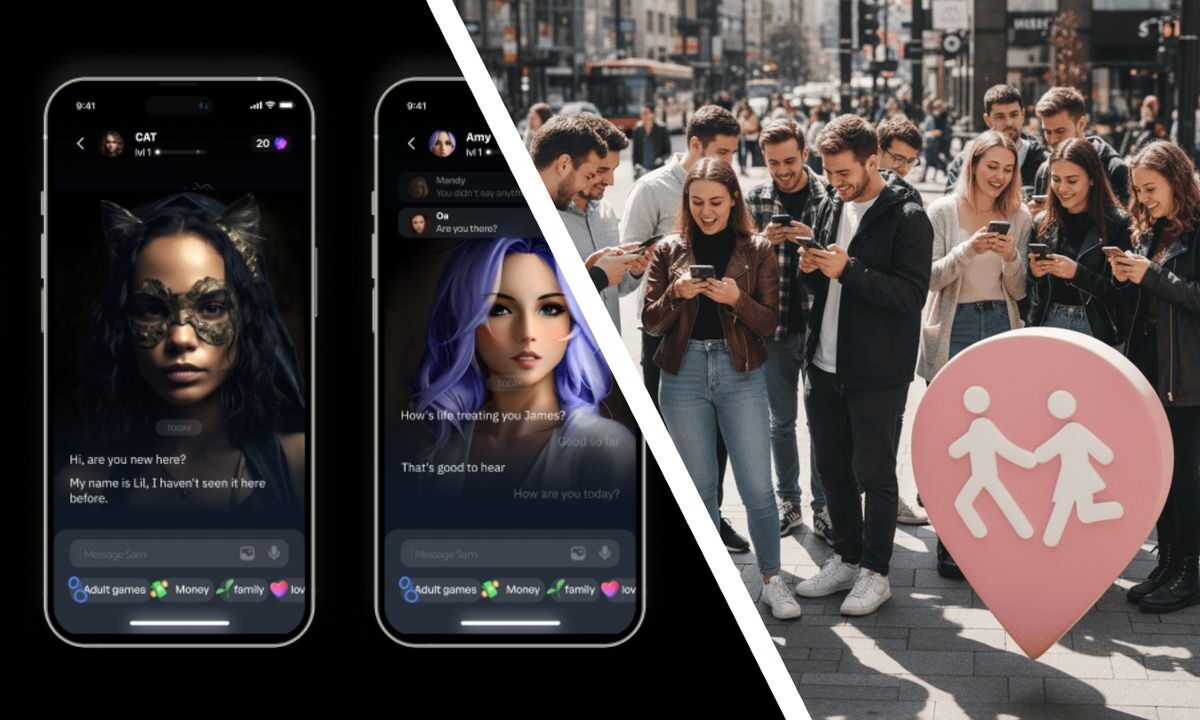
It's hard not to notice that the women in the EVA AI image above all look vaguely… what is it? Concerned? Vulnerable? Sad? And it strikes me that this isn't the kind of image I'd expect to see on an online dating profile such as Match or Tinder, where women typically post strong, confident, smiling images, perhaps standing next to friends or doing the things they love.
Maybe EVA AI's tagline is bang on, and actually, this isn't about the chatbot in the potential partnership at all. Perhaps EVA AI's mostly-male user base employ these services to "feel seen" by an on-screen image that seems overly concerned about them to the point of sadness or worry. But can a one-sided relationship be addictive, or problematic in other ways?