The iPhone of the 90s was well ahead of its time
When you purchase through links on our site, we may earn an affiliate commission. Here’s how it works.
What was the first ever smartphone? Ask most people and they'll understandably say the original Apple iPhone, which launched in 2007. But if the definition is a practical device that can send emails and browse the web as well as make calls and send text messages, then there's a strong case for the Nokia 9000 Communicator — which launched 30 years ago today on August 15, 1996.
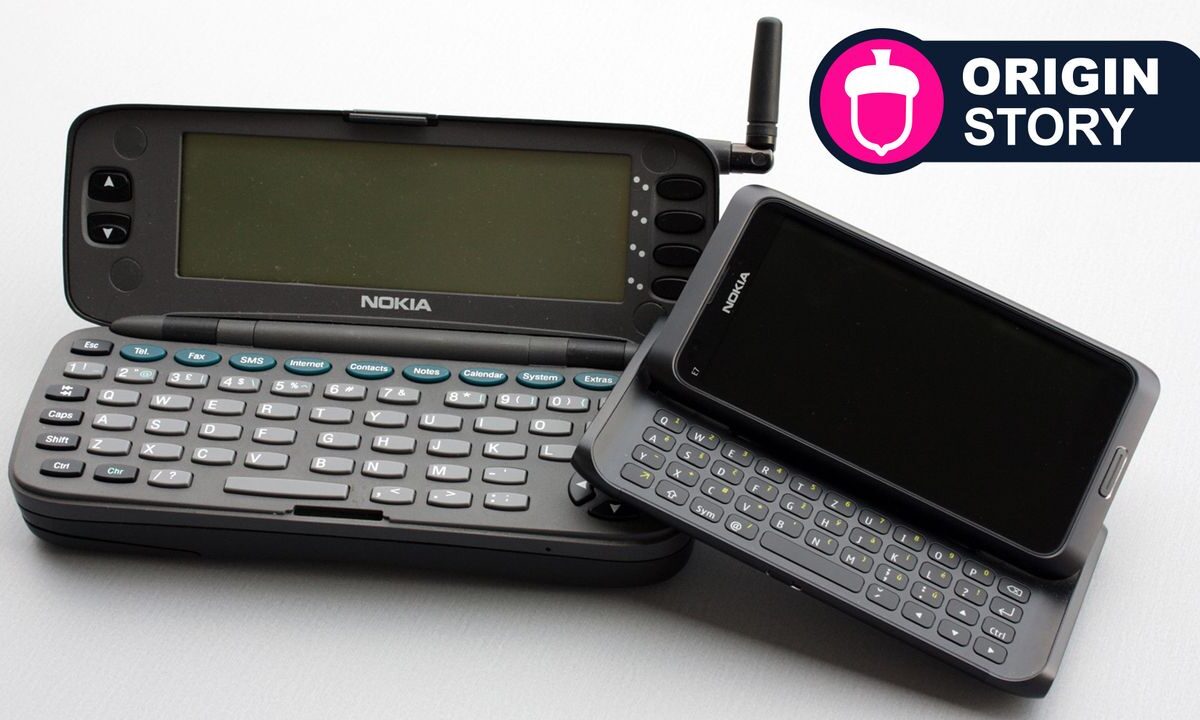
The first Communicator looked like a chunky 1990s mobile phone, but open it up, and there was a keyboard and grayscale LCD screen inside. You could get some actual work done on the go with this phone, as the ads of the time (see below) were keen to stress, and it could even send faxes.
"If you want to get on the web while sitting in a pub or on a mountain, wait until 15 August and you will be able to do so in style," said a review from the The Independent in July 1996. No other phone promised to combine email, fax, a personal organizer and wireless web access in one (just about) pocketable device.
In honor of this fine gadget — now very much a museum piece — we're taking a look back at what made the Nokia 9000 Communicator so special, the legacy it left behind it, and how Nokia failed to capitalize on its innovations. This phone never did change the world like the iPhone did, even though it launched eleven years earlier.
30 years ago, everything about the Nokia 9000 Communicator felt cutting edge. You got that 4.5-inch grayscale LCD, running at a resolution of 640 x 200 pixels, and there was an Intel 386 processor inside. 8MB of memory was included, with 2MB as user storage, 2MB for running programs, and 4MB for holding the operating system and its apps.
"The most spectacular piece of software is the World Wide Web browser. The Web is a great way to look up information — a kind of electronic Yellow Pages for the whole world, and with the Nokia 9000 you can carry this in your pocket."Simon Rockman, Personal Computer World (June 1996)
A fascinating 'first impressions' review of the Nokia 9000 Communicator in Personal Computer World's June 1996 issue reveals how big a deal this mix of a personal organizer and mobile phone was at the time. "Put them both together with some cunning software and you've got a PDA with email, fax and, most impressive of all, internet web browsing facilities. Quite easily the most exciting 397g we've seen for ages," the magazine noted with wonder.
The first Communicator also serves as a reminder of the limitations of phone technology time: there was only room in the call history for 10 dialed calls, 10 received calls, and 10 missed calls, for example. But whatever limits there were, the Communicator was pushing against them.
Sign up for breaking news, reviews, opinion, top tech deals, and more.
Not everyone was impressed with its performance, though. An early review from The Independent in July 1996 said: "The Communicator behaved rather poorly when accessing live pages. Given the flaky nature of the web, this could be down to Vodafone, Pipex, Nokia or just plain normal web headaches."
The apps centered around the telephone, fax, SMS, email, and internet features. The browser could render graphics as well as text — not that there were many images on the web back in 1996 — and it was also possible to use the device to dial into bulletin boards and corporate mainframes.
This was very much for business users on the go. There was a rudimentary word processor program included for doing work via the QWERTY keyboard, while other apps included a calendar for meetings and appointments, a calculator, and a world clock so you could see what time zones your colleagues and clients were operating in.
As an added bonus there was also a ringtone composer (remember them?), plus options for connecting to a computer for exchanging files. Packing all of this into a unit that could still fit in your pocket was a significant achievement by Nokia and its engineers — it featured over 1,000 components, compared to the 100-150 that was typical for the time.