Published: 00:36 BST, 7 August 2026 | Updated: 00:39 BST, 7 August 2026
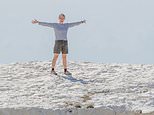
Apparently oblivious to the danger, reckless tourists pose for selfies at the edge of a cracked and crumbling chalk cliff 170ft above a rocky beach.
The alarming scene at Seaford Head in East Sussex follows warnings about the risks of standing on the brink of the cliff, from which huge sections regularly plunge to the shore.
Distressing pictures showed members of the public and sometimes children stood perilously close to the cliff edge as they smile and pose for the camera.
The striking white landmark is riddled with so–called tension cracks – but that didn't stop more than a dozen visitors ignoring warning signs so they could take photographs.
Seaford Head attracts thousands of walkers on the King Charles III England Coast Path each year. Sightseers are urged to keep at least five metres from the edge while admiring the Seven Sisters cliffs between Brighton and Eastbourne.
East Sussex County Council has issued a warning to visitors that the cliffs are extremely unstable.
The statement said: 'Every year, thousands of tons of chalk falls from the cliffs.
'Despite warning signs, people often stand near the edge. Chalk cliffs are extremely unstable and can fall at any time.
Distressing pictures show members of the public and sometimes children stood perilously close to the cliff edge at Seaford Head as they smile and pose for the camera
The striking white landmark is riddled with so–called tension cracks – but that didn't stop more than a dozen visitors ignoring warning signs so they could take photographs
The clifftop is also home to one of England's oldest golf courses, Seaford Head Golf Course, which is in danger of falling into the sea after a spate of cliff falls triggered by extreme weather.
It is now planning to move its world famous 18th hole tee and 17th green as a safety measure after repeated falls left golfers perilously close to the cliff edge.
The club says the accelerating coastal erosion which threatens its future is being caused by climate change.
A recent fall saw hundreds of tonnes of the chalk cliff face collapse to the beach below.