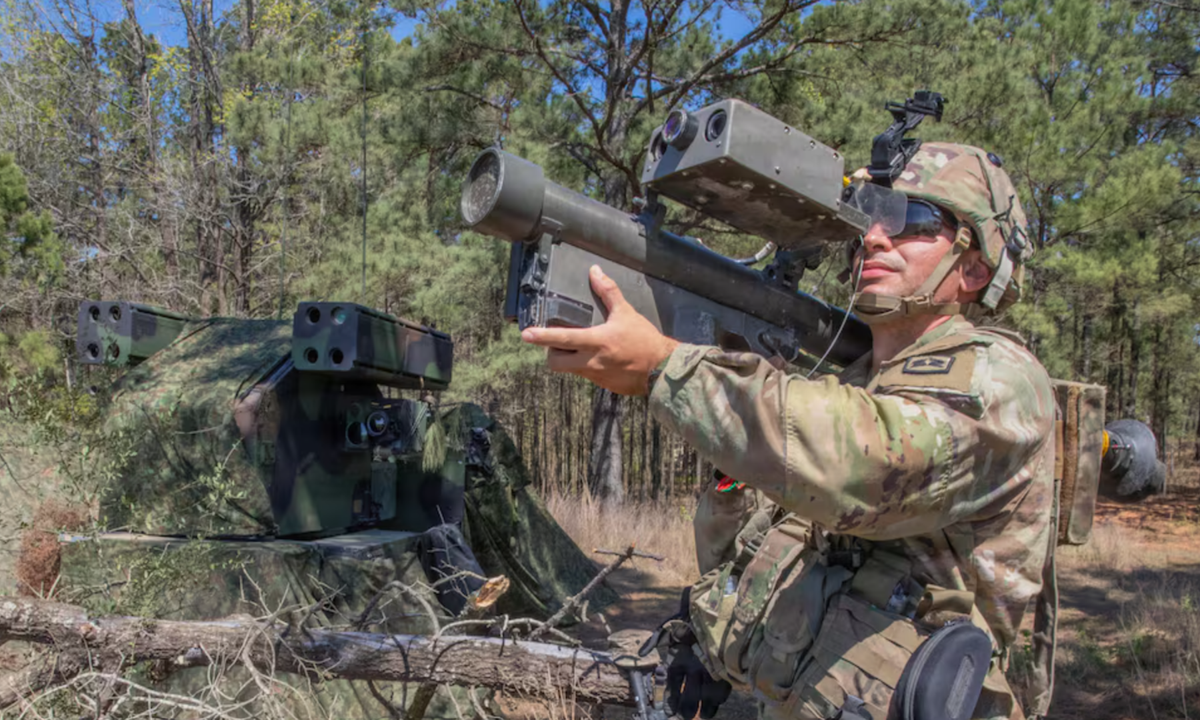
US Army plans for thousands of affordable NGCM missiles
When you purchase through links on our site, we may earn an affiliate commission. Here’s how it works.
The US Army has launched a search for a new surface-to-air missile called the Next Generation C-sUAS Missile (NGCM), designed to destroy small drones while extending the range of existing counter-unmanned aircraft systems.
According to the Army's requirements, the missile should engage Group 2 drones like Boeing's ScanEagle, weighing between 21 and 55 pounds, flying below 3,500 feet at speeds under 250 knots.
It must also defeat larger Group 3 drones like Insitu's RQ-21 Blackjack, weighing less than 1,320 pounds, operating below 18,000 feet while remaining under 250 knots.
The Army expects the missile to leave its launcher within five seconds after the operator issues a firing command during an engagement.
Initial performance requirements call for intercepting drones at 6 kilometers altitude beyond 16 kilometers, while future objectives extend engagement beyond 25 kilometers at 8 kilometers altitude.
Guidance should rely on a radar seeker, allowing the missile to operate alongside existing air defense networks supporting broader battlefield surveillance.
“The Army is looking for NGCM to be produced and integrated into the existing Coyote Launch System to provide extended range, rapid launch time, and reduced time-to-target over current effectors,” the notice said.
Sign up to the TechRadar Pro newsletter to get all the top news, opinion, features and guidance your business needs to succeed!
"The missile must be compatible with the Coyote Launcher with minimal to no modifications," it reemphasized.
The repeated references to the Coyote Launcher indicate that the Army wants the NGCM to integrate with its existing counter-drone infrastructure.
The requirement indicates the Army intends to build on its existing air defence architecture rather than introduce a new launch platform.
Compatibility is also required with Sentinel A3 and A4, LTAMDS, and TPQ-53 radar systems, allowing easier integration without extensive infrastructure changes.
Contractors have until August 20 to respond to the Army's Sources Sought notice outlining the proposed capability.