Published: 17:12 BST, 31 August 2026 | Updated: 22:05 BST, 31 August 2026
Five women waited on the ward, sitting up anxiously, stripped bare to their waist. This was on their surgeon’s orders, to save him time as they were examined by him ahead of their surgery that morning.
He led the way around the beds at The Royal Marsden Hospital with me, a trainee oncologist, bringing up the rear of the team.
This was the reality of breast cancer treatment in the 1970s when I began my career.
Did those women mind? Did they feel embarrassed, sitting half-naked with seven men around their bed? No one ever asked them, as far as I was aware. But even at the time it felt awkward to me. Such a practice would be inconceivable nowadays. And it’s not the only thing that’s changed.
In the 1970s, most women who developed breast cancer died of it – at least 60 per cent. Today, most women are cured; fewer than 30 per cent die.
I’ve changed too. Today, 50 years on, I am no longer the junior at the back – I became, until recently, a professor of cancer medicine at The Institute of Cancer Research, as well as being head of the breast unit at The Royal Marsden Hospital, in London. I’ve conducted international trials into treatments for breast cancer, among them research into the use of the drug Herceptin for early breast cancer.
And, of course, I’ve cared for many thousands of women.
Through treating them, I’ve learnt so much, which I want to share with you – with the wish this insight might give you hope if you or someone you love is diagnosed with breast cancer. For there are many reasons to be hopeful. The future is much brighter for those who have breast cancer than it was…
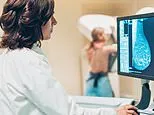
The future is much brighter for those who have breast cancer than it was in the 1970s, writes Professor Ian E Smith. Today, most women are cured; fewer than 30 per cent die
Not long after I became a consultant around 1980, I treated a gentle middle-aged woman called Mrs Baker. It’s no understatement to say she changed my professional life.
Three years after her original breast cancer diagnosis, she developed secondary cancer in her liver, for which there is no cure.
Of course, this is very serious. But you can live with metastases in the liver, sometimes for many years, without any significant symptoms, provided the disease is controlled with treatment.
I started Mrs Baker on chemotherapy. The cancer on her liver did regress but she found the side-effects – nausea and exhaustion – very hard.
Each month, I cajoled her to have another course; each month, she reluctantly agreed.