The following is a lightly edited transcript of the August 24 episode of the Daily Blast podcast. Listen to it here.
Greg Sargent: This is The Daily Blast from The New Republic, produced and presented by the DSR Network. I’m your host, Greg Sargent.
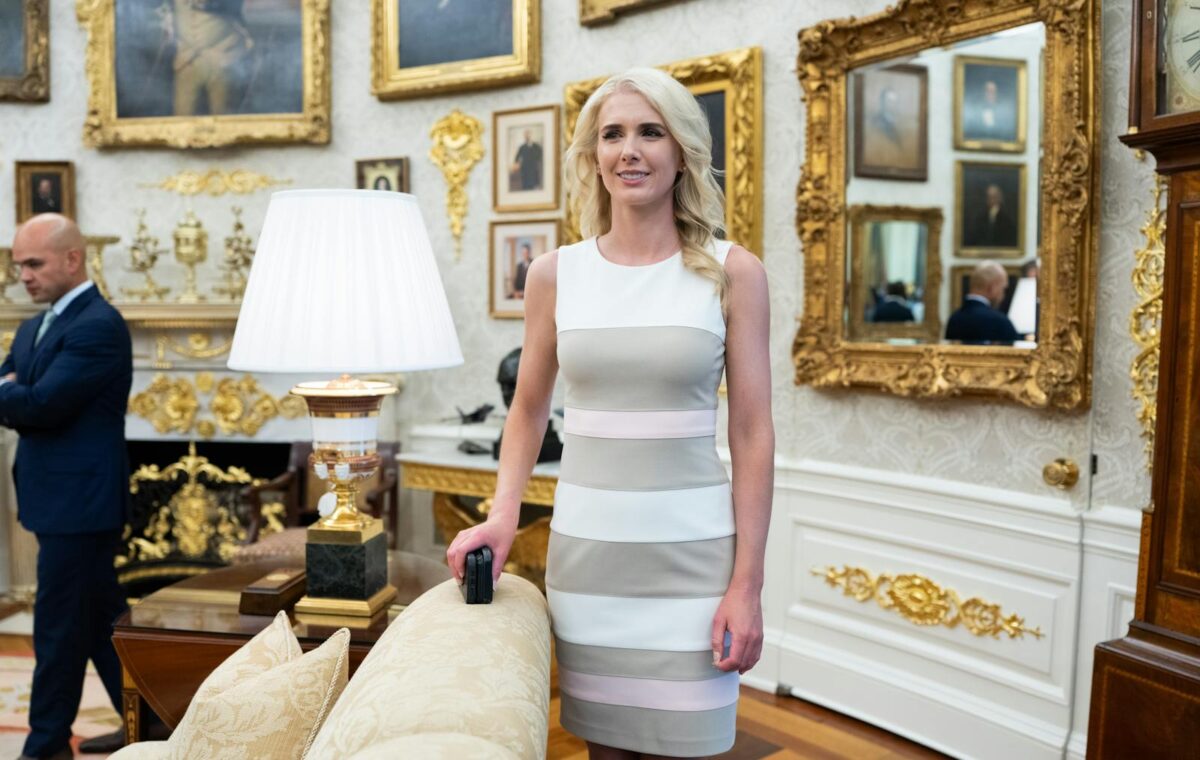
The furor around Donald Trump’s very devoted young aide, Natalie Harp, isn’t abating in the least, and new reporting indicates that anger inside the White House over this story—all driven by the fury of one person in particular—might have backfired, making the story even worse for him. This comes as new leaks also suggest Harp’s role is even more unnerving than we thought.
The whole saga indicates something important about Donald Trump’s political weakness right now, and how Dems can exploit it in today’s information environment. We’re talking about it all with Democratic strategist Greg Greene, who held the job of managing social media accounts under President Obama and wrote about this experience for The New Republic. Greg, good to have you on.
Sargent: OK, so last week Senator Jon Ossoff pointed out that Trump doesn’t like doing the job as president, and instead likes to spend his time traveling with Natalie on the presidential plane. The White House and MAGA went absolutely haywire, resulting in a story that continues right now. Greg, can you bring us up to speed on all this?
Greene: Yes. Jon Ossoff really set off a furor by bringing Natalie into the conversation, and the story has spun out of control almost since then for the White House. What I would say is that I really got interested in this thinking about how Natalie Harp has access not only to the president himself, but also to his phone and to his social media accounts, which really raises questions, in my view, based on my experience, about the appropriateness of her role without supervision in the content that goes out.
Sargent: Yeah, and we’re going to get to that in a second. But we’re now getting new reporting from The Atlantic that reports that the White House freak-out over Harp was really a self-own. The White House publicly tried to humiliate journalists who wrote or asked about Harp, but that only persuaded more outlets that had ignored her role to write about her.
And then The Atlantic reports that aides inside the White House grew angrier because, according to sources, they were, quote, “taking their cues from a furious president.”
Greene: I agree with the White House staffers who believe that this approach to the conversation has really backfired on the White House. Natalie Harp is someone who people have covered since at least 2024.
Maggie Haberman has written about her role in the White House operation and the campaign operation before, but she managed to fly under the radar before now—when, thanks to the escapade in Ankara, Turkey, with the catering cart, she became a live wire in news coverage, in a heated story, and has been since then talked about in a way that really hasn’t served her interests or the president’s, in a time when the president’s approval ratings are already in the tank.
Sargent: Absolutely. And Greg, we know how Trump operates. It goes all the way back to Roy Cohn. It’s never concede error, always attack, always try to humiliate at all costs. What’s the difference between the way Natalie Harp and Trump are doing this versus the way you did it under Obama?
Greene: Well, the biggest difference is that there were many layers between myself and the president. As I say in the piece for The New Republic, I never wrote on a plane, never mind a catering cart. I spent my time at the Democratic National Committee working with colleagues there and consulting with the digital director, the communications director, and people inside the White House communications office to figure out what priorities we had for getting messages out, and to shape our posts around those agenda items.
So it was never an instance of one staffer—never mind myself—getting into the president’s ear and proposing material, because really it was an operation designed to support the presidency, rather than one person just whispering into another person’s ear.
Sargent: And you also didn’t decide what the president saw and what he doesn’t see. If the White House had said nothing, most reporters would have moved on very quickly. But then the vehemence of the reaction kind of stirs the interest of the reporters, because it starts to look like there’s some reason the White House doesn’t want this relationship with this young aide talked about. And boom, there’s the ingredient to really make it blow up.
You’ve been doing this stuff a long time. What does this tell us about how Washington works?