By STACY LIBERATORE, US SCIENCE & TECHNOLOGY EDITOR
Published: 21:22 BST, 20 August 2026 | Updated: 21:26 BST, 20 August 2026
A sprawling tornado threat has put millions of Americans on alert Thursday as dangerous thunderstorms are barreling over a large stretch of the Mid-Atlantic.
The National Weather Service issued a Tornado Watch for parts of Maryland, Virginia, New Jersey, Pennsylvania and Delaware, along with Washington DC.
The watch is set to remain in force until 10pm ET on Thursday.
The zone stretches through the Washington-Baltimore-Philadelphia corridor and includes communities surrounding Chesapeake Bay, Delaware Bay and the lower Delaware River.
Residents should keep emergency notifications turned on, monitor local forecasts and identify the safest room in their home before storms arrive.
A tornado watch means atmospheric conditions are favorable for tornadoes, but it does not mean a twister has been confirmed.
If a tornado warning is issued, people should move immediately to a basement, storm shelter or small interior room on the lowest floor, away from windows.
Anyone in a mobile home, vehicle or outdoors should plan now how to reach a sturdy building and should not wait until a storm is overhead.
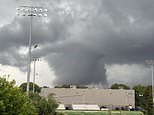
The National Weather Service issued a Tornado Watch for parts of Maryland, Virginia, New Jersey, Pennsylvania and Delaware, along with Washington DC. Above is a tornado in new Jersey last month
The NWS alert encompasses 39 counties, seven independent cities and Washington, DC, but it does not place every part of the five states under the watch.
Maryland has the largest area affected, with 19 counties included: Anne Arundel, Baltimore, Calvert, Caroline, Carroll, Cecil, Charles, Dorchester, Harford, Howard, Kent, Montgomery, Prince George’s, Queen Anne’s, Somerset, St. Mary’s, Talbot, Wicomico and Worcester.
Baltimore City, which is legally separate from Baltimore County, is also inside the watch area.
The Maryland zone stretches from the Washington suburbs and Baltimore region to Southern Maryland and across the Eastern Shore, putting communities on both sides of Chesapeake Bay at risk.