Here’s the scene: You’re catching up with a friend over coffee when your elbow clips your cup, sending espresso all over her brand-new phone. You feel awful. You mop up the spill, apologize five times, and bolt—then avoid her for days, turning a ruined phone into a damaged friendship.
The problem isn’t that you feel awful. It’s that awful doesn’t give you much to work with. It tells you the situation feels bad, but not why—or what to do about it.
Katie Hoemann, an assistant professor of psychology at the University of Kansas, uses a version of this scenario to explain emotional granularity: the ability to make precise distinctions among all the emotions you’re experiencing in a particular situation. Instead of stopping at “awful,” you might recognize guilt about damaging the phone, embarrassment about causing a scene, and anxiety that your ticked-off friend isn’t going to forgive you.
Those distinctions don’t just describe the moment. They point to different responses. Guilt might push you to offer to replace the phone, embarrassment might explain why you want to disappear, and anxiety might prompt you to ask your friend whether your relationship is OK. Distinguishing among them gives you access to what Hoemann calls “situated scripts”—a clearer sense of what to do and say next.
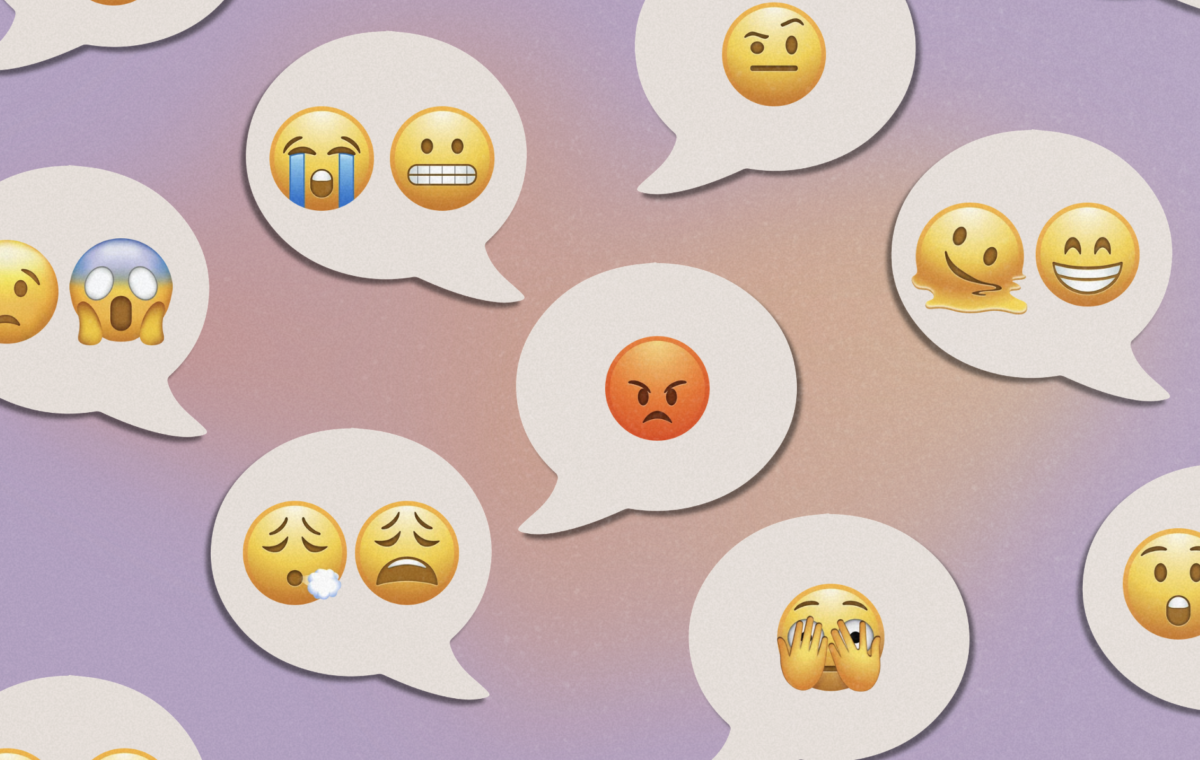
Lisa Feldman Barrett, a distinguished professor at Northeastern University, began documenting these differences in the 1990s. She compares emotional granularity to seeing color: One person might only notice red; another sees crimson, scarlet, burgundy, and maroon. Similarly, some people experience anger, sadness, and fear as different versions of bad, while others experience each one distinctly—and can make even finer distinctions among, say, anger, irritation, and frustration.
This isn’t simply a matter of collecting impressive new words. “The words are not the point,” Barrett says. It’s about developing a more precise understanding of what’s happening inside you, in this particular situation. The clearer that understanding becomes, she says, the better you can tailor your response.
When all you know is that you feel bad, there are almost endless possible explanations: Maybe you’re lonely. Maybe you’re ashamed of something you said. Or maybe you’re disappointed that a friend let you down, resentful that your hard work is going unnoticed, or anxious about tomorrow’s doctor’s appointment. Each situation calls for something different.
“When there’s a precise cause, you can have a precise response,” says Eli Kraiem, a clinical psychologist in New York. If you’re lonely, you might call someone. If you’re resentful, you might need to have a difficult conversation. And if you’re anxious, you might make a plan, seek more information, or do something that helps calm your body. “Bad” leaves you with a giant, shapeless problem; specificity gives you somewhere to begin.
That doesn’t mean every feeling becomes a problem to solve. “Sometimes feelings don’t need solutions,” Kraiem says. “Sometimes they just need to be recognized.” Realizing that you’re not merely stressed but also grieving, for example, might not produce an obvious next step. But it can help you stop treating your sadness like a productivity problem—and give yourself permission to experience it.
Research has repeatedly linked higher emotional granularity with healthier ways of navigating difficult moments. In one study of young social drinkers, people who distinguished more precisely among their negative emotions consumed about 40% less alcohol when they were experiencing intense distress than those with lower granularity. Other daily-diary research found that people who differentiated among their emotions reported fewer aggressive tendencies when they were angry. A review of the literature has also linked higher granularity with more effective emotion regulation and fewer symptoms of depression and anxiety.
Those findings don’t prove that pausing to name three feelings will produce all of those benefits. Much of the research is correlational: It tells us that people who habitually experience emotions with more precision tend to fare better, not that one labeling exercise will transform your mental health. Scientists are still working out exactly how to strengthen the skill—and how much practice it takes.
There is, however, some encouraging evidence that people can better develop their sense of emotional granularity. In a study co-authored by Hoemann, people were able to improve their emotional granularity over roughly two weeks of assessments, during which they responded to prompts about their emotions throughout the day and elaborated on those experiences in daily diary entries. A separate study found that people participating in a mindfulness-based intervention improved their ability to differentiate negative emotions, with the improvement still evident four months after the intervention ended—though it may have partly reflected the fact that they were feeling less negative overall.
The next time you catch yourself saying you feel bad, stressed, or off, pause and try to name three specific emotions.
Start by paying attention to your emotional catchalls—the handful of words you use to describe almost everything. Bad, fine, and stressed are obvious candidates, but your favorite might be overwhelmed, annoyed, or tired.
When you catch yourself using one, don’t stop there. Ask: “What does stressed mean right now?” Maybe you’re anxious because you’re underprepared for a presentation, frustrated that your co-worker isn’t helping, or afraid you’ll disappoint your boss. Those emotions aren’t interchangeable, even though they’ve all been crammed into the same word.