Published: 12:59 BST, 12 August 2026 | Updated: 12:59 BST, 12 August 2026
The growing global trade in mummified body parts could unleash ancient fungal spores on the world, scientists have warned.
Experts say the buying and selling of centuries–old hands, feet and heads could release 'a real mummy's curse'.
They revealed there are alarming risks from dormant microorganisms and the toxic materials used to preserve the dead hundreds of years ago.
Dormant fungal spores can become airborne when moved or disturbed, posing health risks to the living, the experts said.
Some could even cause severe poisoning, brain damage, cancer, liver and kidney issues, skin lesions and lung irritation.
'Where mummified remains are transported without appropriate controls or documentation, the living are exposed to various risks,' they wrote in the International Journal of Cultural Property.
'This includes the potential presence of toxic substances historically used to preserve the dead and subsequent changes to the body and associated personal effects due to microbial growth.'
The idea of a 'mummy's curse' first arose after the opening of Tutankhamun's tomb in 1922. It is believed that inhaling spores from the crypt may have contributed to the death of Lord Carnarvon, the chief financial backer for the project.
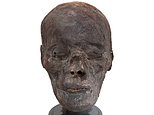
This ancient Egyptian mummy head was previously up for sale for £35,000. Experts have warned there could be alarming risks from dormant microorganisms and the toxic materials used to preserve the remains
It is believed that inhaling spores from Tutankhamun's tomb may have contributed to the death of Lord Carnarvon, the chief financial backer for the project. Pictured: Experts in the burial chamber during the excavation of the mummy
For the study the team analysed 128 online posts on Meta platforms, e–commerce sites, web stores and auction houses and found numerous cases of mummified remains on sale
For the study, the team analysed 128 online posts on Meta platforms, e–commerce sites, web stores and auction houses and found numerous cases of mummified remains on sale.
Some showed them out in the open, in living rooms and in homes with no evidence of temperature control. Sellers provided no safety guidance and often used the regular postal service to transport parts to buyers.
'Isolated body parts, such as hands and feet, were most frequently identified, followed by whole mummified heads,' the researchers said.