Your insider guide to living well in London, with trends and insider recommendations in fashion, wellbeing, travel, beauty and more.
I would like to be emailed about offers, event and updates from Evening Standard. Read our privacy notice.
Sitting in an event space at Imperial’s White City campus, I wondered if it was wise to get inked by a man with only one visible tattoo. Every other needle to graze my skin has been wielded by people who are absolutely covered — face and body — in their own work. The only body art I could spy on Ferdinand Kohle, co-founder of tech company CipherX and co-creator of the new “painless” Microdot Tattoo device, was a tiny 010, in honour of the company’s numerical name.
The Microdot Tattoo was born out of an interaction Kohle had with a very tattooed friend. Kohle, who has a lifelong phobia of needles, gestured to the friend’s arms and asked him: “Why can’t we do all of that, but with no pain?” As a materials scientist with expertise in injectable medicines, Kohle could have easily thought of himself as the immediate answer to his own question. “But I thought, ‘If it’s able to be done, someone will already be doing it,’” he told me, bashfully.
As it turns out: it is, and they weren’t. After coming up with the idea of a pain-free microneedle tattoo during Covid, he applied for a patent and set about perfecting the technology alongside his co-founder Karl-Anton Harms, a qualified doctor with a wealth of microneedle and reconstructive plastic surgery experience.
Now, in 2026, it’s finally available to the public — for £50 a pop, considerably lower than most London tattoo artists’ flat rate. And it is genuinely pain-free.
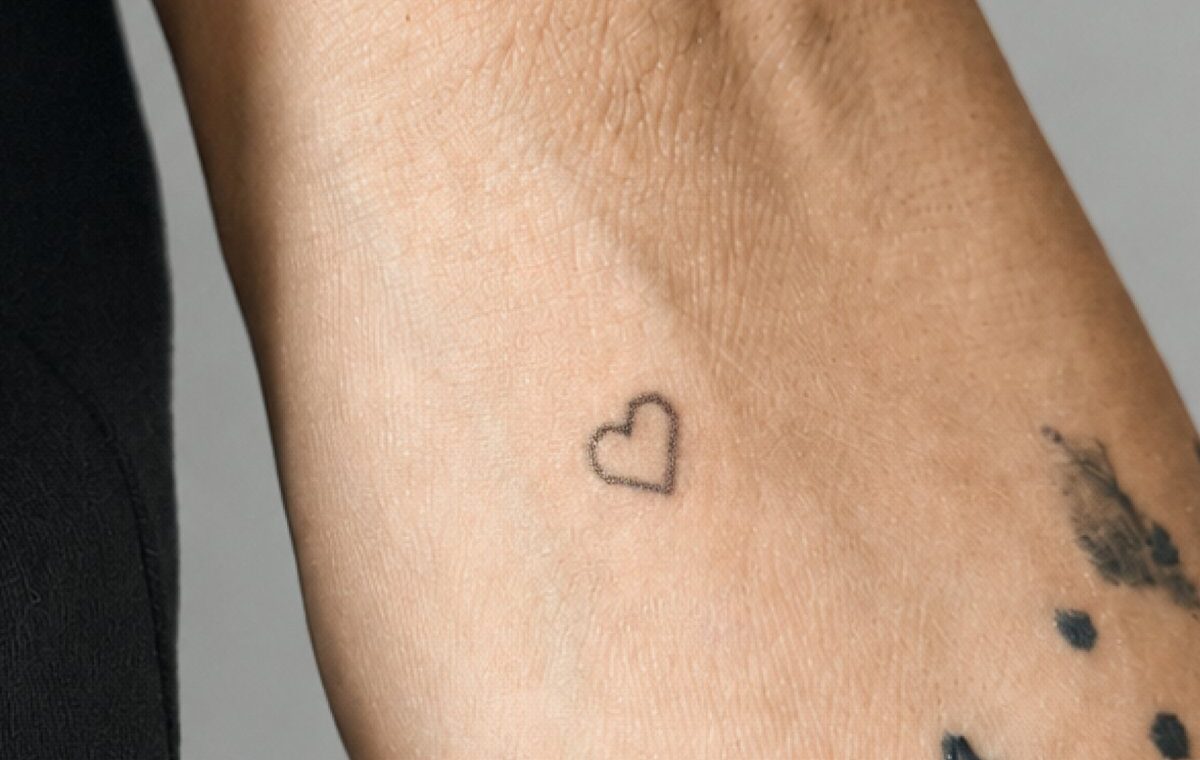
A patch that resembles a glucose monitor is filled with microscopic spikes containing tattoo ink. After being stamped for my tattoo — a small sparkle, around the size of a five-pence piece — by the CipherX device, I simply sat for 15 minutes while the microneedles dissolved into my skin.
While chatting to Kohle, he told me he is aware of raised eyebrows from tattoo artists, who take pride in their craft and are wary of new technology that threatens to replace them.
One such non-believer tells me anonymously that the device is an “insult to professional tattoo artists around the world, who have spent years and lifetimes perfecting their craft — not to mention the centuries of culture and heritage behind tattooing.” Though not everyone is as resistant.
Tal Booker, a fine line tattoo artist based in Notting Hill, says he can understand the opposition but doesn’t necessarily feel it himself.
“I think it’s cool to see new technology coming into the tattoo space”
“I think it’s cool to see new technology coming into the tattoo space,” he says. “Nobody likes change, especially in an industry that hasn’t changed very much in many years.”
Tattoo artists also don’t have to worry too much about being replaced due to practical constraints around CipherX’s technology. It’s currently capable of delivering small tattoos of relatively simple designs to the public, measuring between three to 11mm.
A day in the life: Plastic surgeon Patrick Mallucci
Will the next pandemic be spotted in a hospital or under London’s streets?