This is read by an automated voice. Please report any issues or inconsistencies here.
See more from the L.A. Times in Google Search. Set us as preferred
For most of television history, comedies were filmed with multiple cameras on two or three main sets in front of live studio audiences. But the multicam sitcom has fallen out of fashion, including at the Emmys: Not since “The Big Bang Theory” in 2014 has one been nominated for comedy series, and not since “Everybody Loves Raymond” in 2005 has one won. But one category remains exclusively dedicated to celebrating the art form: picture editing for a multi-camera comedy series.
“[Multicam sitcoms] are one of the things that the Emmys are founded on,” says editor Russell Griffin, nominated this year for “Leanne.” “It’s a category where you realize, ‘This is what created this industry.’”
Now the multicam editing community is fighting just to keep their category at the Emmys. Multicam cinematography and directing have failed to meet the 20-submission threshold to remain separate categories in the last few years, leaving those series to compete against single-camera shows with much larger budgets, like “The Studio,” in all-encompassing categories.
“We were low on submissions,” says Angel Gamboa Bryant, nominated for “The Upshaws,” of this year’s crop. “We were like, ‘Oh, are we gonna get the category or not?’”
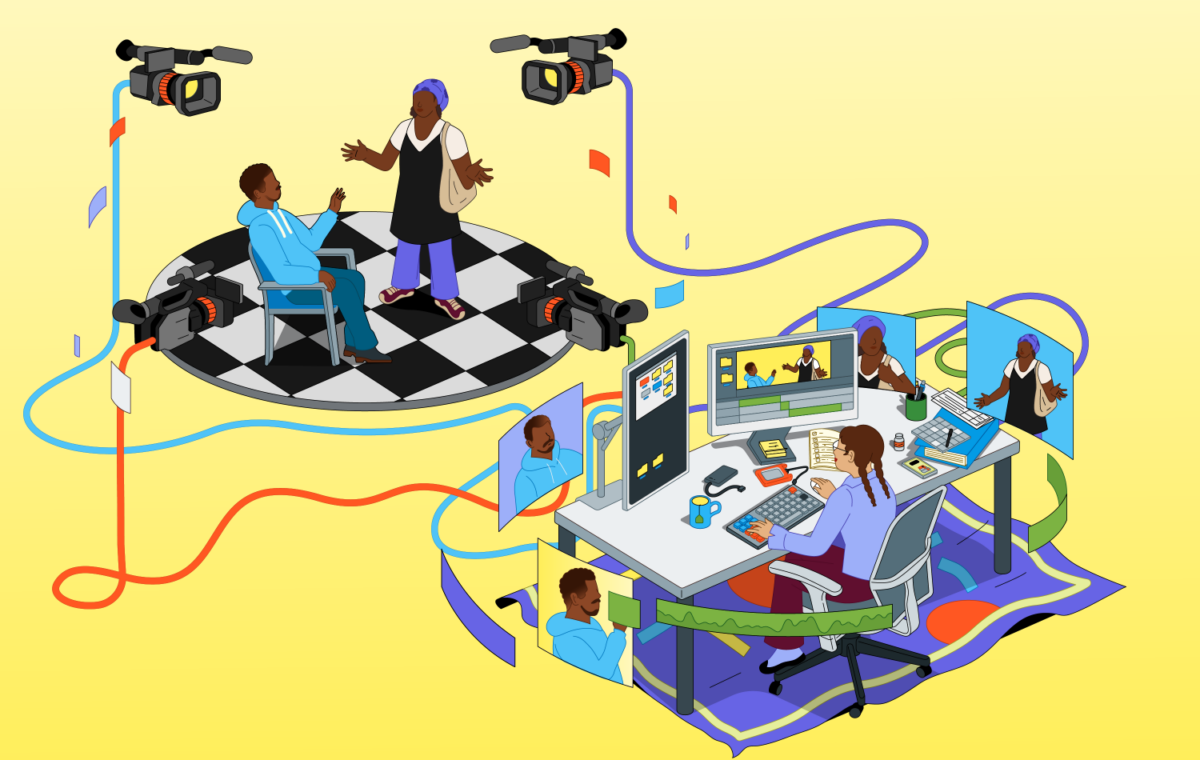
Multicam sitcoms are produced differently than other scripted TV shows. There are traditionally four cameras rolling at once: two on the main characters in a scene, one wide shot of the room, and a tracking camera that can follow any movement.
Editor Jennifer Viola, nominated for “Tyler Perry’s Assisted Living,” says her background in unscripted TV — which also shoots with multiple cameras — became an asset when editing the sitcom. “Your eye gets trained to watching all the angles at the same time.”
Editors on multicam sitcoms learn to work quickly with little margin for error. Each week starts with a table read and rehearsals for an episode. Any material that cannot be shot in front of a live studio audience — because of limitations with sets, timing or special effects — is shot the day before the live taping. The editor then compiles the footage to be ready for the audience to watch the next day to record their reactions.
“I don’t get to start until 10 or 11 at night, and I need to have it done by 4 p.m. the next day to get it to the stage,” says Pamela Marshall, nominated for “Shifting Gears.”
Editing is traditionally a solitary art form, its practitioners working after shooting has wrapped to assemble the story from the captured footage. But multicam editors stay on set during filming. They can suggest doing another take or getting coverage of an actor before moving on.
“Editors who work in multicam, more so than any other industry, are part of the production process inherently,” says Griffin.
One of the defining aspects of a multicamera TV show is the laughter. All the series nominated for editing this year, except “Tyler Perry’s Assisted Living,” are shot in front of live audiences and use real laughter. A multicam editor is often splicing in laughs from different takes, or for Viola, adding the laughs in. The goal is to maintain the rhythm of the episode while also understanding the timing that may make or break a joke for the viewer. “You’re trying to create that live experience, and more specifically, a communal experience for the audience watching at home,” says Griffin.
Changing tastes in comedy have affected how multicams are edited. “I edit differently now than I used to with the popularity of single-cam because the shows move much faster,” says Marshall. “I’ll look at old shows that I did and [think], ‘I would never let that laugh play so long [now].’”
Then there are the unplanned challenges of any production that a good editor can make disappear: Bryant edited a scene in “The Upshaws” to make guest star Marla Gibbs appear to be on a bus even though the actor was unavailable, while “The Neighborhood” masked VFX shots for scenes filmed on a green screen.