Published: 16:26 BST, 4 September 2026 | Updated: 16:26 BST, 4 September 2026
They may look unique and beautiful, but these reptiles are 'suffering silently' from debilitating issues thanks to extreme selective breeding, experts say.
The RSPCA has warned that snakes and lizards with rare markings and unusual patterns are miserable due to their exaggerated physical traits.
This includes a snake whose head wobbles, leaving him with constant dizziness, and a python who has to eat in the dark.
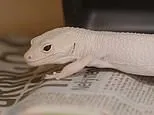
The charity has also cared for a gecko with such bad eyesight that he bumps into the sides of his enclosure.
As with many exotic animals, a culture of the 'more unique, the more they sell for' has exacerbated problems, it warned in a new report.
Lead author Ashleigh Brown, RSPCA scientific and policy manager, said: 'Some of the features that make reptiles appealing as exotic pets to those who know and love them – their unique needs, unusual colours and patterns, and often other–worldly appearance – has also made them vulnerable to experimental breeding for novel and rare traits – such as scalelessness or colour morphs associated with harmful genetic conditions.
'Unfortunately, in many cases, this leads to them suffering in silence.'
This gecko has such bad eyesight that he bumps into the sides of his enclosure. The RSPCA warned exotic animals are 'suffering silently'
Oscar is an albino royal python with striking yellow markings. In his case, he also has extreme light sensitivity affecting both his skin and eyes
Alongside the report, the RSPCA has released a documentary highlighting the crippling conditions some of these reptiles now live with.
In it, a team visit the Brighton Reptile Rescue, in Sussex, to meet some of the animals in its care.
One royal python, called Donnie, has been intentionally bred to have the 'spider' colour morph, which causes the pale–coloured web–like markings on his scales.
However, this also causes what's become known as spider wobble syndrome.
This is a severe neurological issue affecting his inner ear which causes disrupted balance and uncoordinated movement, leading him to wobble, sway or so–called 'star–gaze' – an abnormal upwards tilting of the head.