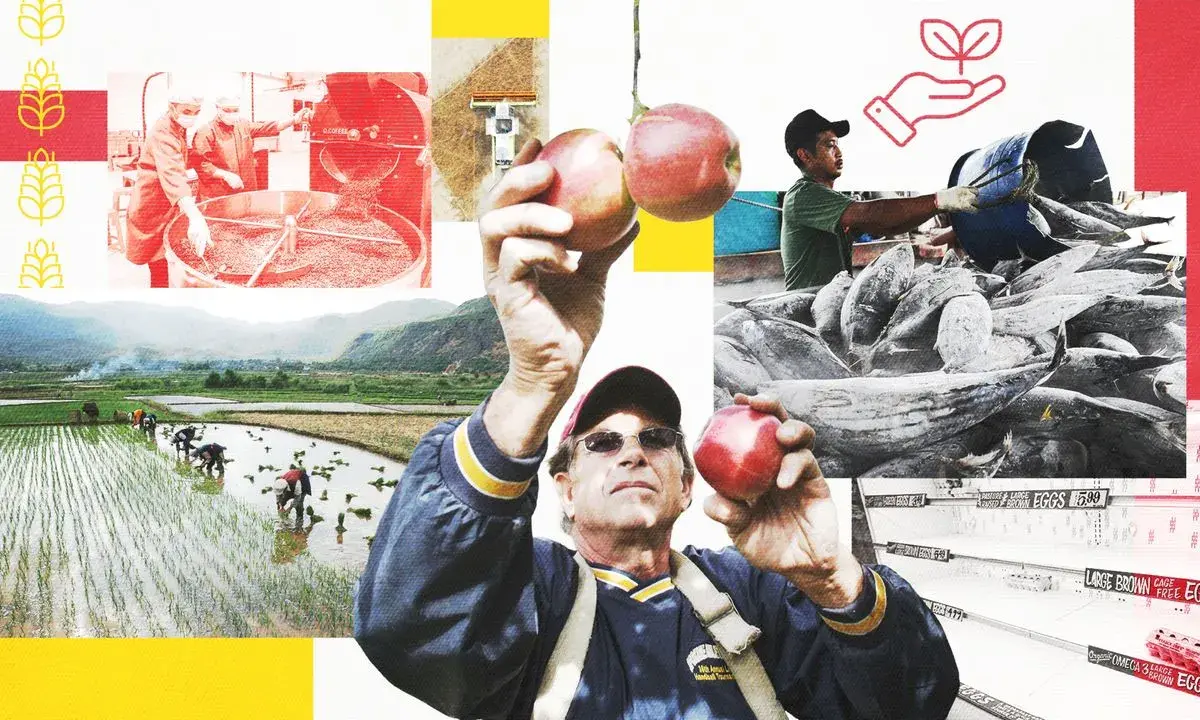
Almost every aspect of our food system will be transformed by climate change.
When you purchase through links on our site, we may earn an affiliate commission. Here’s how it works.
As the planet warms, our environment will be transformed, but so will our bodies. In this series, we investigate the health impacts of climate change, focusing on heat, air quality, food and infection risk. We also evaluate the promising solutions that could help us adapt to our warmer future.
With only a couple of months to go before the harvest season for winter wheat in Colorado, the crop faced a whiplash: After a warm, dry winter, a cold snap plunged the plants into freezing weather for 12 hours, and temperatures soared to nearly 90 degrees Fahrenheit (32.2 degrees Celsius) two days later. When the final harvest numbers were tallied in July, 73% of the crops were in poor or very poor condition. According to early estimates by Colorado Wheat, 2026's winter wheat crop was the smallest in the state since 1965.
Pick a crop, any crop, and you'll hear a similar story: Extreme weather and climate change are rocking the food supply. The warming climate makes food less nutritious, threatens crop survival, and triggers tipping points that would upend farming as we know it.
The impacts will be felt most intensely in less-developed regions of the world, where many people can't afford imported food and climate-related famines and nutritional scarcity are already happening.
Climate change is threatening farming around the globe.
But the U.S. is facing big changes to its food systems too, and no one is immune. Humans have overcome looming agricultural disasters before, but experts say the challenge should not be underestimated.
"There are real food security and nutrition concerns," said Andrew Hultgren, an environmental economist at the University of Illinois, Urbana-Champaign, "especially under these high-warming futures."
As the planet warms, food crops are expected to become less nutritious. That's because, due to plant biology that's not yet fully understood, crops grown under higher levels of carbon dioxide are deficient in zinc, protein, magnesium, iron and other micronutrients. Crops are already less nutritious than they were in the 1950s, but this is partly due to breeding decisions that prioritize yield over nutrition. The carbon dioxide deficiencies will exacerbate this nutrition decline.
The global monthly average concentration of carbon dioxide in the atmosphere is now over 420 parts per million (ppm), well over the preindustrial average of 280 ppm. By the end of the century, those levels will increase to at least 550 ppm in all but the most optimistic scenarios.
That will mean an additional 175 million people will be zinc deficient and an additional 122 million people will be protein deficient by 2050, a 2018 study found. Zinc deficiency has consequences for immune and skin health and may lead to poor growth in childhood; protein deficiency can also cause stunted growth as well as fatigue, muscle weakness and stress fractures. Those figures account only for the effects of carbon dioxide. A cascade of climate shifts and extreme weather may also affect the number of nutrients (and calories) available to the world.
The threats are myriad: Rising sea levels may inundate farmland and lead to saltier soil in coastal regions where, for example, rice farming is common. Soil salinity can make it impossible to grow crops in some regions. Droughts, heat waves, storms or temperature swings like those seen in Colorado this year might take out certain crops in particular places, leading to year-by-year price spikes or shortages. In the U.S., the results might look a lot like the recent egg shortages triggered by bird flu; temporarily empty shelves, price spikes, or even restrictions on the amount a customer can purchase in a visit for an affected food.
Phytoplankton blooms, like the one that grew off the Atlantic coast in April, can make seafood toxic. Such blooms will become more common as climate change worsens.
Climate shifts that harm pollinators and fuel the spread and introduction of plant pathogens such as harmful fungi will also likely reduce crop yields.