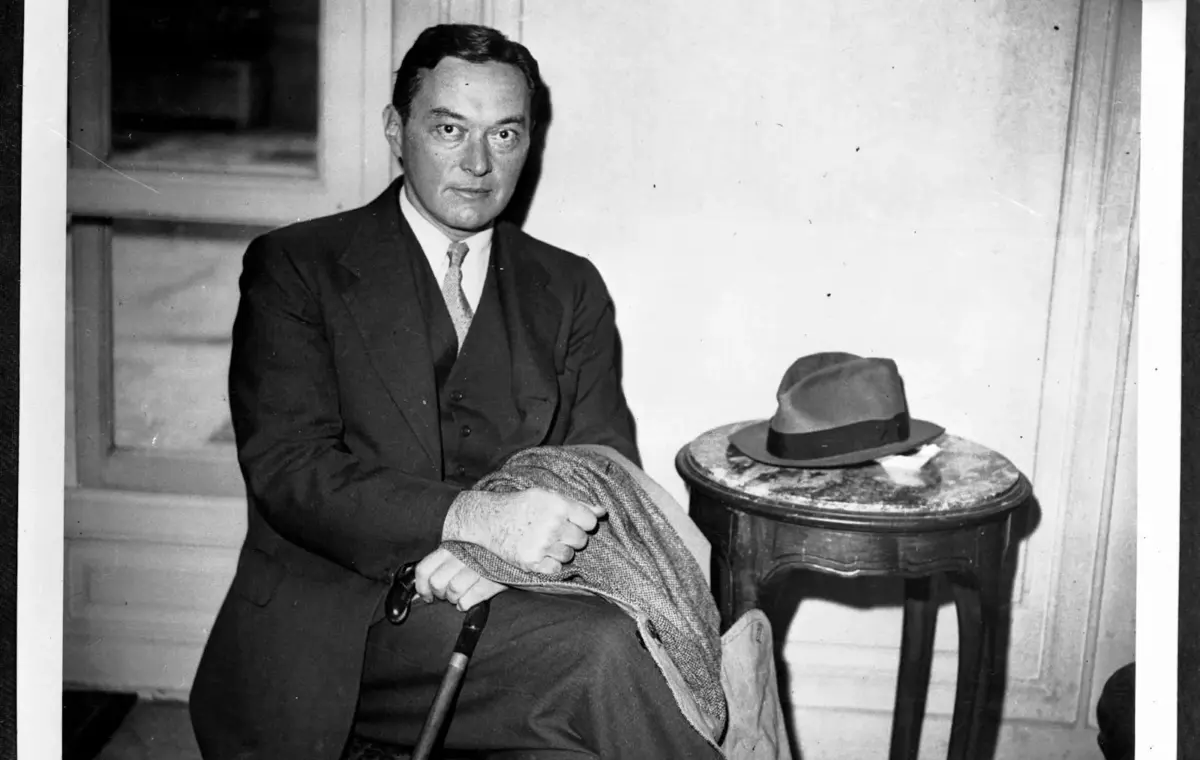
In December 1915, Jacob Schiff sent an irritated letter to Walter Lippmann. Among the country’s most powerful financiers, Schiff was head of the elite banking house Kuhn, Loeb & Co. That perch afforded him the opportunity to be a dominant force in American philanthropy. Lippmann, only 26, was helping edit a young magazine called The New Republic.
Schiff wanted Lippmann to know that he wrote as an admirer. He had been a “constant reader” since the magazine’s first issue, a year earlier, and he regularly recommended it to friends. But there was something in its latest edition that had upset him, and he could not let it pass.
The offending commentary was titled “An Open Letter to the Rich.” Its author, John Lincoln, described himself as a teacher in a small Western city, married with two children. In the piece, Lincoln shared his circumstances. His salary was respectable but increasingly inadequate. Travel was largely impossible; theater and music were luxuries. Doctors, housing, and education all demanded constant calculation. His salary, Lincoln complained, was being reduced each year—not “in dollars and cents,” but “in butter, milk, and eggs.” And, above all, he and his wife wanted more children and they couldn’t afford them.
“And you,” he told the rich, “though you do not know it, are to blame.”
Lincoln’s letter was a complicated artifact of its time. His critique of inequality was entangled with the Progressive era’s preoccupation with heredity, reproduction, and what he called “better births.” But his central economic claim was simple: The United States possessed extraordinary wealth, while ordinary families found even their most intimate choices constrained by its unequal distribution.
Schiff believed that this magazine granting space to Lincoln’s argument was irresponsible. In correspondence he insisted remain private, he told Lippmann that the letter dripped with “jealousy and envy.” It condemned inequality without proposing a serious remedy. He worried that Lincoln’s polemic could damage a magazine whose “educational value” he otherwise admired.
Then Schiff offered an argument that could be made unchanged today. Suppose, he wrote, that the retired industrialist and richest man on the planet, John D. Rockefeller, possessed a billion dollars. Divide it among every American, and each person would receive roughly $10. Rockefeller would no longer be fantastically rich, but ordinary Americans would hardly be more secure—and something that was, to his mind, socially valuable would be lost.
Kept intact, Rockefeller’s fortune—and especially the fortune inherited by his son, John D. Rockefeller Jr.—could improve social conditions, build universities, support research, and create institutions whose benefits reached far beyond the Rockefeller family. Schiff believed the younger Rockefeller possessed “a high conception of the duty the possession of such great wealth imposes upon its possessor.”
This was not chiefly a defense of the rich man’s right to enjoy his wealth. It was a defense of concentrated wealth based on what an enlightened rich man could accomplish for everyone else. In other words, great inequality, in Schiff’s formulation, made possible great philanthropy.
He opened by rejecting Schiff’s charge that The New Republic had published an exercise in envy. Lincoln’s essay mattered, he explained, because it was “a very sincere, human document.” And ordinary people should be allowed to describe honestly what economic arrangements looked like from where they stood.
Nor did Lippmann believe that Rockefeller should simply divide his fortune into $10 payments. Such an idea, he told Schiff, was “obviously preposterous.” Personally, Lippmann said his preferred remedies would be progressive taxation, inheritance taxes, restrictions on the private appropriation of natural resources, and public investment in what he called “social betterment.” But then Lippmann did something interesting: He accepted Schiff’s main argument. He had “no doubt,” he wrote, that Rockefeller Jr. was spending his fortune “in a highly desirable way.”
“Think what it means to a community,” Lippmann challenged Schiff, “to trust such staggering power to the accidents of birth.”
What if Rockefeller’s heir had been someone else? Suppose he had inherited the fortune but none of the sense of responsibility Schiff admired. Both men knew rich men’s sons of precisely that sort.
The problem for Lippmann was not whether a rich person could use concentrated wealth for the public good. The problem was that the public good had become dependent upon what that person decided to do.
“I am one of those who believes that the possession of great masses of property is an enormous power,” Lippmann wrote, “a power which has reached a stage in our country that is almost ominous to the future of democracy.” If America hoped to become the country it promised to be, he continued, it could not safely leave in a few private hands, “controlled by nothing but the private conscience, a power which is greater than that of the government itself.”