Find this story in your account’s ‘Saved for Later’ section.
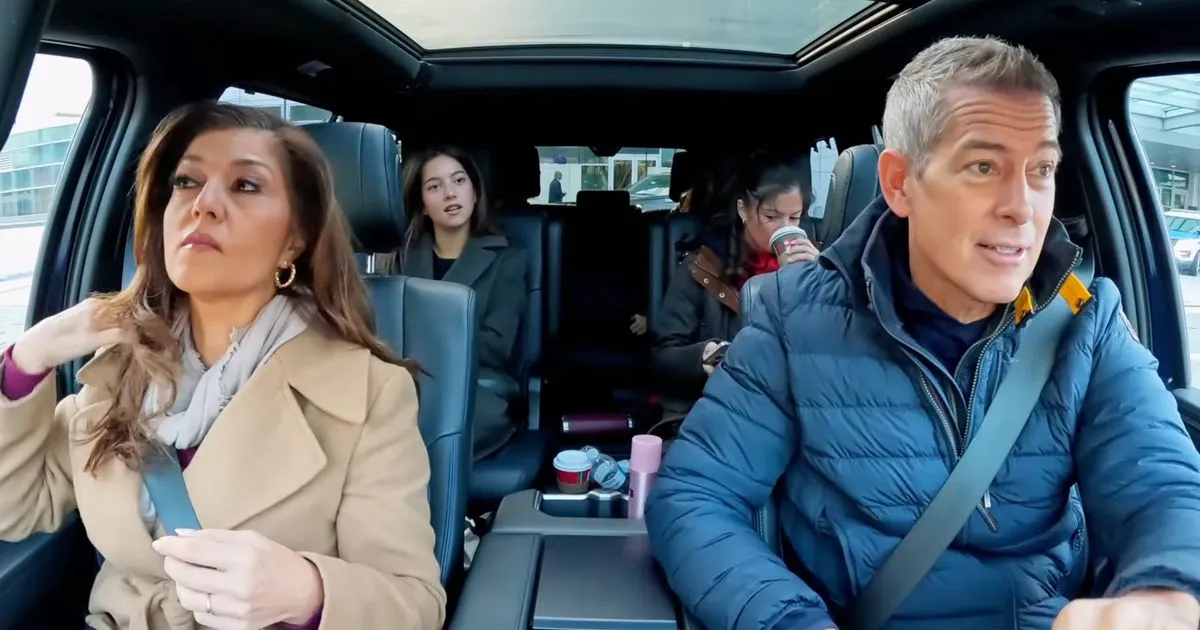
You might’ve seen this clip of Transportation Secretary Sean Duffy floating around social media last week. He’s explaining to his daughter Paloma why he doesn’t want her to go to Harvard, which he says has “professionalized figuring out how they can take good young girls like you and corrupt their minds.” The footage is from The Great American Road Trip, a YouTube series starring Duffy and his family as they travel to a variety of American vacation destinations in an effort to convince Americans to “stop scrolling and hit the road.” The trailer, released in May, is also full of blithe triggers for fury and attention: sunny drone shots of various American destinations intercut with what seem to be AI videos of old-fashioned cars zipping along uncannily smooth highways and an egregious second-long shot of the front grill of a car prominently displaying a Toyota logo. The series was sponsored by many of the companies affected and regulated by the Department of Transportation, including Boeing, Lyft, Enterprise Rent-a-Car, Shell Oil, and United Airlines; Duffy was questioned about it during congressional testimony, with Senators Kirsten Gillibrand and Patty Murray wondering what the reality show suggests about corruption and pay-for-play policies in the DoT.
If all of The Great American Road Trip were that thrillingly replete with outrage fodder, it would be a nightmarish snarl of prime hate-watch material. Everything about it looks like a naked, self-serving cash grab — a corporate-sponsored family vacation dressed up as patriotic boosterism designed to sell people on a bowdlerized story of America. It’s disgusting, yes, but it’s also ripe for megapopularity among reality-TV viewers, who’ve made hate-watching wealthy, entitled families on Real Housewives, Below Deck, Selling Sunset, and a number of other major franchises into a fondly popular long-term viewing habit. Unfortunately, Paloma Duffy’s brief flirtation with hypothetically attending the most prestigious university in the world also constitutes The Great American Road Trip’s singular high point in entertainment value, narrative tension, and insight into the Duffys as people. Aside from that short element of friction, it is an otherwise stultifyingly boring piece of reality TV, with less tourism appeal than a hotel lobby brochure and less insight into the Duffys than any of the celebrity-produced docuseries currently littering streaming platforms.
Great American Road Trip was never going to be an actually relatable, grounded story of a family going on vacation together. It could not be. The Duffys live in a bubble of financial privilege, conservative ideology, and celebrity connections: The whole series is launched from the Oval Office, where President Donald Trump wishes them all well. In the episode when the Duffys visit Harvard, Paloma’s older sister Evita calmly notes that she herself was canceled for her beliefs while attending University of Chicago. (She doesn’t explain why.) In a warm conversation about visiting Charleston, Sean’s wife, Rachel Campos-Duffy, happily notes that Charleston is very accessible because you can fly there “on points” and can also use points to eat at the restaurant where they’re filming. (Her friend is Naomie Olindo, a cast member on Southern Charm whose family owns the restaurant.) Their cultural touchstones and references for “authenticity” are a fantasy with no connection to most of American life.
This does not disqualify them as potential reality stars — far from it! But the Duffys simply are not forthright or interesting enough to be compelling subjects. Both Sean and Rachel began their television careers as reality-TV figures on different seasons of The Real World, then were later on Road Rules together. They are veterans of the medium, and yet they move through Great American Road Trip with a polished sense of caution and wide, defensive, veneer-forward grins, treating the series more like spon-con than a reality show. Brand partnerships do not want drama; they want inoffensive promotion. Rachel announces over and over how much she loves Texas, how great it is to see her children running outside, and how happy she would be to live there. There is no deeper thought or more pointed observation attached. Their trip to Charleston includes a visit to Boeing (it was a sponsor) but zero reflection on the centuries of Charleston’s history with the slave trade. When one of the Duffy kids falls ill during their Yellowstone trip, there are only a few moments of alarm before it turns out to be constipation. In Arizona, everyone takes a ride in a Waymo (oddly not a sponsor) and is alarmed by the self-driving car before deciding that it’s fine and safe. Even the Harvard incident ends without drama when, believe it or not, the Duffys realize that Harvard is actually a comfortable, supportive environment for conservative Catholics.
It’s not clear whether the show’s tedious nothingness results from the Duffys themselves or whether it’s thanks to a hypercautious edit of the series, but there are hints that this vacuity was imposed upon them rather than burbling up from within. In the early trailer for the show, Rachel strides onto a dude ranch, ready to display the authenticity of the American West, and notes in an aside that her cowboy boots were given to her by country-music star and former Celebrity Apprentice contestant John Rich. That scene never appears in the officially released episodes, nor does any of the trailer footage from what looks like a trip to Florida, including establishing footage of what’s likely a Royal Caribbean cruise ship (it was a sponsor). Moments like that exchange about traveling “on points,” or the sequence where Duffy cosplays as a ranch hand and vaccinates cows without any commentary about how his administration has undermined vaccines for people, suggest that plenty of eyebrow-raising footage may have been deliberately excised to make the whole series look less flagrantly out of touch.
The Great American Road Trip’s problem — aside from the ethical concerns, the broader implications about Sean Duffy’s priorities, the chintzy AI trailer clips, and the fact that no one takes time to unpack the reality that one of the nine Duffy children goes by the name Mud — is that it is a poor attempt to avoid all of the truest, most obvious things about its own existence. This is a show made by a government official married to a Fox & Friends anchor to promote a specific, narrowly sliced image of American greatness, one that omits any discussion of race, class, or the content of the Duffys’ value system. What’s left is a vaguely political YouTube series afraid of its own tail, incapable of being actually relatable and too cowardly to own the batshit truths of these people’s lives.
But it’s a tough media environment out there right now. In the seven days since its release on YouTube, the first episode of Great American Road Trip has gained only about 20 thousand views, with a precipitous drop as the series goes on (five thousand views for episode six). In the media ecosystem Donald Trump has helped create, where news that would’ve been a years-long scandal now barely makes it onto the front page, a blandly tone-deaf reality series sponsored by giant corporations looking for political favoritism is just a brief blip in the algorithm.
By submitting your email, you agree to our Terms and Privacy Notice and to receive email correspondence from us.