Scotland could create more than 130,000 high-value jobs and add at least £20 billion a year to the economy without committing a single extra pound of public money, according to a new report that argues the country’s entrepreneurial support system is failing to target businesses at the moment they most need help.
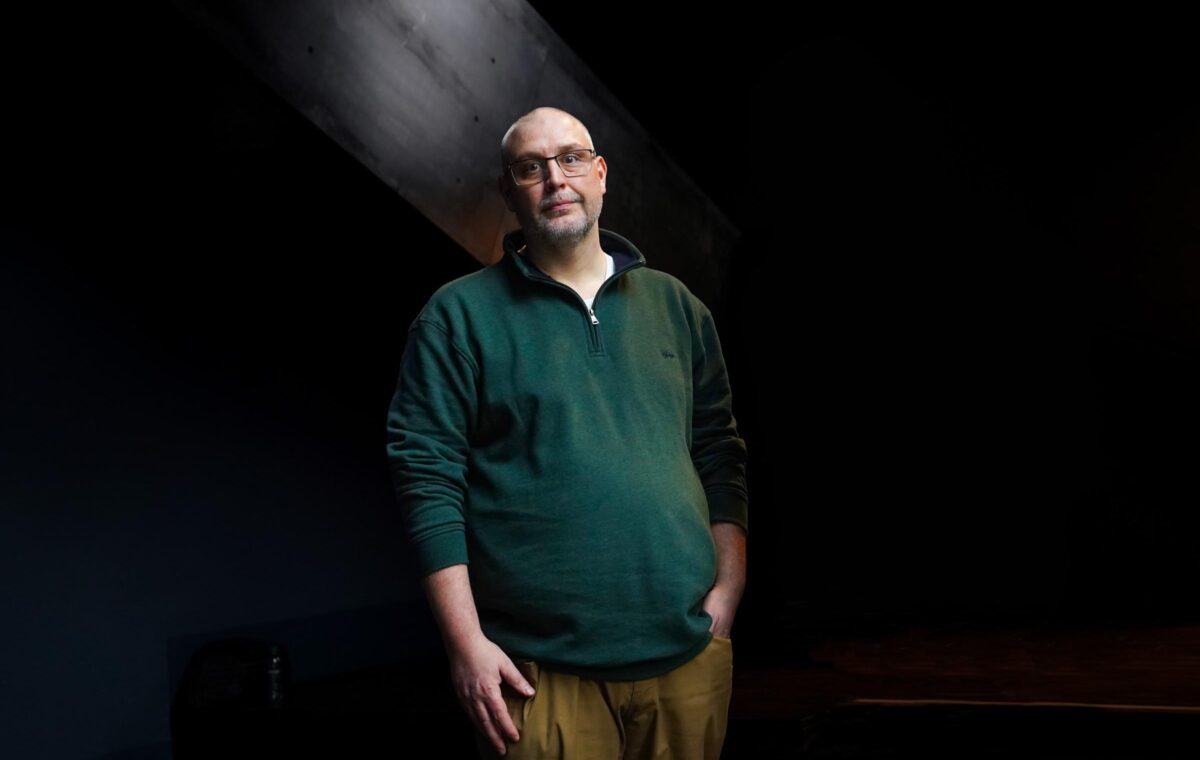
The Framing Scotland’s Entrepreneurial Economy report has been produced by Richard Lennox, the chief operating officer of CodeBase and a veteran of Scottish technology success stories Skyscanner and Current Health.
The report's central claim is that Scotland’s long-running debate about funding for entrepreneurs has focused on the wrong issue. Rather than increasing budgets or creating new programmes, policymakers should concentrate on directing existing resources more effectively towards high-growth firms.
While companies growing their turnover or workforce by more than 20% over a three-year period account for only around 0.5% of Scotland’s SMEs, they generate roughly one-third of all SME turnover. The challenge is not producing more start-ups, Mr Lennox argues, but ensuring promising firms can make the difficult transition from early-stage ventures into larger, internationally competitive businesses.
"The fix isn't a bigger budget or another programme," he said. "It's discipline about where the existing money goes.
"Every intervention should be able to answer one question: did this put something of genuine value in the hands of a founder, at the moment they needed it? If it can't, we should stop funding it and redirect that money to something that can."
Rather than funding programmes and then assessing how many founders participate, he argues that support should be designed around the needs of entrepreneurs at different stages of development and judged on whether companies actually progress.
The report further identifies what Mr Lennox sees as a persistent blind spot in Scotland’s ecosystem. While support for firms already moving along a growth trajectory has improved, businesses at a crucial inflection point are often underserved. Mr Lennox asserts that these operations have the greatest potential to create jobs, attract investment and generate long-term economic value.
Mr Lennox proposes a framework built around what he calls the “parallel destinies principle”, recognising that not every company is trying to become the same kind of business. From there, support would be organised across three areas: access to capital, access to customers and markets, and operator-led guidance from experienced entrepreneurs.
These would then be mapped against four stages of development, ranging from ideation through to scale.
The report points to a new generation of Scottish technology firms including Wordsmith, Simple Online Healthcare, Malted AI and Chemify as evidence that Scotland already possesses many of the ingredients required for success. Mr Lennox said these are evidence that Scotland benefits from strong technical talent, respected research institutions, and an increasingly experienced community of founders and operators.
There is, however, one major intervention that he believes government alone can deliver.
In perhaps the report’s most ambitious recommendation, Mr Lennox calls for Scotland to attract a major global technology company capable of employing around 1,000 highly-skilled workers and participating actively in the wider ecosystem. He cites companies such as Google, Anthropic and OpenAI as examples of the type of employer that could accelerate the development of Scotland’s technology sector.
“Dublin, Berlin, and London compounded their entrepreneurial ecosystems in part because large-scale technology employers like Amazon, Meta, and Alphabet established significant campuses that trained technical talent at scale, created the density of expertise that spun out into new companies, and signalled to international talent that the ecosystem was worth relocating to," Mr Lennox said.
"Scotland does not have an equivalent, and relies on the successful homegrown businesses like Skyscanner who have scaled.”