Published: 10:36 BST, 27 August 2026 | Updated: 11:56 BST, 27 August 2026
Scientists have blamed climate change for yesterday's flash floods in Nepal.
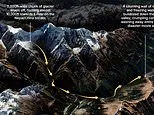
The devastating event saw rushing waters reportedly reaching up to 650ft high, sparked by the collapse of a glacier.
While scientists are still studying the exact causes of the disaster, Dr Wouter Buytaert, Reader in Hydrology and Water Resources at Imperial College London, says that climate change is to blame.
'It is exactly the type of event that is triggered by climate change,' he explained.
'Global warming shrinks glaciers, making it more likely for them to break apart. Land degradation, due to increasing wildfires, extreme weather, and unsustainable land use, destabilizes valley slopes and mobilizes rocks and sediment.
'In mountain regions with steep slopes and narrow valleys, this creates the perfect conditions for events such as this.'
The floods come just one month after an ominous study was published, warning that global warming could spark glacial collapse in the region.
The study, led by researchers at Kathmandu University, explained: 'Across the Himalayan region, warming rates exceed the global average, intensifying climate–related hazards and associated losses contributing to the melting of glaciers and increasing the risk of GLOF [glacial lake outburst floods].'
Nepal is facing what officials are describing as 'devastation beyond imagination' after flash floods wiped out buildings and bridges along the Nepal–Tibet border
The United States Geological Survey (USGS) first reported the event as a magnitude 4.4 earthquake.
However, it has since confirmed that a GLOF was to blame.
'Additional analysis of nearby seismic stations, long period seismic waves, and satellite imagery led to the determination that the seismic event was instead a glacial collapse and debris flow, and that no earthquake had occurred,' the USGS told the BBC today.
Dr Adrian McCallum, a Glaciologist and Polar Engineer at the University of the Sunshine Coast, agreed that climate change is likely to blame for yesterday's event.
He said: 'I'm yet to fully appraise myself of the situation, but these floods are probably "glacial lake outburst floods" (GLOFs); these are increasingly common in alpine regions globally as our climate changes.