Published: 10:06 BST, 22 August 2026 | Updated: 10:06 BST, 22 August 2026
Invasive weed specialists have revealed the UK areas most at risk from Japanese knotweed this autumn.
Experts say the nightmare plant – which can grow up to 10cm (4in) per day and tear through brickwork and concrete – could soon spread to new gardens.
Homeowners in some of the UK's wettest regions are most at risk, they warned, as heavy rain and flooding could carry fragments of knotweed into areas where it has never been seen before.
Analysis of Met Office rainfall data reveals a stark divide between the UK's wettest and driest regions – and it's bad news for those in the north.
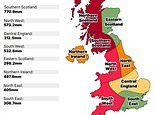
South Scotland recorded the most rainfall between September and December last year, with a staggering 770.9mm falling over the four–month period.
It was followed by North Scotland, which recorded 679.1mm, while North West England and North Wales saw 573.2mm.
Experts warn that if similarly wet conditions return this autumn, flooding, riverbank erosion and powerful water flows could help invasive plants hitch a ride downstream.
Jennifer Holmes, from Environment Controls, said: 'Following a flood, homeowners may discover unfamiliar, fast–growing plants during the next growing season.'
The map reveals areas at more moderate risk include South West England and South Wales, Northern Ireland and the North East of England.
Areas at the lowest risk include Central England, South East England and East Scotland.
Japanese knotweed can spread when pieces of its underground stem system, known as rhizomes, break away and are transported to new ground – with even a very small viable fragment capable of producing a new plant.
Himalayan balsam – another invasive species – poses a similar threat, with its seeds able to enter rivers, streams and drainage channels before being carried to new locations.
That means homeowners could spot unfamiliar fast–growing plants appearing in their gardens after a flood, even if they have never previously had a problem with invasive species.
'Autumn and winter storms don't just cause water damage,' Ms Holmes said.