Published: 10:00 BST, 2 September 2026 | Updated: 10:00 BST, 2 September 2026
Overshooting the critical 1.5°C warming limit is now inevitable, the UN has warned in a new report.
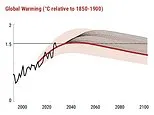
Titled 'Limiting Overshooting', the report reveals that in the best–case scenario, global temperature rise will now hit 1.8°C.
However, in the worst–case scenario, we could see temperatures soar by as much as 2°C in the next few years.
Worryingly, experts warn that the impacts are going to be 'devastating'.
'There are no good outcomes if we remain above 1.5°C,' said Inger Andersen, Executive Director of UNEP.
'Across the globe, extreme heatwaves are already proving that climate impacts will strike faster, hit harder, and last longer – costing more lives and causing deeper disruption.
'Now is the time we must double down on climate action. We can – and must – get on the right path.
'By cutting greenhouse gas emissions, strengthening resilience and adaptation, and ensuring exceedance of 1.5°C is as small and short as possible.'
Overshooting the critical 1.5°C warming limit is now inevitable, the UN has warned in a new report. Titled 'Limiting Overshooting', the report reveals that in the best–case scenario, global temperature rise will now hit 1.8°C
The 1.5°C global warming limit was introduced as part of the Paris Agreement on 12 December 2015.
It meant that nations agreed to pursue efforts to limit the temperature increase to 1.5°C above pre-industrial levels.
However, the new report warns that this warming limit is now out the window, with warming of at least 1.8°C now expected.
This temperature rise could have 'devastating consequences', ranging from intensified extreme weather to sea level rise.
'The likelihood of crossing irreversible tipping points increases with the magnitude and duration of higher temperatures,' the report warns.