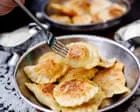
Pierogi are a religion in Poland, but I’d never been a believer. Could a recce in the charming Baltic city convert me?
I used to live in Poland. I worked in a fish-and-chip shop in the western city of Poznań, boning cod and peeling potatoes for £1.50 an hour. With the exception of that job, I enjoyed everything about my time in the country, not least the food. I liked the chicken broth with noodles, the slippery herring, the knuckles of pork the size of basketballs, the cold beetroot soup that beats gazpacho hands down.
One thing I was less delighted by were Polish dumplings – pierogi. It wasn’t that they weren’t nice – they were – it was more that they didn’t seem to warrant the extreme levels of affection and esteem Poles often bestow on the doughy parcels. By being ambivalent about them, I was going against a well-established grain.
It is claimed by some that pierogi arrived in Poland via Marco Polo (actually a myth), and that the oldest written Polish recipe dates to 1682 (true). In short, these things have pedigree, and you denigrate them at your peril. I almost lost a Polish friend once for not being smitten with Poland’s answer to gyoza and ravioli. Such was her reaction, you’d have thought I’d denigrated the late Polish pope, John Paul II.
“I don’t understand this mentality,” said Paulina. “Have you tried the ones filled with cheese and potato?”
“Have you had the ones from the fancy place on the old square?”
“Have you had the frozen ones from the supermarket?”
“Have you had the ones from the milk bar near Freedom Street?”
“Hm. Have you tried my grandmother’s?”
“Well there you are. Mystery solved. That explains your mentality. You have to reserve judgment and stop talking nonsense until you’ve tried the dumplings of a babcia.”
I had versions of this conversation several times when telling Poles that I was merely fond of pierogi rather than hopelessly devoted. On each occasion, the babcia (grandmother figure) in question was either dead or otherwise engaged, meaning that their dumplings couldn’t be tested, and my opinion – that pierogi are just OK – couldn’t be validated.
Until now perhaps. Having enjoyed searching for the perfect steak frites in Paris, I set myself the task of giving pierogi a proper crack of the whip in one of Poland’s finest cities – its jewel on the Baltic coast, Gdańsk. Could the old port city cure me of my pierogi scepticism? Would the dumplings of a local babcia bowl me over? The answer was yes … and no.
After a mooch around the picturesque old town (during which I learned that Daniel Fahrenheit, inventor of the temperature scale, spent his first years in Gdańsk before leaving as a teen, having realised how cold it got in winter), I pull up a pew on the riverside terrace of this well-regarded establishment. I have a mixed plate of the classics: potato and cheese, cabbage and mushroom, minced pork. They’ve been boiled then shallow fried, ensuring a slightly crisp finish, and are served with the traditional accompaniments: sour cream and bacon bits jostling in their own lardy juices.
The first thing that strikes me is the size of these parcels. Boy, are they plump. Of the selection, potato and cheese triumphs, with the optimal mouthful requiring a touch of each topping: the bacon bringing a salty crunch, the lard adding an umami note, the sour cream resolving the whole. In short, solid grub in a lovely spot. £13, 7.5/10, gdanskibowke.com
No chance of just happening on this restaurant: it’s on the 16th floor of what might be charitably called a nondescript building. The view isn’t postcard-perfect but it’s powerful: the vista is dominated by the city’s famous shipyard, where in 1980 trade union leader Lech Wałęsa and his unmerry men downed tools and gave communism the cold shoulder.