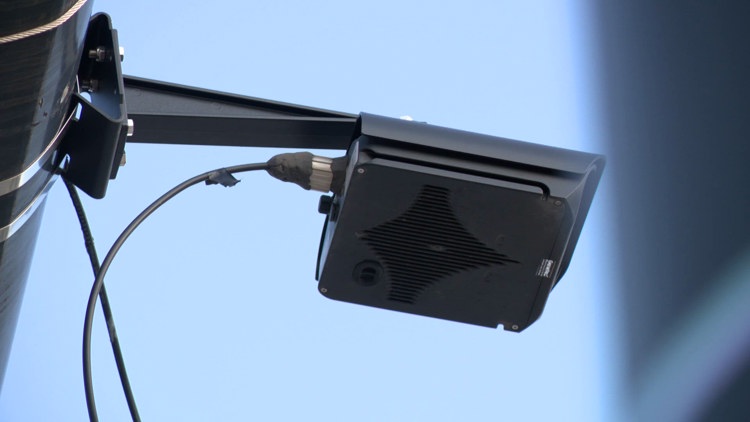
Police agencies across St. Charles County have long called automated license plate readers a game-changer for tracking down suspects and stolen vehicles. But after a recent breach of trust involving a police employee, local county council members are proposing a total ban, arguing that the abuse of the surveillance technology is fundamentally unacceptable.
The conflict stems from the recent resignation of a St. Charles County Police Department employee who was found to be misusing the department's "Flock" license plate readers for a personal matter.
Following the discovery, the department stopped using the Flock system but has continued to utilize a similar network of cameras from a company called Genetec. The incident has prompted County Councilmen Joe Brazil and Tim Baker to draft legislation that would ban the technology entirely in unincorporated areas of the county.
Brazil noted that he had predicted this type of situation was possible when the county first approved the cameras.
Baker initially never thought they would be used in a nefarious way.
"My initial position was well, they're used to help stop crime, and I really don't think people are going to use it for this, but I was proven wrong," Baker said. "And now that I'm proven that they are used for private surveillance, just can't support that. And we just have got to look at the whole system and see what we can do to one, prevent crime, and two, prevent it in a way that doesn't involve surveillance of our citizens."
Despite the controversy, law enforcement officials are fiercely defending the crime-fighting capabilities of the cameras. St. Charles County Police Chief Kurt Frisz highlighted the technology's effectiveness in solving serious and violent crimes.
"We're making up to 50 felony arrests a year with the system," Frisz said. "You know we're apprehending murder suspects, stolen cars, burglary suspects. So we've already had a lot of proven success with it."
Lake St. Louis Police Chief Chris DiGiueseppi acknowledged the incident in St. Charles County and echoed Frisz's support for the tool, while firmly condemning the privacy breach.
"We are aware of the incident in St. Charles County relating to FLOCK License Plate readers and are looking into the details so we can collaborate with city leaders, assess the situation and take appropriate action. License plate readers are a key piece of technology in lowering crime and keeping communities safe; however, misuse of criminal justice information cannot be tolerated. Therefore, myself, and other law enforcement leaders, will be collaborating with our local and state leaders to address this issue and protect our residents," DiGiueseppi said in a statement.
Council members are hoping to schedule a work session soon to gather feedback from both the public and police before advancing their measure. Baker emphasized the need to proceed carefully as they draft the legislation.
"Because I want to get this ordinance down, we've got one try at it, and I want to make sure it's perfect," Baker said.
According to Brazil, there are currently 28 license plate readers operating in unincorporated St. Charles County. While a simple council vote could ban the cameras in those unincorporated areas, extending the ban countywide would likely require a charter change. The county navigated a similar charter change to ban red-light cameras several years ago.