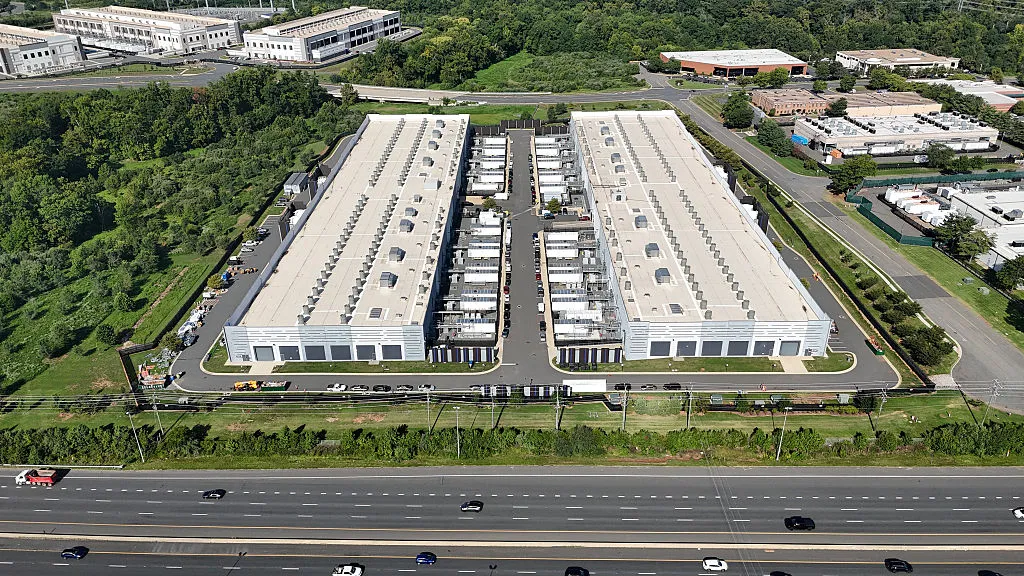
Data center companies “dug their own grave,” Texas Governor Greg Abbott said Sunday, and “that’s why they got the backlash they deserve.” Nine months ago, Abbott crowned Texas the epicenter of AI development, alongside Google executives announcing a $40 billion investment in the state. Pennsylvania’s Josh Shapiro, a Democrat who actively recruited Amazon’s $20 billion commitment to his commonwealth, made a similar U-turn days earlier, signing an executive order he calls the “nation’s strictest guardrails” on data centers: no more fast-track permits, no nondisclosure agreements, and no state permit review until developers make binding commitments to community standards.
When a Texas Republican and a Pennsylvania Democrat pivot to the same position in the same week, it becomes clear that the politics of data centers have shifted. Like everything else in AI, sentiment is moving at an extraordinary pace. Even the AI industry’s biggest winner recognizes the need for change. The tech sector needs to “do a much better job working with the communities,” Nvidia CEO Jensen Huang said this week.
While shifting or walking back public statements never looks good, leaders are simply listening to voters’ demands. The truth is that leaders across the political spectrum are pivoting on data centers for a simple reason: they want their communities to actually benefit. The best ones are listening to citizens’ concerns while constructively raising the bar for the data center industry—not cutting them off.
Seven in ten Americans tell Gallup they oppose a data center in their own community, more opposition than a nuclear plant draws. The primary complaint started with electric bills. PJM’s independent market monitor attributes 63% of the region’s 2025/2026 capacity price increase to data center load, roughly $9.3 billion recovered from customers across 13 states in a single year, causing household bills to rise 1.5% to 5% this summer.The countervailing benefits are just as measurable. In Loudoun County, Virginia (often referred to as known as the "Data Center Capital of the World”), data centers supply as much as 31% of local revenue by the state legislature’s audit count, and the county has banked a $119.7 million stabilization fund against any downturn. The facilities also pay blue-collar wage premiums of 10% to 64% over comparable employers, the venture firm Andreessen Horowitz finds in Indeed postings data. The Dallas Fed has reported that skilled concrete workers, who typically make $28 to $32 per hour, are earning $45 per hour and a $150 per diem on data center jobs. And in July, the National Federation of Independent Business found that small-business optimism is at its highest levels in a year, crediting AI investment in chips and the structures that house them with spillover business opportunities.
The fight over data centers, meanwhile, has become a social and political flashpoint and, at times, embellished beyond what the record supports. Some backlash is earned. Most jobs promised are temporary. Resource demands are massive, and draining when mismanaged. Speculators have gamed interconnection queues and incentive programs, while both developers and policymakers have done a poor job communicating to the public. We heard these concerns from over 50 mayors leading cities that span the U.S. during our annual Yale Mayors College in March.
Done well, though, these projects are a once-in-a-generation development opportunity for places ranging from underused farmland to urban brownfield sites. As Huang explained it: “This is the first time in probably the last century that we’re able to invest in sustainable energy, invest in improving our energy grid, securing our energy supply, reducing the cost of energy across the country.”
Opposition to data centers tends to concentrate at the county level because costs pool locally while benefits disperse. A county absorbs the water draw, the noise, the land conversion, and a share of the regional capacity bill. The compute serves users elsewhere, and the returns accrue to shareholders nowhere nearby. Every serious policy response attempts to move some portion of that diffuse benefit back to the community bearing the concentrated cost.
The responses span a diverse spectrum. New York paused state environmental permitting on large data centers for at least one year, pending a statewide study—the only statewide pause in effect, for now. Texas ordered an audit of every project in its grid queue, and the state’s grid operator paused new data center connections until the audit is complete. Maine’s legislature passed the first statewide construction moratorium this spring, only for Governor Janet Mills to veto the bill and create an advisory council to write standards instead. More broadly, 27 states advanced large-load legislation this year, with California, Ohio, and Utah enacting laws that exceed the industry’s voluntary ratepayer pledge to the White House.
At the federal level, Washington continues to accelerate. A July 2025 executive order fast-tracked federal permitting, and a December preemption order, whose promised list of invalid state laws has yet to appear, expressly preserved state authority over “AI compute and data center infrastructure, other than generally applicable permitting reforms.”
Beneath the surface, the two sides are searching for a shared premise: the buildout must take the form of a mutually beneficial, transparent partnership. The public is already there. In Morning Consult polling commissioned for our June CEO Summit, 55% of Americans view data centers as a community benefit, while 69% call the backlash justified, the clearest indicator of an electorate searching for better terms, not fewer projects.
“Don’t ban—raise the bar, ask for more,” suggests Chris Crosby, CEO of Compass Datacenters.
Meta’s Mark Zuckerberg drew the same position in his August letter, proposing a community compact of local jobs, investment in schools, and public services, held-down energy prices, and environmental care, backed by a $1 billion fund. When the company told Eagle Mountain, Utah, back in 2018 that it wanted to be a welcomed corporate partner, local public leaders answered, “Well, then we’re going to ask for some things.” And ask they did.
Virginia Governor Abigail Spanberger, whose state hosts more data centers than any other, has taken note and come to define the state’s role as ensuring “our local communities know what they can ask for and what standards they should be setting.” If knowing what to ask for is half the problem, then capacity to execute is the other half. The table often seats a county planning staff of a dozen across from a trillion-dollar counterparty, and that imbalance has unfortunately appeared in lopsided deals negotiated behind nondisclosure agreements.
Yet the smaller side of the table holds more leverage today than it may realize. The industry is desperate to scale and willing to deal. “AI is constrained today by data center capacity, not compute or software,” MARA Holdings CEO Fred Thiel tells us.
In reviewing the tariffs, statutes, audits, agreements, and published commitments behind the American AI buildout and other noteworthy economic development projects for our forthcoming book When Machines Act, we identified those practices that have produced win-win outcomes for all parties.