By Donnie Munro, Director of Development, Fundraising and the Arts at Sabhal Mòr Ostaig
KILBEG – Baile na Cille Bige – is the first new architecturally planned village to be built in the Isle of Skye for over 100 years. It takes its name from an original township in Sleat, whose people were forcibly cleared from their land in the 1800s.
Not only is Kilbeg iconic in redressing the wrongs of that difficult period in Highland history; it also plays a significant contemporary role in providing much needed affordable housing in the area.
Just under twenty homes have so far been built on land belonging to Sabhal Mòr Ostaig, Scotland’s National Centre for Gaelic Language and Culture, creating an economically active and thriving new community, with the Gaelic language at its heart.
More than 50 years ago, Sabhal Mòr Ostaig’s founder, Sir Iain Noble, recognised that confidence in one’s own language and culture is intrinsically linked to economic development.
Following a visit to the Faroe Islands, he saw first-hand how the regeneration of an indigenous language and culture could help drive socio-economic regeneration. It was an idea that became fundamental to the founding of Sabhal Mòr Ostaig in 1973: that Gaelic could not only be preserved, but used as a foundation for creating a confident, sustainable and economically vibrant community.
Kilbeg is a contemporary expression of that same philosophy. It brings together housing, community, language, education, and economic opportunity, recognising that none of these exist in isolation.
It is a great honour therefore that the development was recognised with The Herald’s award for Outstanding Contribution to the Community.
Sabhal Mòr Ostaig itself demonstrates what can be achieved when these elements come together. It is the only further and higher education institution in the world delivering all its degree and postgraduate programmes entirely through the medium of Gaelic, alongside our wider work in research, language development, culture and the arts.
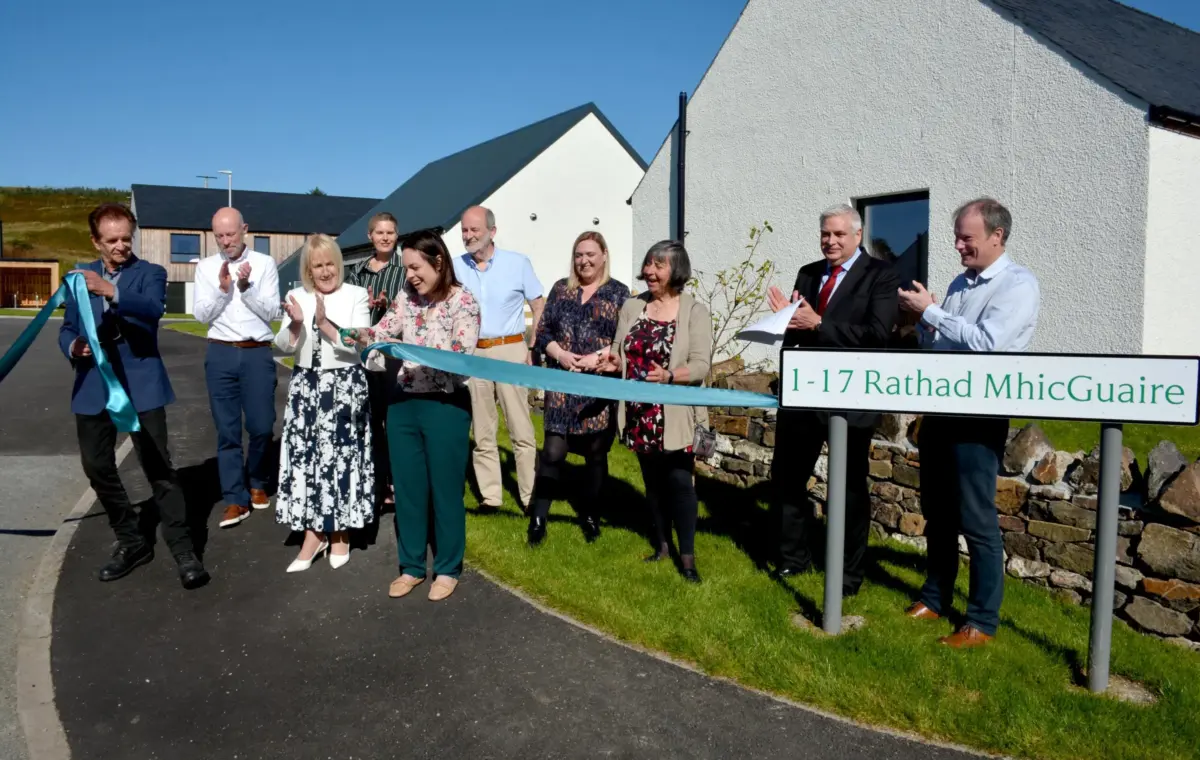
We pioneered the delivery partnership behind Kilbeg, working with The Highland Council, the Community Housing Trust, and Skye-based Builders James MacQueen’s Ltd. The first two rent-to-buy homes were completed in 2018.
Donnie Munro, Director of Development, Fundraising and the Arts at Sabhal Mòr Ostaig (Image: Supplied)
The next phase brought a further 14 affordable homes, including six homes for social rent, plus three self-build plots. An adjacent development is planned to provide another 24 affordable homes, while the wider Kilbeg Masterplan allows for the phased development of up to 100 homes over time.
That scale of ambition matters because access to affordable housing is a prerequisite for sustainable rural communities. It is vitally important that we create opportunities to learn Gaelic and through Gaelic at all levels of education, but it is equally important that we sustain communities where the language can be spoken daily and passed from one generation to the next.
People need somewhere affordable to live and access to sustainable, high-quality employment. Young people need to be able to imagine a future for themselves in the Highlands and Islands, and those who have left need a realistic opportunity to return.
Since Sabhal Mòr Ostaig's inception, the population of the surrounding area has more than doubled, running counter to historic patterns of depopulation and outward migration experienced across the Highlands and Islands.