It’s one of the more persistently annoying aspects of owning an iPhone, and one of those dumb little things where Apple was overzealous in making things simple and left us with a frustration that most Android users haven’t had to deal with for years: Independent volume controls for various kinds of system sounds.
Sure, you’ve been able to adjust the volume for media (videos or music) separately from system sounds for ages. But there’s been one “Ringtone and Alerts” volume setting that controls everything else. Turn it up so your phone rings loudly, your timers will blast your ears off, and your alarm going off on your bedside table will make you jump out of bed. Lower it, and you risk sleeping through a wake-up call.
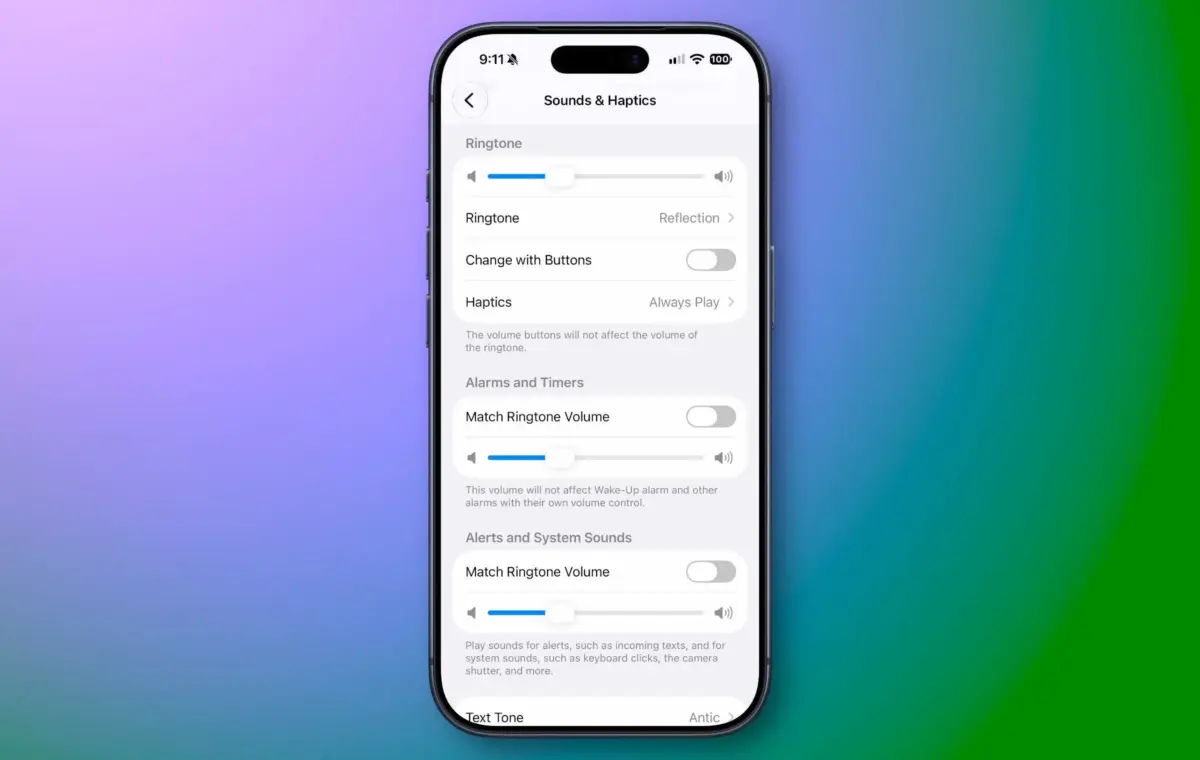
Now, at long last, Apple is giving us the ability to set independent volumes for different sounds. iOS 27 splits these sounds into three groups: Ringtones, Alarms and Timers, and Alerts and System Sounds.
Controlling these volume settings independently is easy and optional. Here’s where you find it:
If you like the simplicity of fewer volumes to adjust, you can simply leave the “Match Ringtone volume” switched on. So iOS 27 gives you to option to independently adjust just the type of system sounds you want.
Adjusting the volume with your volume buttons when listening to media or on a call will continue to adjust the volume of just media or calls, the same way iOS has worked for years.