Parton put her millions behind causes she believed in – from Covid vaccines to the Imagination Library, which sends children around the world a free book every month
Dolly Parton dies aged 80 | Celebrity tributes | A life in pictures
Parton’s peerless career turned country music cliches inside out
Share your tributes and memories of Dolly Parton
In 1991, Dolly Parton made an startling offer to every seventh and eighth-grade student in Sevier County, Tennessee where she grew up: the world-famous singer would personally give them $500 each if they graduated high school. The children had to pick a buddy to hold each other accountable; if one didn’t graduate, the other wouldn’t get the cash. But the idea worked: the county’s high school dropout rate plummeted from 35% to 6%.
This was the sort of practical, radical act of charity that Parton, nicknamed “St Dolly”, dedicated her life to trying out. By showing that all it took was the promise of $500 to incentivise kids to stay at school, Sevier County had to address the drop out rate (and it did). It is telling that the tributes shared after Parton’s death at 80 have been equally about her philanthropy and her music. There was so much of both. She told People in 2021: “I’m kind of addicted to the feeling of giving. Knowing that I’m doing something good for someone else.”
Parton’s family has encouraged fans to honour her legacy by donating to the Imagination Library, her charity that sends children around the world a free book every month from birth until they turn five. More than 300m books have been sent to children since 1995; last year alone, the Imagination Library sent a book to a child the equivalent of one every 0.78 seconds.
Sometimes Parton’s causes seemed curiously varied – like the 30,000-square-foot bald eagle sanctuary she founded in 1991 – but there were often deeply personal reasons behind her giving. The Imagination Library was perhaps the most personal to Parton, the fourth of 12 children raised in poverty. “My father could not read and write, and I saw how crippling that could be,” she once said. And aside from improving child literacy, receiving a gift in the mail could do wonders for a child’s self-esteem. “It’s the fact they get recognised,” Parton once explained. “They get this little book with their little name on it in the mail, and they feel special. They start taking pride in themselves, and they know that somebody out there is thinking of [them].”
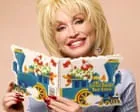
Parton never had children, but she felt a particular duty to them. “I didn’t have children because I believed that God didn’t mean for me to have kids so everybody’s kids could be mine,” she told Oprah Winfrey in 2020, the same year she would read picture books aloud on YouTube on Thursday nights for 10 weeks, to distract scared kids during Covid.
She founded the Dollywood Foundation in 1988, which has managed her philanthropy since: it handled her deal with the seventh and eighth graders, distributed $12m to Sevier County families whose homes were destroyed in wildfires in 2016, and gives out thousands of dollars in scholarships every year to high school students in Sevier County. After Hurricane Helene in 2024, the foundation pledged $2m to recovery efforts in east Tennessee.
In 2017 she gave $1m to the Pediatric Cancer Program at Monroe Carell Jr. Children’s hospital in Tennessee to honour her niece who survived leukemia, and then gave $1m more in 2022 for paediatric infectious disease research. After an undisclosed donation earlier this year, the East Tennessee children’s hospital announced it would be renamed the Dolly Parton children’s hospital.
In April 2020, she donated $1m to the Vanderbilt University in Tennessee which directly funded coronavirus research that helped develop the Moderna Covid vaccine. There was a personal link to Dr Naji Abumrad, who Parton had befriended six years earlier when he treated her after a car accident. He’d told her the vaccine research was promising and she got out her chequebook. When the Moderna vaccine became available, she got her jab on camera, showing her fans it was safe – while singing “Vaccine, vaccine, vaccine” to the tune of Jolene.
Where other public figures remained silent about HIV/Aids in the 1980s and 1990s, Parton pushed for compassion and research. In 1994 she gave her song You Gotta Be My Baby to a charity album that raised funds for HIV/Aids research, and joined 35 other country music stars in an Aids Awareness campaign called Break the Silence, speaking in public service announcements aimed at rural communities that saw Aids as an urban issue. And her production company, Sandollar Productions, co-produced the 1989 Academy Award-winning documentary Common Threads: Stories from the Quilt, about the lives of the people memorialised on the famous Names Project Aids Memorial Quilt.
Some of her acts were only made public years later – like in 2021, when she revealed that she had invested some of the royalties she earned from Whitney Houston’s cover of her song I Will Always Love You to into an office complex in a Black neighbourhood in Nashville.
“It was mostly just Black families and people that lived around there,” Parton said. “It was a whole strip mall. And I thought, ‘This is the perfect place for me to be, considering it was Whitney … I’m going to be down here with her people, who are my people as well.’”