More direct flights from North America and, say tourism chiefs, Highland warriors and Tartan Army have helped
For the tourist industry, 2026 has been a rocky year, with war, EU border delays, climate and economic woes gnawing away at holiday plans. But while much of Britain is feeling the loss of visitors from the Middle East and beyond, one part is thriving.
Scotland is reeling in ever more visitors, with strong annual growth and a 15% rise in flight bookings to Scottish airports in June and July, compared with a drop in bookings to London and the rest of England in recent months, according to VisitBritain figures.
With heatwaves gripping much of Europe, the hope of finding cooler climes farther north may have increased Scotland’s allure – although tourism chiefs say dashing Highland warriors and kilted football fans may have more to do with it.
Long-term plans to increase direct flights from North America have come to fruition in the last two years, bolstering the traditional US-led foreign tourist base.
A rise in visitors from continental Europe, possibly looking to escape the heat, has added to the mix. And more Britons have chosen to holiday at home rather than face the border confusion and delays under the EU’s entry-exit system.
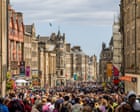
In Edinburgh, where August has long been the busiest time of the year, Princes Street was this week particularly teeming with tourists, gathered around bagpipers and being targeted with leaflets by cheery fringe promoters.
Festival sales are up 30%, according to Marc Crothall, the chief executive of the Scottish Tourism Alliance. “Edinburgh is jumping, which is great. And that’s a massive draw for international visitors,” he said.
Not all were here for the world’s biggest arts festival: Zanet Garcia, from Mexico City and on her second day in the country, had no idea it was on. “I was really confused by it all. I had never heard of the fringe and I didn’t know what it was,” she said with a laugh. “But everyone has been so friendly.”
Garcia chose Scotland because of her interest in Scottish mythology, sparked by books and TV shows that were huge UK exports, such as Harry Potter and Outlander, and had visited locations connected with them. She was taking in traditional national attractions too, fresh from the Johnnie Walker Experience – “I don’t even drink whisky” – and with tickets to the military tattoo.
The majority of tourists are from the UK. But it is the big-spending foreigners who are more likely to stay longer, chalk up the visitor attractions and pack in the experiences. An average overseas visitor to Scotland spent just over £900 in a week in 2024, compared with just over £300 in three nights for a British holidaymaker.
According to data from the Moffat Centre for travel and tourism at Glasgow Caledonian University the biggest jump this year has been in visitors touring by campervan rather than staying in hotels.
Numbers are up but spending per head is down, Crothall said, describing the overall picture as “healthy but by no means booming”.
The holidaying Briton is more likely, he said, to be pursuing free visits to museums and walking in the countryside, with the cost of living still a big issue. “Instead of the three course meal, it’s the one. The 5% VAT and free travel helps, but it’s not magic,” Crothall said.
Although Scotland has suffered its own heatwaves, and devastating wildfires in the Cairngorms, it remains cooler than the southern UK. “We hope and suspect that we’ll see more European visitors given the climate conditions,” Crothall added.