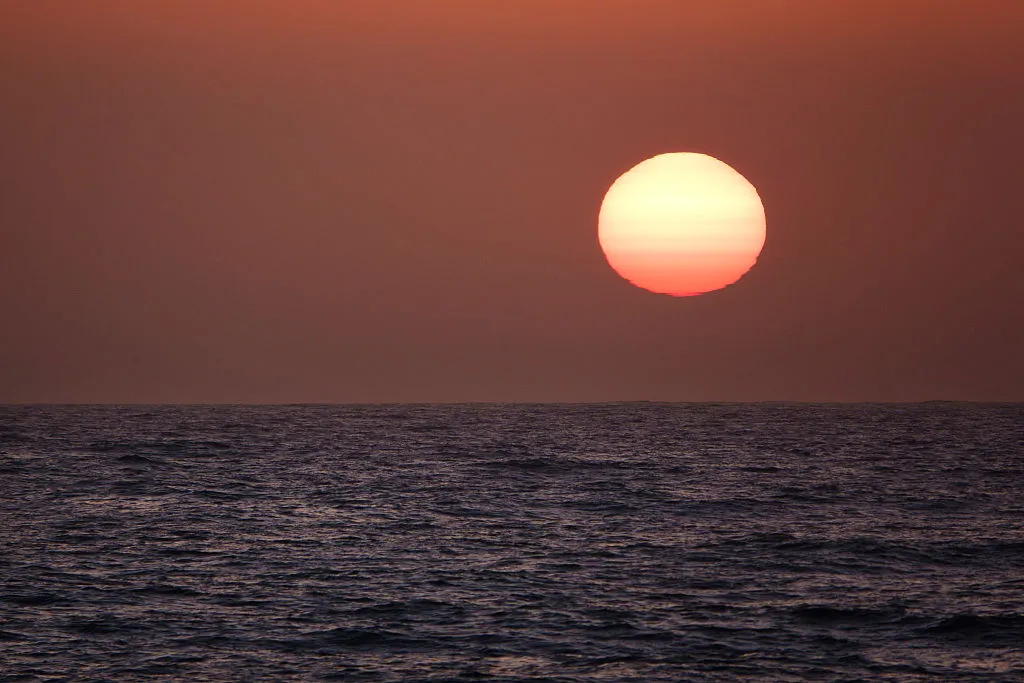
El Niño is here, threatening to bring warmer global temperatures as it strengthens over the Pacific Ocean.
“This El Niño could be a record setting event,” says Erin Coughlan de Perez, associate professor of climate science at Tufts University.
Forecasts are anticipating it might be the strongest in living memory—but the impact will likely vary depending on where you’re located. Here’s what to expect, and how you can prepare.
El Niño began forming in the early summer and is expected to last into 2027, reaching its peak strength in the last two months of 2026.
The impact it has will vary. Forecasts predict that the system will bring drought conditions to southern Africa, southeast Asia, and the northern parts of South America, while parts of East Africa and the southern U.S. might see stormier weather and flooding.
An El Niño event increases global temperatures, which, coupled with rising temperatures fueled by climate change, means 2027 could shape up to be the warmest year on record, if predictions hold true.
The impact will be felt around the world. “El Nino impacts millions of people's lives in terms of increasing the likelihood of above or below normal rainfall in some areas, which has impacts on agriculture production, crop yields, logistics, and transportation,” says Andrew Kruczkiewicz, senior researcher at the International Research Institute for Climate and Society at Columbia University.
In the U.S., El Niño often brings a warmer than usual winter to the northern U.S., and a wetter, cooler winter in the south, with a higher likelihood for rain and snow.
“Much of the South, particularly the Southeast U.S. can expect to see wetter and likely cooler weather during those cool months into the late fall through the early spring,” says Emily Powell, Florida state climatologist at Florida State University, who notes that El Niño also brings increased risk for severe weather, including tornadoes to the area.
However, it doesn’t mean these conditions are a given. “Right now we are in a moderate to strong El Niño, and it's forecast to strengthen,” says Kruczkiewicz. “Now, that doesn't necessarily mean the impacts around the world will be moderate or strong or weak or will manifest at all.” That’s because there are a number of other modes of climate variability, including the Indian Ocean Dipole (which impacts sea surface temperatures in the Indian Ocean) and the Madden-Julian Oscillation (a tropical atmospheric phenomenon that influences rainfall), both of which can also impact weather patterns alongside El Niño.
If you live in an area that’s likely to see stormy weather this winter, preparing for El Niño doesn’t have to be complicated. “People should just think about this as preparing as they would for any kind of system that would bring more rain and increase risk for flooding,” says Powell.
Make sure the area around your home has good drainage, clear your gutters, and patch up any leaks.
Sign up for emergency alerts and pay attention to local forecasts. “These are good for providing general awareness of what's expected in terms of whether your area will be wetter than average in the coming weeks to months,” says Powell.
Some of the weather impacts that El Niño may bring—like snowstorms or flash floods—can come during a normal winter. It presents an opportunity for governments to make sure they’re prepared to tackle extreme weather events that are only becoming more common due to climate change. Cities can prepare in advance: setting up cooling centers and creating action plans to help those most vulnerable to extreme heat or helping residents understand flood risk and purchase flood insurance.
“El Niño years should [in theory] be the years with the fewest disasters because we have the warning. If we actually do take this seriously, and we prepare, this could be a year where we don't have big impacts,” says Coughlan de Perez. “We shouldn't be surprised. We shouldn't be caught unaware.”