Updated
Aug 30, 2026 7:39 AM EDT
Get the Popular Science daily newsletter💡
Breakthroughs, discoveries, and DIY tips sent six days a week.
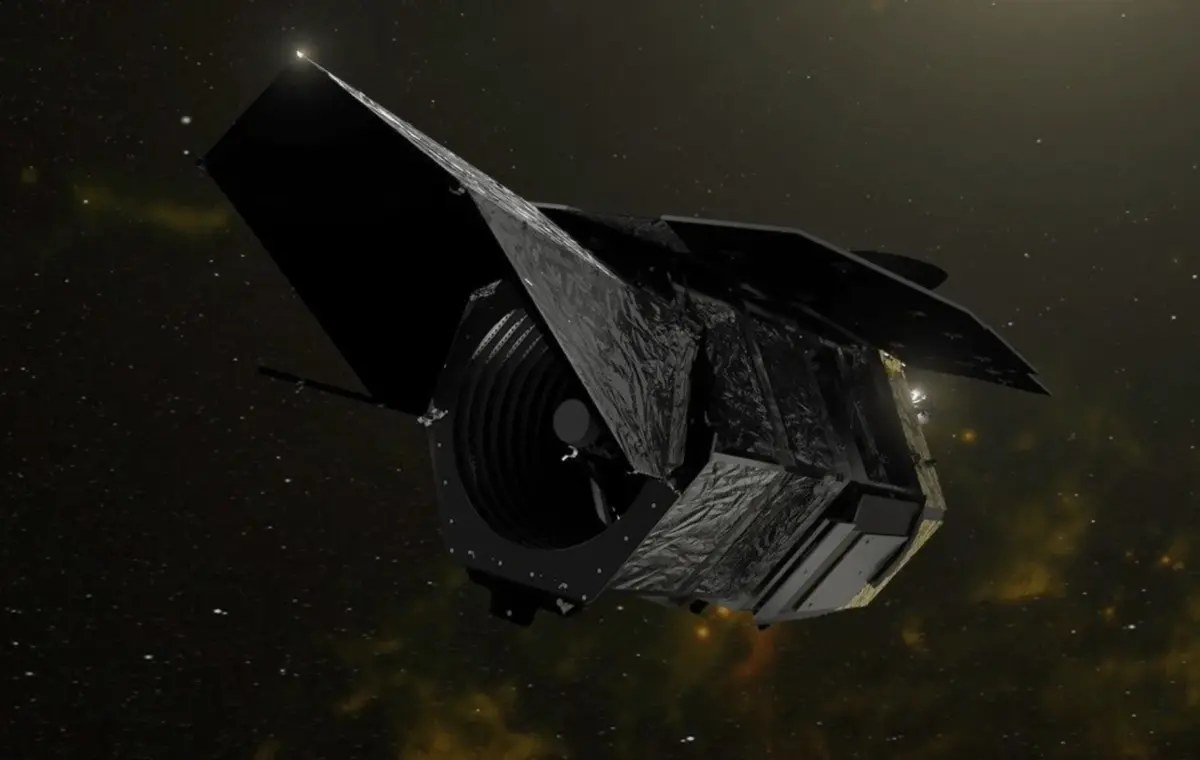
Less than five years after the revolutionary James Webb Space Telescope’s (JWST or Webb) debut, NASA is heading back to the launch pad to deploy another world-class space observatory—the Nancy Grace Roman Space Telescope. Called Roman for short, the space telescope will hunt dark matter, dark energy and exoplanets, as well as providing an unprecedented view of the cosmos to all sorts of astrophysicists.
With Webb and the venerable Hubble Space Telescope continuing to gather ever more observations, it’s easy to wonder what another mission will add to the mix. But scientists in the know can’t wait for Roman to really get to work early next year. Its unique capabilities will complement Hubble and Webb while creating its own hugely important legacy—even if people aren’t quite as familiar with it yet.
“Roman is kind of like a quiet underdog,” Elisa Quintana, an astrophysicist at NASA’s Goddard Space Flight Telescope who previously served as Roman’s deputy project scientist for communications, tells Popular Science. “All of the data they’re collecting is going to be a goldmine for many, many decades.”
The mission has three massive research goals: hunt down the subtle signatures of dark matter and dark energy, identify tens of thousands of new exoplanets, and collect a flood of general astrophysics observations—data on hundreds of black holes, billions of galaxies and 100 billion stars. Named for NASA’s first chief of astronomy, the tour-bus-sized spacecraft will accomplish all that with just one instrument, although a second, experimental instrument is riding along to attempt to spot alien planets similar to our own Jupiter.
To tackle its packed agenda, Roman will pan across the skies in a carefully choreographed dance to which it is uniquely tailored.
“It is a big survey machine, but also at high resolution. “Usually, you have to pick one or the other,” Sabrina Stierwalt, an astrophysicist at Occidental College in California, tells Popular Science. Stierwalt is also the co-chair of the Roman Science User Panel, which is a liasion between the mission team and the global science community.
Roman’s focus on surveying is built into its very fabric in a way that NASA’s existing flagship telescopes can’t match.
“It’s not just that we have a field of view that’s much larger than Hubble and Webb,” Julie McEnery, an astrophysicist at NASA’s Goddard Space Flight Center in Maryland and senior project scientist for Roman, explains to Popular Science.
The mirror—the heart of any telescope—and the spacecraft as a whole are lighter than both Hubble and JWST.
“We have an observatory that can move nimbly, it can stop on a dime,” McEnery says.
Webb is a prime example of the other side of that talent tradeoff, with Webb prioritizing a truly massive mirror that offers super-deep penetration of the universe at the cost of a narrow field of view.
“You could think of Roman as the wide-angle lens and Webb as the zoom,” McEnery explains.