You have reached your maximum number of saved items.
Meta paid a group of Australian parenting influencers with a combined following of about 3 million to promote its teen safety products while it was campaigning against the federal government’s under-16 social media ban, a new report from a US watchdog group alleges.
The Tech Transparency Project says the company invited dozens of parenting influencers to an “Instagram Safety Camp” at a Sydney Harbour venue in July 2025, five months before the ban took effect. Attendees were given scout badges, toasted-marshmallow s’mores and access to tent photo stations. They were also given Meta’s argument against the legislation.
For Meta, Instagram is the front door to the next generation of users. Internal documents obtained by The Washington Post last year showed a years-long strategy to win teenagers back to the app after critics said it was not safe for them.
Calling the Australian legislation rushed and poorly developed, Meta lobbied against it publicly and privately. The influencer campaign shows its attempt to convince parents directly that the service was safe for teenagers.
Meta’s US-based head of child safety policy, Ravi Sinha, told the group that blanket bans did not work and Instagram’s parental supervision tools were the better option. “We worry about … pushing teens into places that are less safe,” he said, according to the report.
Videos from the event show talks and panels hosted by former Network Ten TV presenter Sarah Harris and actress Pia Miranda, and an address from activist Annie Wylie of ReachOut Australia, a youth mental health service. Meta is listed as a “gold sponsor” on ReachOut’s website, though the organisation denies its sponsors dictate its agenda. Those three are not the influencers identified in the report.
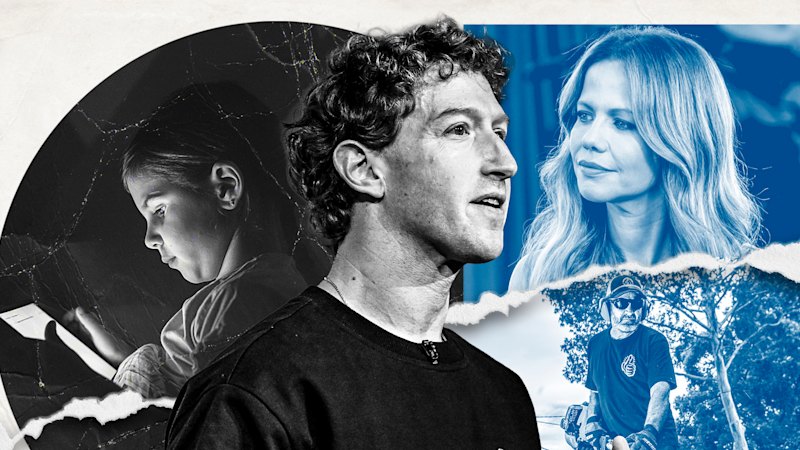
Among the influencers relaying Meta’s message were Pretty Little Liars actress Tammin Sursok, with 1.3 million, former cricketer and Married at First Sight contestant Cameron Merchant, actor and model Simran Summy Gulati and lifestyle influencer Shabina Wood.
Paying influencers is standard practice. The report reveals how Meta deployed this everyday marketing tool to push back against live government legislation.
The four influencers, with about 3 million followers combined, posted from the event praising Meta for its work protecting kids from online harms, specifically with its Teen Accounts product for younger users. Some used hashtags #instagramteenaccounts and #instagrampartner, indicating a commercial arrangement. None of the five responded to questions about their posts.
Two months before the camp, The Washington Post published a scathing report on Teen Accounts, claiming features like automatic blocking of sexual and extreme content did not work.
The Washington Post tested the product with accounts set up for teenagers and concluded that even on the strict default settings, Instagram recommended sexualised posts and content about eating disorders and body image.
Days before the social media ban began on December 10, a second cluster of influencers with a combined 1.2 million followers posted content provided by Meta, coaching parents on how to restore their children’s accounts the moment they turn 16. All used the hashtags #InstagramPartner or #MetaPartner. One appeared to delete the post after the group made inquiries.
Whether a hashtag alone satisfies Australian law is untested: the Australian Competition and Consumer Commission has warned influencers against burying disclosures in long lists of hashtags and links. Misleading endorsements can attract penalties of up to $2.5 million.
Tech Transparency Project director Katie Paul said the Sydney campaign was part of a global effort.