Sony's affordable OLEDs look good, especially for gamers, but they're up against some seriously talented TVs
When you purchase through links on our site, we may earn an affiliate commission. Here’s how it works.
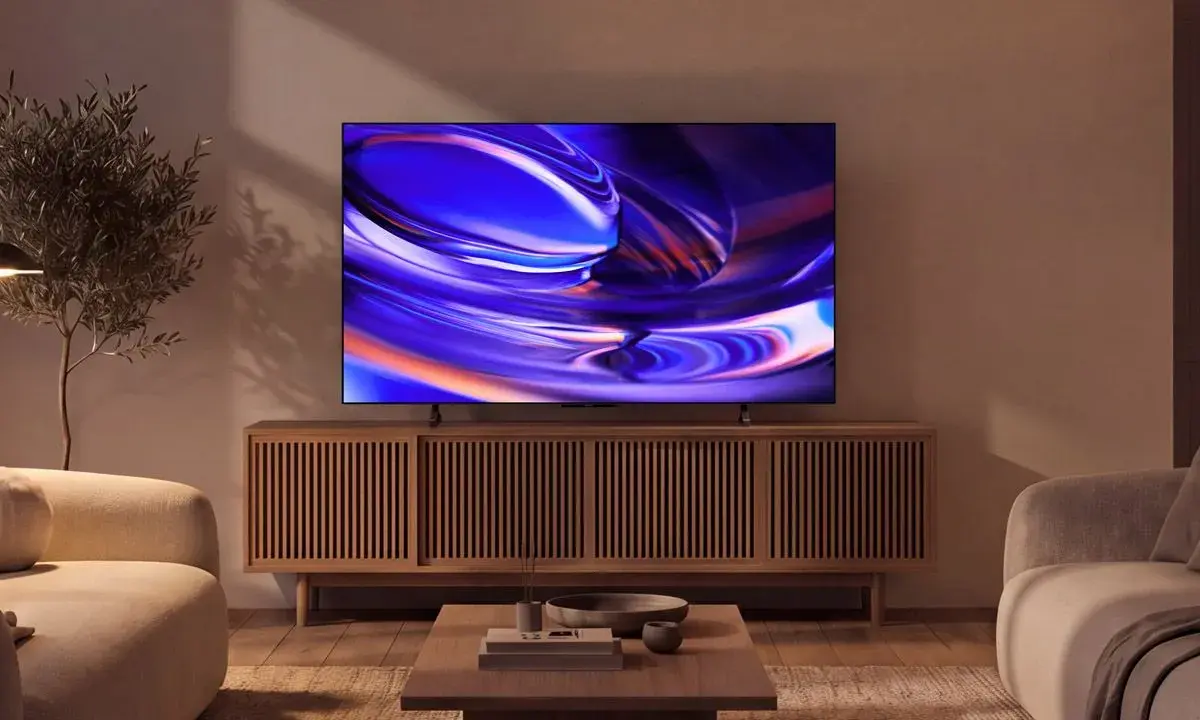
Sony has launched a new mid-range OLED TV, the Bravia 6. As the numbering suggests, it sits below the Bravia 8 and Bravia 8 II OLED TVs and the Bravia 7 II and Bravia 9 II RGB LED TVs in Sony's 2026 TV range.
The Bravia 6 comes in five sizes, ranging from 48 to 83 inches, and includes the MediaTek Pentonic 800 chip, which means it has four HDMI 2.1 ports that support 4K 120Hz and variable refresh rate — unlike Sony's higher-end TVs, which only have two HDMI 2.1 ports each due to a quirk of chip choices. The Bravia 6 also supports Dolby Vision, Dolby Atmos, DTS:X, auto low latency mode and HDMI eARC.
The strapline for Sony's marketing is "OLED essentials, now within reach", and with prices ranging from $1,300 to $4,000 in the US (international pricing is coming soon) the Bravia 6 is priced to fight it out with the LG C6 and the Samsung S90H. So how do they compare?
As you'd expect from a new Sony, the Bravia 6 runs Google TV. LG has its webOS system, and the Samsung runs Tizen. There's essentially universal disagreement in the TV community over which of these is better, but they all support every major streaming service.
The Bravia 6 will come in five sizes: 48, 55, 65, 77 and 83 inches. The LG C6 and Samsung S90H are both available in six: 42, 48, 55, 65, 77 and 83 inches.
Samsung's model has HDR 10+ while the Sony and LG have HDR 10 and Dolby Vision; all three have Dolby Atmos audio but the Sony also has DTS:X.
For gamers, the Sony has variable refresh rate based on the standard HDMI 2.1 spec; the LG has HDMI-spec VRR, plus, Nvidia G-Sync and AMD FreeSync Premium; and the Samsung has HDMI-spec VRR, G-Sync and FreeSync Premium Pro.
Sign up for breaking news, reviews, opinion, top tech deals, and more.
All three TVs support at least 120Hz 4K, but this is where it gets interesting. The Sony only supports 120Hz at 4K, while the LG and Samsung both support 4K 165Hz maximum.
This suggests that the Sony is using a different panel to the other models, despite being the same kind of price. We don't have official confirmation yet, but multiple outlets are have reported that the Bravia 6 uses the new, more affordable OLED SE panel, which is also used in the LG B6.
But what's odd is that the OLED SE panel is capable of hitting 144Hz, so the Sony being limited to 120Hz doesn't actually confirm anything about its panel either way.
If it is using the OLED SE panel, the LG C6 and Samsung S90H have a clear advantage in terms of the brightness and color reproduction of the panel itself. We loved the performance of the LG C6, and our first impressions of the Samsung S90H were that its display came very close to the C6, though our full review is coming soon.
TV enthusiasts will be very interested in Sony's processing, however, rather than just the panel. Sony's built a reputation for offering extremely good motion handling and upscaling, and producing fantastic levels of accuracy in its pictures. However, this often comes with a dimmer-looking picture than the competition even when using the same panel, and Sony might be using a dimmer panel to start with here…