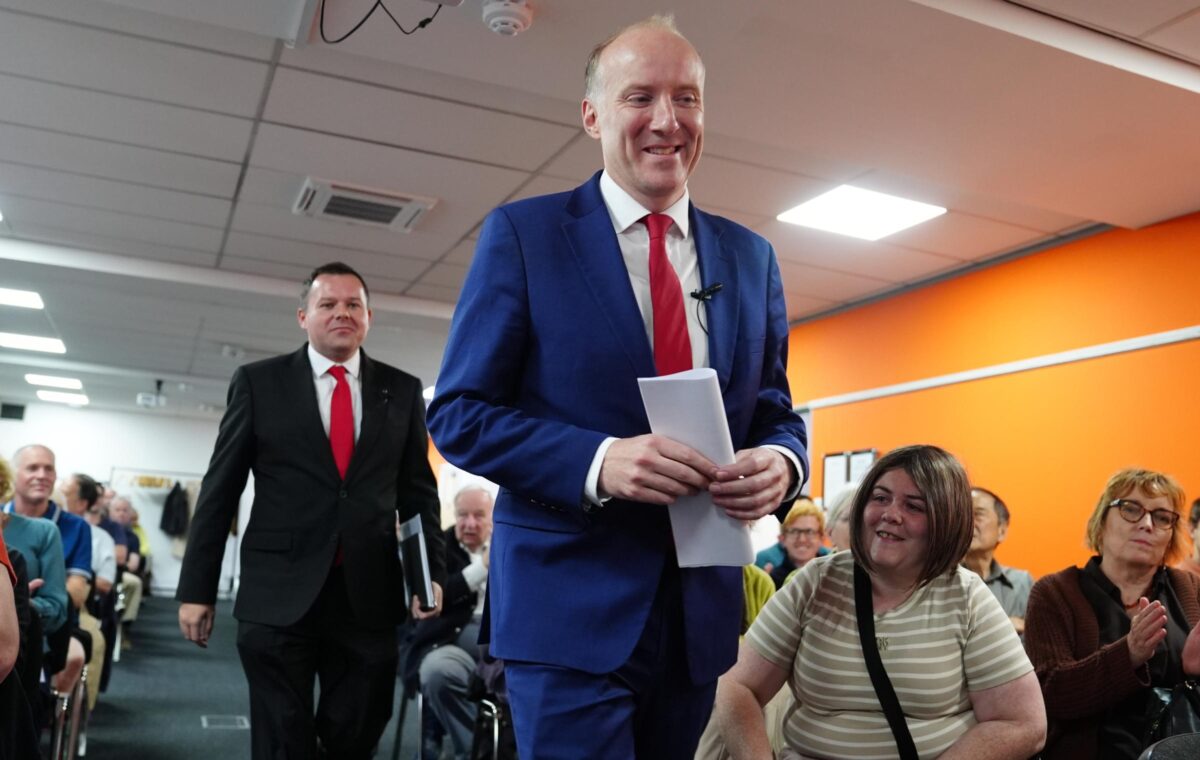
Women's and trans rights dominated part of the second Scottish Labour leadership hustings, as Michael Marra and Joe Fagan faced questions over how the party can appeal to women while repairing relations with LGBT members.
The hustings came as the contest has been whittled down to two male candidates.
It also follows Monica Lennon's criticism of Scottish Labour's approach to trans people following her failure to make the ballot, increasing pressure on both remaining candidates to show how they would unite a party divided by the issue
Mr Marra used his opening remarks to pay tribute to his former rival as one of the party’s “most formidable campaigners”.
Asked how they would make Scottish Labour more attractive to women voters and members by one Labour member, both candidates focused on women’s health.
Mr Fagan said the party should listen to the issues motivating women to become involved in politics, pointing to grassroots interest in developing a stronger approach to women’s health.
He highlighted research into conditions including Alzheimer’s and dementia and argued that Labour policy should be informed by women’s experiences.
Mr Marra said women’s health was “systematically neglected” in Scotland and pointed to long waiting times for procedures including hysterectomies and treatment for conditions such as endometriosis.
The discussion moved quickly on to single-sex spaces and trans rights.
Mr Marra referred to the recent Supreme Court ruling and said public services required clear guidance on how it should be implemented.
He also spoke about his mother, who died from cancer several years ago, saying that during the final weeks of her life she had shared a hospital ward with a man with a history of violence and had lived in “significant fear”.
Mr Marra said that situation was “entirely unacceptable” and argued that women should have access to hospital spaces protected on the basis of sex.
He also defended his decision not to support the Scottish Government’s Gender Recognition Reform Bill in the previous parliament, saying he believed at the time that it did not adequately protect women’s rights and would prove unlawful.
The issue returned later when a Labour member, who identified himself as a gay man, challenged the candidates over the party’s direction on LGBT rights.
He said Labour had previously been a champion of LGBT rights in Scotland but was now a party in which women’s rights and trans rights appeared to be placed in conflict.