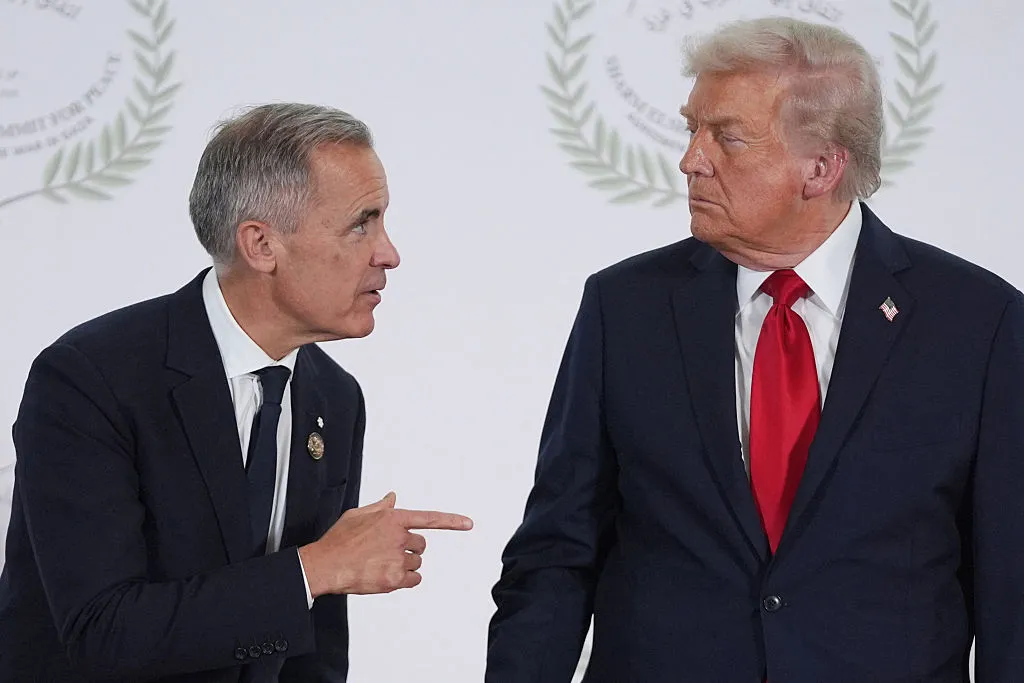
With relations between the U.S. and Canada becoming more and more strained following the breakdown in trade talks between the two countries, most Canadians are backing their government and the way it has chosen to handle the standoff. But on the other side of the border, Americans are offering the Trump Administration far less support for its approach.
Trade negotiations between the U.S. and Canada collapsed last month, with each side placing the blame on the other. Canadian Prime Minister Mark Carney criticized the U.S. for requesting what he described as “last-minute changes” that he argued were “unfair, uneconomic, and called into question the reliability of any deal.” American President Donald Trump, meanwhile, accused Canada of “‘Ripping Off’ the U.S.A. for decades” and portrayed the country as being “difficult and unreasonable.”
The day after trade talks broke down, the Trump Administration’s 50% tariffs on billions of dollars worth of Canadian products took effect. Canada then announced retaliatory tariffs that will go into effect on Sept. 8.
Tensions between the two nations have only continued to grow. Last week, Trump signed an Executive Order directing his Interior Secretary to change the name of Lake Ontario to “Lake America”—a move that angered Canadians and sparked pushback from political leaders in both Canada and the U.S.
There is no clear resolution in sight for the rift in the countries’ critical trading relationship, with both Trump and Carney remaining firm in their stances.
While speaking to reporters on Tuesday, Carney signaled that he would be willing to resume negotiations—but only if U.S. officials stop insulting and mocking his country. “When the Americans stop doing memes, stop throwing shade, stop trying to be tough, and start being serious about having those discussions, we can have those discussions,” the Canadian leader said.
“It’s not constructive,” he added. “But that’s their democracy.”
Trump, meanwhile, doubled down on his accusations against Canada when asked the following day about the prospect of talks starting back up. “Canada has been ripping off the United States for many, many years, for decades, many decades,” the President said during a Wednesday press conference.
Here’s what recent polls reveal about how Americans and Canadians feel about the heated situation—and how their leaders are handling it.
Most Americans—nearly 70%—said they feel that the U.S. should be open to reaching a compromise with Canada, even if that leads to many of the U.S.’s demands not being met, according to an Ipsos poll that was released on Tuesday. In comparison, only 25% of Americans said they believe that the U.S. should take a firm stand against its northern neighbor and push for many of its demands to be met.
Americans were also more likely to hold their own government responsible for the breakdown in relations than Canada’s. About 46% said they think that the U.S. shoulders more of the blame for the ongoing trade war, while only 12% said they believe that Canada is more culpable and 18% said they feel that both parties are equally at fault, according to the poll.
The survey also found that most Americans oppose actions that could or have already escalated tensions between the two countries. For instance, nearly 60% of Americans said they are against the U.S. imposing additional tariffs on Canada, while only 20% indicated support for such an aggressive step. And more than 60% of Americans said they disagree with Trump’s order to rename Lake Ontario, while only 14% backed the move.
Americans’ objection to the Executive Order in particular was seen across party lines—84% of Democrats and 65% of independents said they were against it, and more Republicans (43%) objected to it than those who agreed with it (33%).
A recent Economist/YouGov poll produced similar results: nearly 60% of Americans who responded to the survey said they were against increasing tariffs on Canadian products, compared to less than 30% who said they would back such a move. About 45% said they think Canada has not been unfair to the U.S. when it comes to trading between the two nations, while just 28% are aligned with Trump in thinking that Canada has been unfair.
The majority—64%—of Americans still describe Canada as an ally or friendly, according to the Economist/YouGov poll. But while they remain a minority, the portion of Americans who view Canada in a negative light has grown in recent years; about 22% describe Canada as either unfriendly or an enemy, a record high since 2016. That growth has mostly been driven by Americans who identify as Republicans, the survey found.