Account subscription benefits alongside Premium Stories, Editorials,
Opinions and more. Unlock these with Subscription
The View From India
Looking at World Affairs from the Indian perspective.
First Day First Show
News and reviews from the world of cinema and streaming.
Today's Cache
Your download of the top 5 technology stories of the day.
Science For All
The weekly newsletter from science writers takes the jargon out of science and puts the fun in!
Data Point
Decoding the headlines with facts, figures, and numbers
THEdge
At the cutting edge of education and careers
Health Matters
Ramya Kannan writes to you on getting to good health, and staying there
Gender Agenda
Stories from beyond the binary.
The Hindu On Books
Books of the week, reviews, excerpts, new titles and features.
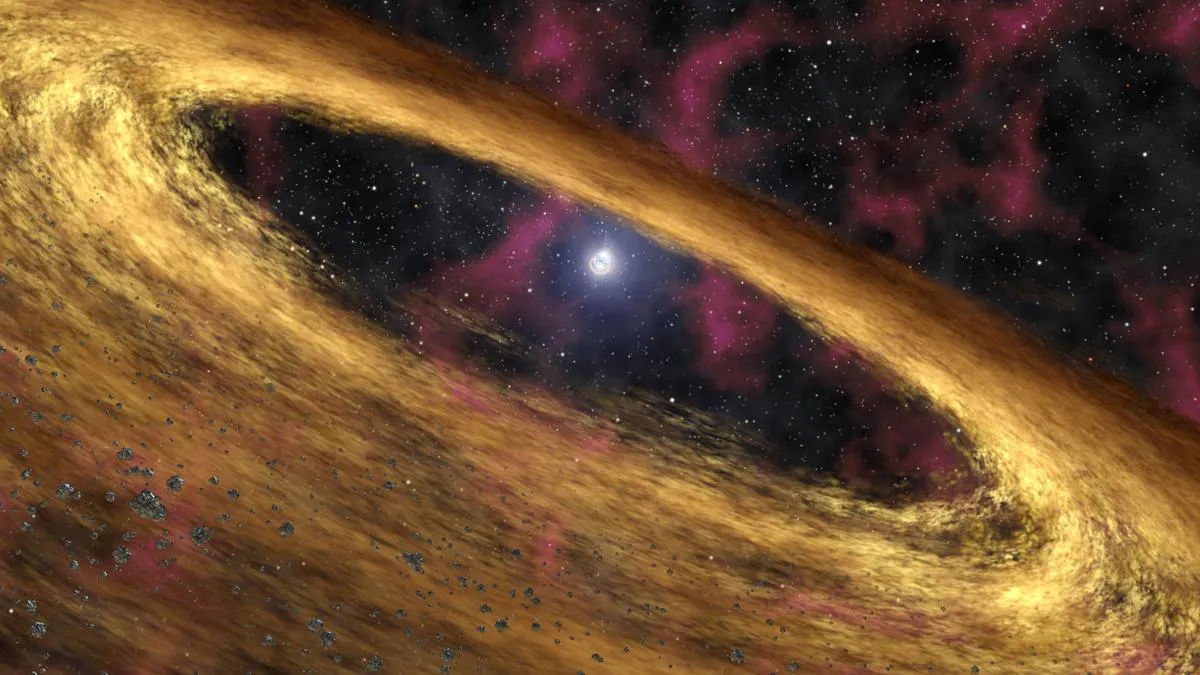
An artist’s impression of the magnetar 4U 0142+61. In May 2022, the IXPE satellite had hinted at vacuum birefringence around this dead star.
| Photo Credit: NASA
Quantum physics has made numerous strange predictions, and scientists have checked and confirmed many of them. But one of the strangest ones persists unresolved. In the 1930s, the German physicists Werner Heisenberg and Hans Heinrich Euler proposed that empty space is not really empty. Instead, they predicted that in the presence of a magnetic field, the vacuum of space would behave like a crystal, changing the properties of light passing through it.
The trouble with testing this prediction — called vacuum birefringence — is that the magnetic field has to be extraordinarily strong.
In a study published in Nature on August 5, astronomers from Australia, Canada, Japan, South Africa, Taiwan, and the U.S. reported it had observed such birefringence using two satellites and a telescope in Australia, almost confirming the prediction at long last.
The work could prove ‘nothingness’ is actually a complex and active medium and also potentially help scientists refine their maps of the universe.