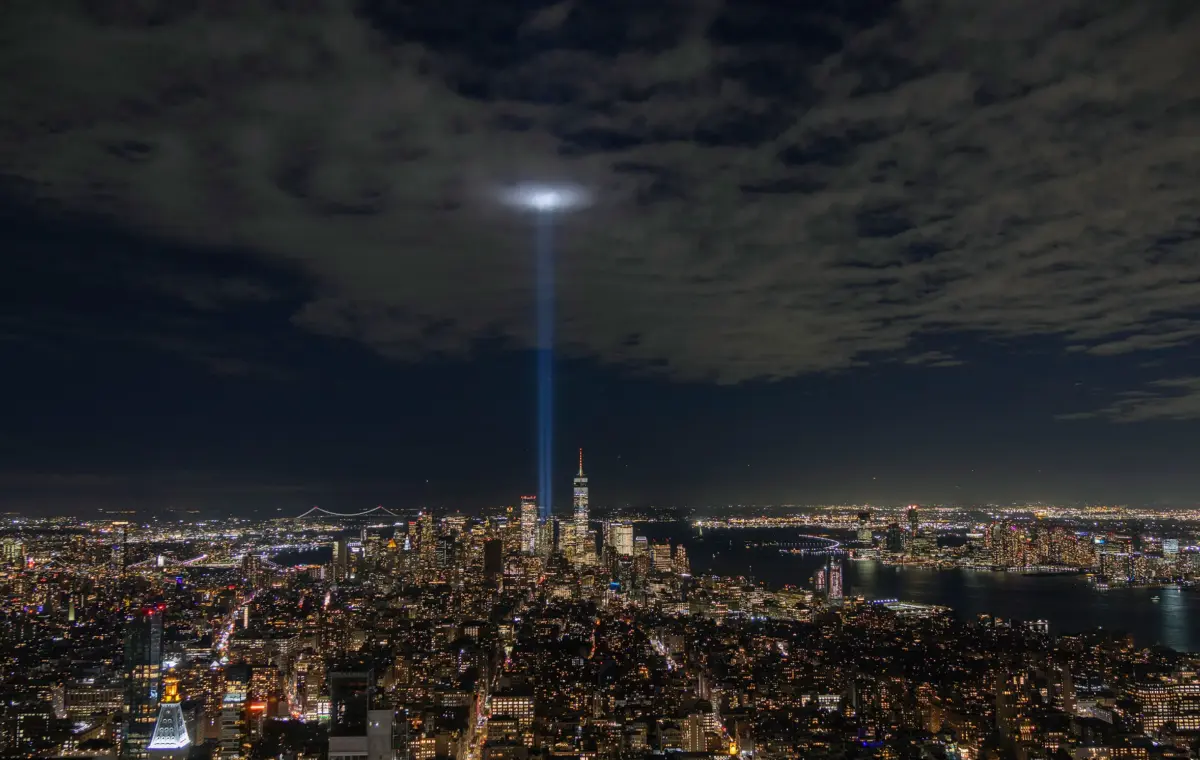
Twenty-five years later, Sept. 11 remains a watershed moment, one with both personal and global implications. To mark the anniversary, TIME spoke to people with very different connections to the day, to hear about what they experienced at the time as well as the ripple effects. For some, the legacy of the date is one of profound loss. Others know about the tragedy mostly from history class. One thing is clear: The attacks that changed the world also changed lives.
Buy a copy of 9/11 Stories of Resilience 25 Years Later here
I was 4½ when my dad died. I have only brief memories of that day. I remember my mom taking my twin brother and me out of preschool. I remember watching the TV at home and then going over to one of her friends’, whose husband was also a firefighter, and watching it there. We were so young, we didn’t really grasp what was actually going on. But as you get older, you start to realize what you’ve missed out on. It’s not quite the same as being sad because you miss someone close to you. It’s more like you’re sad because you didn’t really get to be close to them.
My dad was a cop for 12 years and a firefighter for only 18 months, but joining the FDNY was always his plan. For as long as I can remember, I also wanted to be a firefighter. I did the entry exam when I was 18, even though they don’t take anyone until 21. I went to college, but I think I was just killing time. I dropped out after two years, as the process ramped up. My mom kept encouraging me to consider other things, but she knew I had put all my eggs in that basket. I loved the routine and discipline of the academy, and I really tried to earn my spot; I didn’t want to feel like I was getting special treatment.
A lot of things about the fire department don’t change, and I remember thinking my dad might have stood right where I was standing, worrying about getting yelled at by some drill instructor for having a button undone. I don’t have many shared memories with him, but that came close. He worked in Brooklyn, just on the other side of the tunnel from the World Trade Center. I wanted to go to a different firehouse, to let the guys make up their mind about me without having known his reputation, so I’m in the Bronx. The firefighters I meet that knew him, I feel like they're happy to see that I'm on the job.
On 9/11 I usually go to Mass at my firehouse and then drop by Ladder 101, where Dad worked. Last year for the first time I met someone who was actually riding that day, and he gave me the full rundown. They were staged at the mouth of the tunnel right under the towers, and as they sat there on the rigs, they watched the second plane come in. They could feel the impact and then they went straight in. From what I understand, his group went up a way, came back down, and were in the lobby when the building collapsed.
Dad was also a lifeguard at Overlook Beach in Long Island, and the lifeguards there put up a little memorial for him. My mom is not big on going to the firehouse or the ceremonies in the city on the anniversaries. I think it’s just too overwhelming. So we do a more casual gathering in the afternoon. It’s less somber, more a reason for everyone to just get together.
Sometimes the attention that comes with being a legacy firefighter is uncomfortable, but not for the reasons you might think. I don’t have trouble talking about it; it was something that happened when I was young, but I had a happy childhood and a very fortunate life. I’m not looking for sympathy—I feel lucky to have had that role model of selflessness and self-sacrifice. On the other hand, I do miss having had a real relationship with my dad.
Do I wish he was still alive? Of course. I sometimes wonder if I’d be different if I’d known my dad. But that event shaped my way of thinking and shaped me. I’m very proud of what he did, and I think it’s a very admirable and honorable way to die. And I wouldn’t want someone else to have been in his place because I don’t think that’s what he would have wanted. –As told to Belinda Luscombe
My journey of becoming a pilot started when I was 14, when I went to a youth summer camp sponsored by the Organization of Black Aerospace Professionals (OBAP). When I first told my parents that I wanted to be a pilot, of course they were a little bit concerned about the dangers that come with flight training at a young age, but they were also very supportive.
I took my first discovery flight with an instructor in 2022. At first I was definitely nervous, because there was so much going on in the plane at once. But once we were at around 2,000 feet, everything became incredibly peaceful. Looking down at the scenery gave me a sense of freedom that I never really experienced anywhere else. I knew at a young age that I never wanted to work a traditional nine-to-five job. I was also really big on traveling, and that discovery flight showed me that being a pilot was something I could do every day and enjoy. I took my first solo fight in 2024.
Flight training is expensive, but my parents made sacrifices to support me financially as I sought out scholarships and opportunities. I was drawn to the LeRoy W. Homer Jr. Foundation Scholarship, because of their mission to empower future aviators. He was an African American pilot, and a first officer for United Airlines on Flight 93. I wasn’t alive when 9/11 happened, so my understanding comes from learning about it through documentaries and conversations with my parents and grandparents and others.
The tragedies definitely impacted not only the lives of everyday people, but also caused major disruption in the aviation industry. When my mentor just started his career as a pilot, he got furloughed soon after 9/11 because the airline industry was completely devastated over Americans’ fear of flying. I have a family member that is still afraid to fly on aircrafts.
Before I went to college, I became a private pilot and a licensed drone pilot. I briefly stopped my training after one of my friends passed away, but getting the scholarship lifted my spirits and gave me an extra push to continue my goal. The scholarship exists because of somebody who lived with courage, professionalism, and commitment to serving others. Knowing that I’m representing his legacy motivates me to work harder and fly with integrity, and never take opportunities for granted.
At Middle Georgia State University, I'm enrolled in aviation courses to finish out my remaining ratings and license and also to, as we call it in the industry, time build. I have to get at least 1,000 flight hours before I can go to a regional airline. It will probably take me about six more years of training to become a major airline pilot. African American women make up less than 1% of professional pilots in the U.S. I have had the privilege of connecting with several of them through organizations such as Sisters of the Skies, OBAP, Aviation Career Enrichment, Pink STEM, and Youth in Aviation. Having this support gives me a sense of comfort and understanding that through hard work, I can also achieve it. –As told to Philip Wang